Star of David: From Jewish Symbol to Universal Icon
Uncover the mystical meaning of the Star of David in Jewish tradition. Explore its sacred geometry, spiritual symbolism, and protective powers through ages o...
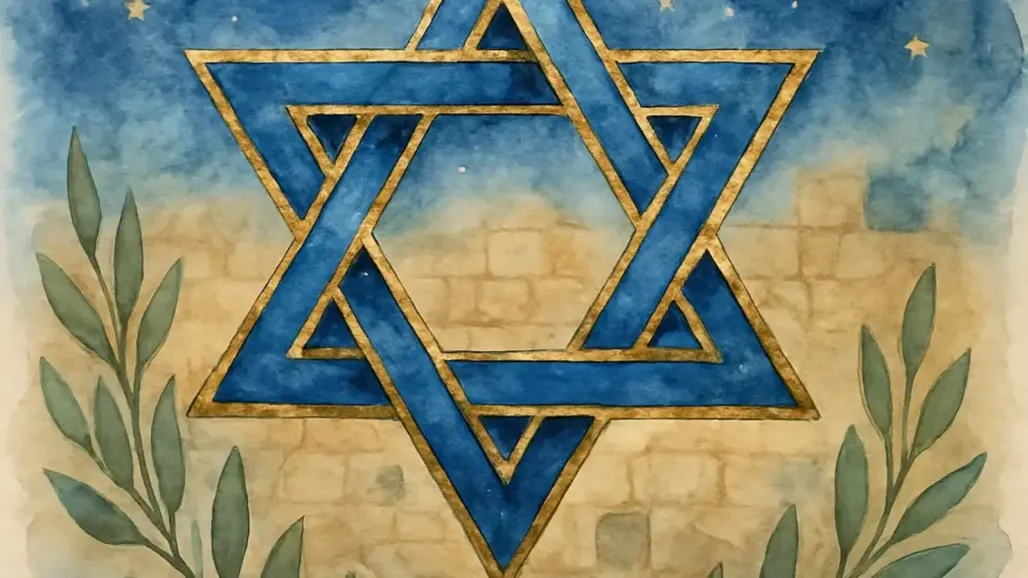
When the six-pointed Star of David—Magen David—first catches the eye, its simple, striking geometry belies a rich tapestry of spiritual meaning, historical transformation, and cross-cultural resonance. Recognized worldwide as the emblem of Judaism and the State of Israel, the star’s journey from ancient geometric pattern to universal spiritual icon reveals a compelling story of faith, identity, and dialogue.
This article traces the evolution of the Star of David, exploring its ancient roots, mystical symbolism, and profound role in Jewish tradition. It also examines its parallels in other religious contexts, illuminating shared human quests for meaning and divine connection across sacred traditions worldwide. Finally, practical guidance offers respectful ways to engage with this symbol, enhancing interfaith understanding.
Ancient Hexagram: From Mesopotamian Magic to Jewish Mysticism
The hexagram shape—two interlocking equilateral triangles forming a six-pointed star—has origins that far predate its Jewish identification. Archaeological evidence shows that hexagrams appeared in civilizations as diverse as Mesopotamia, Egypt, and India, often as symbols of cosmic order, protection, or spiritual balance.
In Jewish contexts, the earliest appearances of the hexagram were ornamental or amuletic rather than explicitly religious. Medieval Jewish tombstones and synagogue decorations bore this symbol as a protective emblem, invoking divine shelter against evil forces. This association with protection gave rise to the term Magen David—“Shield of David,” linking the star to King David’s legacy as a divinely favored protector and leader.
The Psalms frequently depict God as a shield:
“The LORD is my rock, and my fortress, and my deliverer; my God, my strength, in whom I will trust;” — Psalms, 18:2

Jewish mysticism, particularly Kabbalah, further enriched the star's meaning. The two triangles symbolize the interplay between divine and earthly realms: the upward triangle represents spiritual ascent toward God, while the downward triangle signifies God's immanence in creation. The Zohar elaborates this as the harmony of opposites that sustains existence, a dance of concealment and revelation of the divine.
Geometrically, the hexagram encloses a central hexagon—an emblem of unity within multiplicity, reflecting the One God manifesting as many facets. This layered symbolism elevates the star from mere ornament to profound spiritual metaphor.
How Medieval Jews Transformed a Universal Symbol into Sacred Identity
Despite its ancient roots, the Star of David did not become a definitive Jewish symbol until the modern era. Unlike the menorah or the lion of Judah, which have biblical origins and frequent textual references, the Magen David was historically less central to Jewish ritual or scripture.
Its adoption as a communal emblem began in medieval Europe, appearing on synagogues, Jewish flags, and community seals, often alongside the menorah. By the 17th century, it increasingly served as a marker of Jewish identity, especially as communities sought visual symbols amidst growing external pressures.
The 19th-century Jewish emancipation and nationalist movements accelerated this trend. Jews, integrating into European nation-states, sought symbols to express unity, heritage, and pride. The Magen David’s geometric simplicity and layered meaning made it ideal.
The Zionist movement's formal embrace of the Star of David was pivotal. The symbol was chosen for the flag of the Jewish community in Palestine and later became the national emblem of the State of Israel in 1948.

Sacred Geometry Across Faiths: Why Three Religions Share This Star

The six-pointed star's sacred geometry resonates far beyond Judaism. Across faiths, the hexagram conveys universal spiritual themes: cosmic balance, divine protection, and unity of opposites.
In Kabbalah, the star corresponds to the sefirot, divine emanations through which God interacts with creation. Particularly, the interlocking triangles represent the tension and harmony between Yesod (foundation) and Malchut (kingdom), the channels bridging divine energy and the material world.
In Islamic art, the hexagram is prominent in geometric tessellations, symbolizing the infinite nature of Allah's creation and the order underlying the cosmos. The Qur'an teaches,
“Verily, God enjoineth you to give back your trusts to their owners, and when ye judge between men, to judge with fairness.” — Qur’an, 4:58

Christianity also used six-pointed stars in medieval iconography. In some contexts, the hexagram symbolized the six days of creation, the union of heaven and earth, or God's covenant with humanity.
“The heavens declare the glory of God; and the firmament sheweth his handywork.” — Psalms, 19:1

These shared uses highlight a transcultural spiritual language, where geometry serves as a gateway to contemplating the divine order and human responsibility within it.
From Yellow Badge to Blue Flag: The Star's Journey Through Tragedy and Triumph
Though the Magen David is not a liturgical object or required religious symbol, it holds powerful ritual and cultural significance.
The star decorates Torah ark curtains, synagogue windows, and mezuzah cases, marking sacred spaces and texts. In Jewish cemeteries, it adorns gravestones, signifying communal belonging and faith.
The 20th century marked a painful chapter in the star’s history. Nazi Germany forced Jews to wear yellow Star of David badges to stigmatize and isolate them. This brutal misuse transformed the symbol into one of oppression but also resistance and remembrance.
“Yea, for thy sake are we killed all the day long; we are counted as sheep for the slaughter.” — Psalms, 44:22

The star’s presence on Israel’s flag and in global Jewish communities reaffirms identity, faith, and collective memory.
“He shall cover thee with his feathers, and under his wings shalt thou trust: his truth shall be thy shield and buckler.” — Psalms, 91:4

Building Bridges: What Christians and Muslims See in the Jewish Star
The Star of David offers a rich avenue for interfaith reflection. Its geometric and spiritual themes resonate with core values in Judaism, Christianity, and Islam—faith, divine protection, covenant, and moral responsibility.
Christianity's emphasis on unity of heaven and earth finds visual analogies in the hexagram's interlocking triangles, symbolizing the incarnation and divine-human relationship.
“For by him were all things created, that are in heaven, and that are in earth, visible and invisible” — Colossians, 1:16

Respectful dialogue invites recognition of these convergences without erasing distinctiveness. It fosters mutual appreciation and highlights how symbols, like the Star of David, can bridge divides through shared spiritual language.
“O ye Corinthians, our mouth is open unto you, our heart is enlarged.” — 2 Corinthians, 6:11

Why Modern Spirituality Embraces This Ancient Symbol
In contemporary society, the Star of David continues to serve as a bridge—not only between faith traditions but also between the secular and the sacred. This bridging function resonates with efforts to connect diverse spiritual traditions through accessible sacred texts. Its visual simplicity lends itself to artistic interpretation while its spiritual depth continues to nourish theological reflection.
Many Jewish communities around the world incorporate the star into their celebrations of Hanukkah, Passover, and Yom HaShoah. In these contexts, the star becomes a symbol of continuity, a visual anchor that connects modern Jewish life to its ancient spiritual heritage.
Outside of Jewish circles, the Star of David occasionally appears in multifaith art installations, interfaith dialogue events, and museum exhibitions that explore the sacred geometry of world religions. In these cases, the star serves as a touchpoint for conversations about unity, difference, and the shared longing for meaning that runs through all faiths.
In addition to religious settings, the Star of David has increasingly found a place in educational curricula, where it becomes a visual tool for discussing both the horrors of the Holocaust and the hope embodied by modern Jewish resilience. Museums and historical institutions worldwide have dedicated permanent exhibits to Jewish culture, often featuring the star prominently to symbolize both tragedy and renewal.
Furthermore, modern spirituality movements outside the traditional Abrahamic faiths have adopted the hexagram in meditative and metaphysical contexts. Yoga retreats, energy healing practices, and holistic health seminars sometimes use the hexagram as a symbol of balance and interconnection. While not always referencing the Jewish origins, these adaptations testify to the star’s resonance with universal human concerns.
The broader society’s embrace of the Star of David—whether in solemn memorials or artistic tributes—underscores the growing awareness that sacred symbols can evoke shared aspirations: peace, understanding, justice, and spiritual wholeness.
“Great peace have they which love thy law: and nothing shall offend them.” — Psalms, 119:165

From Ancient Motif to Universal Icon: The Star's Global Journey
Today, the Star of David shines beyond Jewish contexts. It appears in art, architecture, and spirituality worldwide, inspiring reflections on balance, protection, and divine unity.
Artists draw on the hexagram's geometric purity to explore themes of harmony and interconnectedness. Spiritual seekers find in the symbol a meditation on duality—the meeting point of human striving and divine grace.
The star's evolution from ancient motif to national emblem and universal icon exemplifies how symbols can carry layered meanings that deepen over time and across cultures.

“The secret of the LORD is with them that fear him;” — Psalms, 25:14

A Living Symbol: How the Star of David Continues to Unite and Inspire
The Star of David is far more than a national flag emblem or a geometric design. It encapsulates a profound spiritual heritage woven from ancient symbolism, mystical insights, and collective experience. As a symbol of divine protection, unity, and moral covenant that echoes the timeless principles found in sacred law, it invites all who encounter it—Jew and non-Jew alike—to reflect on shared quests for meaning and belonging.
In a world marked by division, the Magen David offers a luminous example of how sacred symbols transcend boundaries while honoring particular histories and identities. It is a bridge between past and present, heaven and earth, the particular and the universal—a star that continues to inspire dialogue, respect, and spiritual awakening.
Related Wisdom
Explore the deeper spiritual significance of Jewish traditions and their universal teachings of atonement, forgiveness, and divine protection.
- Sacred Sustenance: Religious Dietary Laws and Mindful Eating - Discover how religious dietary laws shape identity and faith through Jewish kosher, Islamic halal, and other spiritual food practices
- World Religion 101: A Beginner's Guide to Global Faiths - Discover the core beliefs of nine major world religions and their surprising connections
About Your Guide
Elly Marimbocho is a seasoned writer with a background in Religious Studies and over a decade of experience producing long-form educational content on theology, interfaith spirituality, and world religions. Passionate about the contemplative heart of faith, Elly creates in-depth, reverent, and accessible guides that help readers engage meaningfully with religious wisdom across traditions.