Beyond Lanterns and Lotus: Vesak's Three-Fold Path to Awakening
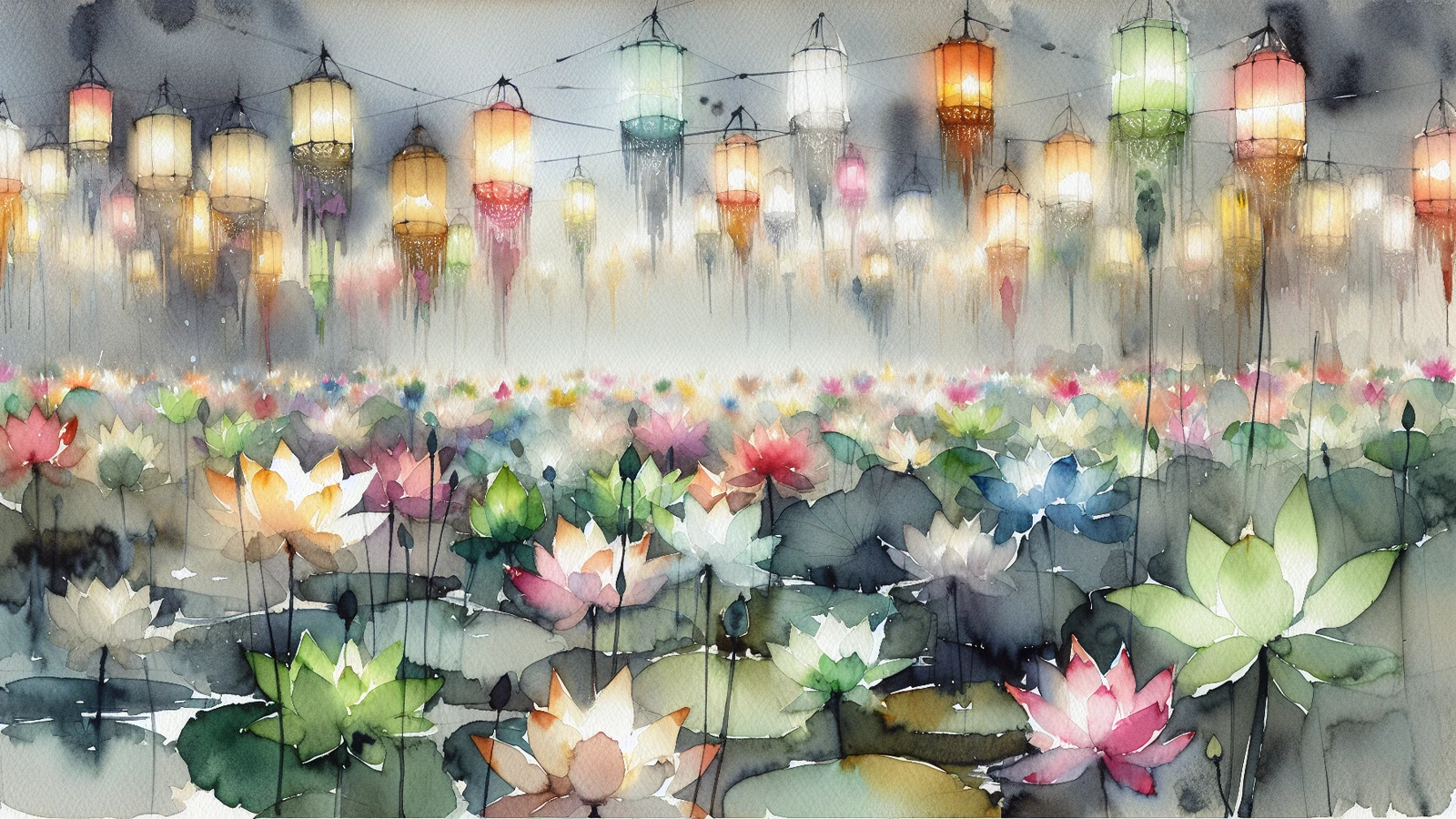
Discover how Vesak's three-fold celebration illuminates the universal path of spiritual awakening through Buddha's birth, enlightenment, and final passing.
Isn't it fascinating how certain moments in history continue to illuminate our present? On May 12, 2025, millions of Buddhists worldwide will gather to celebrate Vesak, the most sacred day in the Buddhist calendar. To the casual observer, the colorful lanterns and lotus flower offerings might seem like mere festive decorations. But what if these celebrations point to something far more profound—a universal template for spiritual awakening that transcends religious boundaries?
As I stood among throngs of devotees at a temple in Sri Lanka years ago, watching as they circumambulated sacred spaces with quiet reverence, I couldn't help but wonder: What makes this celebration so powerful that the United Nations formally recognized its global significance? Like other transformative encounters with diverse spiritual traditions, this experience opened my awareness to universal truths. The answer, I discovered, lies not in the external pageantry but in the remarkable three-fold nature of what Vesak commemorates—the birth, enlightenment, and parinirvana (final passing) of Siddhartha Gautama, the Buddha.
In this three-part commemoration, might we find a reflection of our own spiritual journeys, regardless of our religious backgrounds? Could the path that transformed a sheltered prince into the Buddha offer insights for our own quest for meaning and awakening? And how might the wisdom traditions of the world's great faiths intersect at these three pivotal points? This exploration of spiritual awakening reveals universal patterns of transformation that echo throughout sacred texts from all traditions, connecting with universal practices of spiritual development.
“The world is afflicted by death and decay. But the wise do not grieve, having realized the nature of the world.” — Sutta Nipata, verse 574

From Royal Palace to Bodhi Tree: Vesak's Three Sacred Moments
The Prince Who Awakened: Buddha's Transformative Path
The story begins with a privileged birth. Siddhartha Gautama was born around the 5th century BCE in what is now Nepal, to a royal family that sheltered him from life's harsher realities. What happens when a soul, protected from suffering, suddenly confronts the universal facts of aging, illness, and death? For the young prince, this encounter sparked an existential crisis that propelled him from palatial comfort into a six-year spiritual quest.

But before these words could emerge, he first had to undergo a radical transformation—from privileged prince to wandering ascetic, from seeker to finder, from human to Buddha, “the awakened one,” achieving the kind of universal mindfulness that transcends cultural boundaries, embodying the dharma wheel's teaching of endless spiritual evolution.
Related Articles
- Noble Eightfold Path: Buddha's Universal Guide to Enlightenment - Buddhist framework for awakening
- Sacred Texts Unveiled: A Comprehensive Guide - Wisdom literature across traditions
- Meditation Mastery: Techniques from World Religions - Universal practices for consciousness
- Zen and the Art of Universal Mindfulness - Buddhist contemplative practices
The canonical accounts in the Pali Canon describe how, after years of extreme asceticism brought him no closer to truth, he chose a middle path. Seated beneath a bodhi tree in Bodh Gaya, he vowed not to rise until he had broken through to complete understanding. After a night of profound meditation, as morning dawned, he attained perfect enlightenment.
Forty-five years of teaching followed, until at age 80, having established his dharma (teachings) and sangha (community of practitioners), he consciously and peacefully entered parinirvana—the final release from the cycle of rebirth.
How One Sacred Day Became a Global Awakening
Have you ever wondered how a single day came to encompass three monumental life events? While the earliest Buddhist scriptures don't explicitly mention a combined celebration, the tradition became firmly established in Theravada Buddhist countries, with records in the Mahāvaṃsa (a Sri Lankan chronicle) confirming its ancient observance.

The Chinese pilgrim Faxian documented Vesak celebrations during his journey to India and Sri Lanka in the early 5th century CE. Yet it wasn't until the 19th and 20th centuries that Vesak gained broader international recognition, culminating in the 1950 World Fellowship of Buddhists conference that standardized its observance, followed by UN recognition in 1999.
Today, Vesak transcends its religious origins to serve as a global reminder of the universal human capacity for transformation and spiritual awakening—a message that resonates far beyond Buddhist communities. Similar to how lantern festivals illuminate paths to spiritual enlightenment, Vesak lights the way for seekers of all backgrounds, offering wisdom that complements interfaith dialogue and understanding.
Why These Three Moments Transform Lives Forever
The Four Truths That Changed Everything
At Vesak's heart lies a profound recognition of the Buddha's central insights—those illuminations that emerged during his night of awakening beneath the bodhi tree. What insights could be so transformative that they continue to inspire celebrations millennia later?
The Four Noble Truths form the cornerstone: the reality of suffering (dukkha), its cause in craving and ignorance, the possibility of its cessation (nirvana), and the path leading to this liberation. This Eightfold Path—comprising right understanding, intention, speech, action, livelihood, effort, mindfulness, and concentration—offers a comprehensive approach to transforming consciousness.
“All that we are is the result of what we have thought: it is founded on our thoughts, it is made up of our thoughts.” — Buddha, The Dhammapada, verse 1

Here lies a fundamental insight: our experience of reality stems not from external circumstances but from the quality of our consciousness. Isn't this a revolutionary idea—that liberation comes not from changing the world but from transforming our perception of it? This understanding resonates deeply with the sacred texts that preserve universal wisdom across traditions.

Nirvana—often misunderstood as a heavenly realm—represents something far more profound: the extinguishing of the flames of greed, hatred, and delusion. It's a state beyond conceptualization, where suffering ceases not through escape but through profound insight into reality's true nature.
Why Buddha's Discovery Matters to Every Seeker
What if the Buddha's discoveries speak not just to Buddhist practitioners but to universal human questions? Across cultures and centuries, haven't humans wrestled with the same fundamental inquiries—about suffering's nature, the possibility of transformation, and the quest for authentic freedom? The Ten Commandments address similar universal questions of right living across faith traditions, while Yom Kippur's universal power of atonement offers parallel insights into spiritual renewal.
“Be a lamp unto yourself. Work out your liberation with diligence.” — Mahaparinibbana Sutta, Digha Nikaya 16
This emphasis on direct personal realization rather than blind faith resonates powerfully in our contemporary context, where spiritual seekers increasingly value firsthand experience over dogmatic assertion.
When we examine contemplative traditions worldwide—from Christian mysticism to Jewish Kabbalah, Islamic Sufism to Hindu Vedanta—don't we find striking parallels to Buddhist insights? Just as the Bhagavad Gita offers timeless wisdom for life's battles, the Buddha's teachings provide practical guidance for navigating suffering. The recognition of egoic attachments as suffering's source, the cultivation of present-moment awareness, the transformative power of compassion—these themes emerge repeatedly across wisdom traditions, suggesting they reflect profound truths about human consciousness itself. This universal pattern appears in diverse spiritual communication methods found across all faiths.
Lanterns, Lotus, and Liberation: Vesak Around the World
From Sri Lankan Pandols to Thai Temple Walks
Walking the streets of Colombo during Vesak, I was mesmerized by the elaborate pandols (thoran)—massive illuminated structures depicting scenes from the Buddha's life—and the countless lanterns transforming ordinary neighborhoods into seas of light. In Thailand's Visakha Bucha celebrations, candlelit processions circle temples three times, honoring the Triple Gem of Buddha, Dharma, and Sangha. Myanmar's Full Moon Day of Kasone features the ceremonial watering of bodhi trees, while Nepali Buddhists undertake pilgrimages to Lumbini, the Buddha's birthplace.

What fascinates me about these diverse expressions is how they unite around several common elements: the symbolism of light dispersing darkness, acts of generosity and compassion, community gatherings, and the significance of the full moon.
“As a mother at the risk of her life watches over her own child, her only child, so also let every one cultivate a boundless (friendly) mind towards all beings.” - The Sutta Nipata, 197

This cultivation of universal lovingkindness (metta) manifests tangibly during Vesak through acts of charity, animal releases, and food offerings—outward expressions of the inward transformation the Buddha embodied.
The full moon itself carries profound significance. In pre-electric times, its illumination facilitated night gatherings, but symbolically, it represents spiritual fullness—consciousness fully illuminated. Isn't there something powerful about gathering beneath the same moon that witnessed the Buddha's enlightenment over two millennia ago?
When Different Buddhisms Unite as One
Vesak uniquely brings together diverse Buddhist traditions that might otherwise have limited interaction. Mahayana, Theravada, and Vajrayana practitioners—whose everyday practices and philosophies sometimes diverge significantly—find common ground in honoring these pivotal moments in the Buddha's life.

In recent decades, Vesak has increasingly fostered interfaith dialogue as well. Representatives from various world religions often participate in Vesak forums and celebrations, recognizing shared values of peace, compassion, and inner transformation. This interfaith spirit reflects missions to make sacred texts from all traditions accessible to seekers worldwide. The UN's formal recognition of Vesak in 1999 further elevated its status as a day of global significance, transcending its purely religious origins.

What might we all learn from this convergence of diverse spiritual paths around a single transformative life? Perhaps it suggests that beneath theological differences lie common human experiences of awakening that unite us more fundamentally than dogmas that divide.
Your Own Three-Fold Journey: Birth, Breakthrough, Beyond
Stage One: Recognizing Your Sacred Potential
The Buddha's birth represents more than a historical event—it symbolizes the awakening of spiritual potential within each human life. According to tradition, the infant Buddha took seven steps and declared, “For enlightenment I was born and for the good of all that lives.” What if every birth, including our own, carries this same sacred potential?
This pure potential—what Zen practitioners call “beginner's mind”—represents consciousness before conditioning, open to all possibilities.
Don't we find analogous concepts across spiritual traditions? Christian baptism symbolizes spiritual rebirth; Jewish bar/bat mitzvana celebrates awakening to spiritual responsibility, much like Yom Kippur's powerful call to transformation; Hindu upanayana marks the beginning of spiritual education. Across traditions, we recognize that the spiritual journey begins with acknowledging our innate capacity for transformation—seeing that we are not merely who we appear to be, but carriers of profound spiritual potential.
In our personal journeys, this “birth” phase often manifests as a spiritual awakening, a moment when we first glimpse that life holds deeper dimensions than we previously recognized. Have you experienced such moments? That first encounter with transcendence, that initial crack in the edifice of materialistic assumptions, that compelling intuition that reality is vaster than our conventional understanding suggests?
Stage Two: When Everything Suddenly Makes Sense
The Buddha's enlightenment under the bodhi tree represents consciousness fully awakened to its true nature. After six years of seeking through external practices, his breakthrough came through direct insight into reality as it is—seeing interdependent arising, the empty nature of phenomena, and the possibility of liberation from suffering.
“Even the smallest thing is not known or perceived there, therefore it is called the highest perfect knowledge.” — Diamond Sutra, Chapter 22

This paradoxical teaching points to enlightenment not as an acquisition but as a recognition of what was always already present—our true nature beneath conceptual constructs.
Across traditions, don't we find similar accounts of breakthrough moments? Christian mystics speak of union with God; Advaitins recognize the Self (Atman) as identical with universal consciousness (Brahman); Islamic Sufi mystics experience fana (annihilation of the separate self) in the ocean of divine unity. While the language differs, isn't there a common experiential core—consciousness recognizing its fundamental nature beyond the limitations of conditioned personality? This universal experience of spiritual breakthrough resonates with Guru Nanak's revolutionary insights that transcended religious boundaries.

In our personal spiritual journeys, these breakthrough moments may come dramatically or subtly—a sudden falling away of separation during meditation, a profound recognition during retreat, a spontaneous opening during life crisis, or simply the gradual clarification of wisdom through consistent practice. The form varies, but the essential insight remains: reality is not what we thought, and neither are we.
Stage Three: How Your Awakening Helps Others
The Buddha's final passing at age 80 completed his demonstration of the dharma. His parinirvana wasn't a tragic end but the fulfillment of his teaching—showing that even the awakened physical form follows the universal law of impermanence.
“All compounded things are subject to decay. Strive with diligence!” — Mahaparinibbana Sutta, Digha Nikaya 16
This teaching on impermanence wasn't delivered as abstract philosophy but embodied through his conscious and peaceful embrace of death—transforming what might seem like loss into a final teaching on liberation.
What endures after parinirvana isn't the personality but the impact of a life fully lived—the dharma body that continues to influence countless lives. Similarly, spiritual traditions worldwide acknowledge that the culmination of spiritual life involves both transcendence and transmission—Christian saints leaving legacies of compassionate action, Jewish tzaddikim remembered for righteous living, Sufi masters whose poetry continues to awaken hearts centuries later. This principle of spiritual legacy echoes through intercessory prayer traditions where practitioners carry others into divine presence.
Might our own spiritual journeys similarly culminate not in personal achievement but in how our awakening benefits others? What if the measure of spiritual attainment isn't what we personally experience but what we leave behind—the kindness, wisdom, and freedom that flows through us to others?
The Secret: It's Not Linear, It's Spiral
The three phases of birth, enlightenment, and parinirvana aren't simply sequential events but aspects of an ongoing spiritual process. Each moment offers the opportunity to awaken to our potential, to experience breakthrough insights, and to release what no longer serves the journey.
“Do not dwell in the past, do not dream of the future, concentrate the mind on the present moment.” — Attributed to the Buddha in many contemporary sources
This present-moment awareness forms the foundation for recognizing our buddhanature, which is never elsewhere but always available here and now.
The spiral nature of spiritual growth reminds us that we don't achieve these stages once and for all but circle through them repeatedly at deeper levels. Yesterday's profound insight becomes today's starting point; today's breakthrough will be tomorrow's foundation. Isn't there something humbling and encouraging in this recognition—that awakening isn't a distant achievement but an ever-present possibility? This understanding aligns with Eid al-Fitr's celebration of renewal that marks both completion and new beginning in the spiritual journey. The same wisdom appears in how different world religions approach spiritual development, each offering unique yet complementary paths to awakening, as seen in the Noble Eightfold Path.
Transform Your Vesak: Practices That Awaken
Sacred Offerings That Change the Giver
During Vesak, Buddhist temples worldwide become vibrant centers of community celebration. Devotees bring offerings of flowers, incense, and candles—each carrying symbolic significance. The beauty of flowers reminds us of life's impermanence; as they inevitably wilt, they demonstrate the transitory nature of all phenomena. Incense, perfuming the air while being consumed, symbolizes the spreading of virtue and the burning away of negative qualities. Candles represent the light of wisdom dispelling ignorance's darkness.

In Sri Lanka's dansalas (alms-giving halls), food and drink are freely distributed to all who pass by, regardless of religion, ethnicity, or social position. This radical generosity embodies the Buddha's teaching that giving with an open heart creates merit and transforms the giver.
“Conquer anger with non-anger. Conquer badness with goodness. Conquer meanness with generosity. Conquer dishonesty with truth.” — Dhammapada, verse 223

Vesak celebrations offer practical opportunities to embody these teachings through charitable acts—supporting monasteries, funding social projects, releasing captive animals, serving the poor, or resolving conflicts.
Full Moon Meditations for Deep Transformation
Amid colorful festivities, the inner dimension of Vesak remains paramount. Many practitioners undertake special meditation practices, observe additional precepts, or participate in all-night meditation sessions, particularly at the full moon's peak.
“It is good to tame the mind, which is difficult to hold in and flighty, rushing wherever it listeth; a tamed mind brings happiness.” — Dhammapada, verse 35

This happiness isn't dependent on external circumstances but emerges naturally from a mind freed from the poisons of greed, hatred, and delusion.
The Buddha's threefold journey from birth to enlightenment to parinirvana offers rich contemplative material. Some practitioners use visualization meditation to connect with these pivotal moments, imagining themselves present at each scene and absorbing their spiritual significance. Others use analytical meditation to penetrate the philosophical implications of these events or engage in open awareness practices to directly experience the qualities of clarity, compassion, and release that they symbolize.
A Non-Buddhist's Guide to Meaningful Vesak
How to Honor Without Appropriating
If you're not Buddhist but feel drawn to Vesak's profound symbolism, how might you participate respectfully? First, approach with genuine curiosity and humility, recognizing that you're engaging with traditions that have nourished millions of people over millennia.
When visiting temples, observe local customs regarding dress (generally modest), behavior (quiet and mindful), and ritual participation (follow others' lead). Remove shoes before entering sacred spaces, avoid pointing feet toward Buddha images (considered disrespectful in many Asian cultures), and maintain a contemplative rather than tourist mindset.
“Should you find a wise critic to point out your faults, follow him as you would a guide to hidden treasure.” — Dhammapada, verse 76

This humble learning stance helps us approach unfamiliar traditions with appropriate reverence.
Listen deeply to practitioners' perspectives rather than imposing your own interpretations. Ask questions that emerge from genuine interest rather than trying to validate preconceptions. Notice similarities with your own tradition without claiming equivalence—honoring both commonalities and differences.
Three Vesak Practices for Any Spiritual Path
How might Vesak's three-fold wisdom enrich your own spiritual path, whatever form it takes? Consider creating a personal ritual that honors the three phases of spiritual transformation.
For “birth” (awakening potential), you might journal about your earliest spiritual intuitions or moments when you first recognized a deeper dimension to reality. What awakened your spiritual quest? How does that initial spark continue to inform your journey?

For “enlightenment” (breakthrough), reflect on moments of profound insight or clarity in your own experience. When have you directly recognized truth beyond conceptual understanding? How did these experiences transform your perception?
For “parinirvana” (transcendence and legacy), contemplate what aspects of your being you're called to release, and what legacy of wisdom and compassion you hope to cultivate through your life. How might your spiritual practice benefit not just yourself but future generations?
“Resolutely train yourself to attain peace.” — Utthana Sutta, Sutta Nipata 2.10
This universal aspiration—for inner peace that benefits all beings—transcends religious boundaries. Might Vesak offer a precious opportunity to reconnect with this fundamental purpose across diverse spiritual paths?
The Light That Never Dims: Your Vesak Invitation
Vesak's three-fold celebration—honoring the Buddha's birth, enlightenment, and parinirvana—offers far more than a historical commemoration. It provides a profound template for understanding the universal spiritual journey we all undertake, regardless of religious affiliation.
From the awakening of potential (birth) through the transformative recognition of reality's true nature (enlightenment) to the final transcendence of separate identity and the leaving of a compassionate legacy (parinirvana)—this threefold path maps our own deepest spiritual unfolding.

As we witness the colorful lanterns and lotus offerings of Vesak, might we recognize that the true celebration lies not in external rituals but in the illumination of consciousness itself? Whether we're Buddhist practitioners or interfaith observers, the Buddha's journey invites us to recognize our own capacity for awakening, to cultivate direct insight into reality's nature, and to embody that wisdom for the benefit of all beings.
“One is not called noble who harms living beings. By not harming living beings one is called noble.” — Dhammapada, verse 270

In this simple ethical principle lies perhaps the most universal teaching of Vesak—that true nobility emerges not from status or achievement but from how we relate to all living beings. In a world often divided by religious differences, might this common aspiration toward compassionate living form the basis for genuine interfaith understanding?
As the full moon illuminates temples and homes this coming May, it reflects the same light that has witnessed countless spiritual awakenings across millennia and traditions. In its serene glow, perhaps we can recognize that the path to awakening, while expressed through diverse cultural forms, shares a common heart—the universal human capacity to awaken, to know truth directly, and to embody that truth for the welfare of all.
Essential Vesak Questions Answered
When Is Vesak 2025 and Why Does the Date Change?
Vesak will be observed on May 12, 2025, coinciding with the full moon of the lunar month of Vesakha (usually falling in May or June). Because it follows a lunar calendar, the precise date varies each year. Different Buddhist countries and traditions sometimes celebrate on slightly different days, depending on their lunar calendar calculations, but the May full moon remains the most widely recognized date internationally.
Why Three Life Events on One Sacred Day?
Traditional accounts in Theravada Buddhism hold that these three pivotal events in the Buddha's life—birth, enlightenment, and parinirvana—all occurred on the full moon day of Vesākha, though separated by many years. While historians may debate this calendrical coincidence, the symbolic significance remains powerful: a single day that encompasses the complete arc of spiritual awakening from potential to fulfillment. This convergence creates a holistic celebration that honors not just isolated events but the entire transformative journey they represent.
Can I Celebrate Vesak If I'm Not Buddhist?
Non-Buddhists can respectfully engage with Vesak by learning about its significance, visiting local temples that welcome visitors, participating in community service projects organized for the day, or creating personal reflections on the three-fold spiritual journey it represents. Approach with genuine curiosity and respect, dress modestly when visiting temples, follow local customs regarding shoes and appropriate behavior, and engage primarily as a learner rather than a tourist. Most Buddhist communities welcome sincere interest from those of different faiths, especially when approached with cultural sensitivity and authentic respect.
Nirvana vs. Parinirvana: What's the Difference?
Nirvana (Sanskrit) or Nibbana (Pali) refers to the state of liberation achieved by the Buddha at his enlightenment—the extinguishing of the fires of greed, hatred, and delusion, and freedom from the cycle of rebirth (samsara). This enlightenment occurred when the Buddha was 35 years old, and he lived and taught for 45 more years afterward.
Parinirvana refers specifically to the Buddha's final passing away at age 80, representing the complete cessation of physical existence for one who has already attained nirvana. While nirvana represents spiritual liberation during life, parinirvana marks the final release from physical form, with no further rebirth. The “pari” prefix indicates completeness or finality.
Which Vesak Practices Work for Other Faiths?
Several Vesak practices translate beautifully across spiritual traditions. The lighting of candles or lanterns to symbolize wisdom's illumination resonates with many faiths that use light symbolism. Acts of generosity and compassion—central to Vesak observances—align with virtually all spiritual paths. The practice of mindful reflection on your spiritual journey, perhaps structured around the three phases of awakening potential, transformative insight, and compassionate legacy, can enrich any tradition.
Creating a personal ritual that honors these three dimensions might include setting aside time for meditation or prayer focused on gratitude for your spiritual potential, openness to deeper insight, and contemplation of how your practice might benefit others beyond yourself. These universal elements of spiritual development transcend specific religious frameworks while respecting the distinctive wisdom of the Buddhist tradition.
Keep Exploring
Experience the magic of spiritual festivals through colorful traditions and symbols, discover how prayer practices unite spiritual seekers across faiths, and explore profound spiritual significance through various wisdom traditions.
Related Articles
- Ocean Library: Free Immersive Interfaith Library - Explore sacred texts and spiritual wisdom across traditions
Author's Journey
Chad Jones is an interfaith explorer and writer passionate about uncovering the universal wisdom within diverse spiritual traditions. With a background in comparative religion and years of firsthand experience visiting sacred sites worldwide, he bridges ancient teachings with contemporary spiritual seekers. His work focuses on finding common ground between faiths while honoring their unique contributions to human consciousness.