Contemplative Prayer: Silence and Stillness Across Traditions
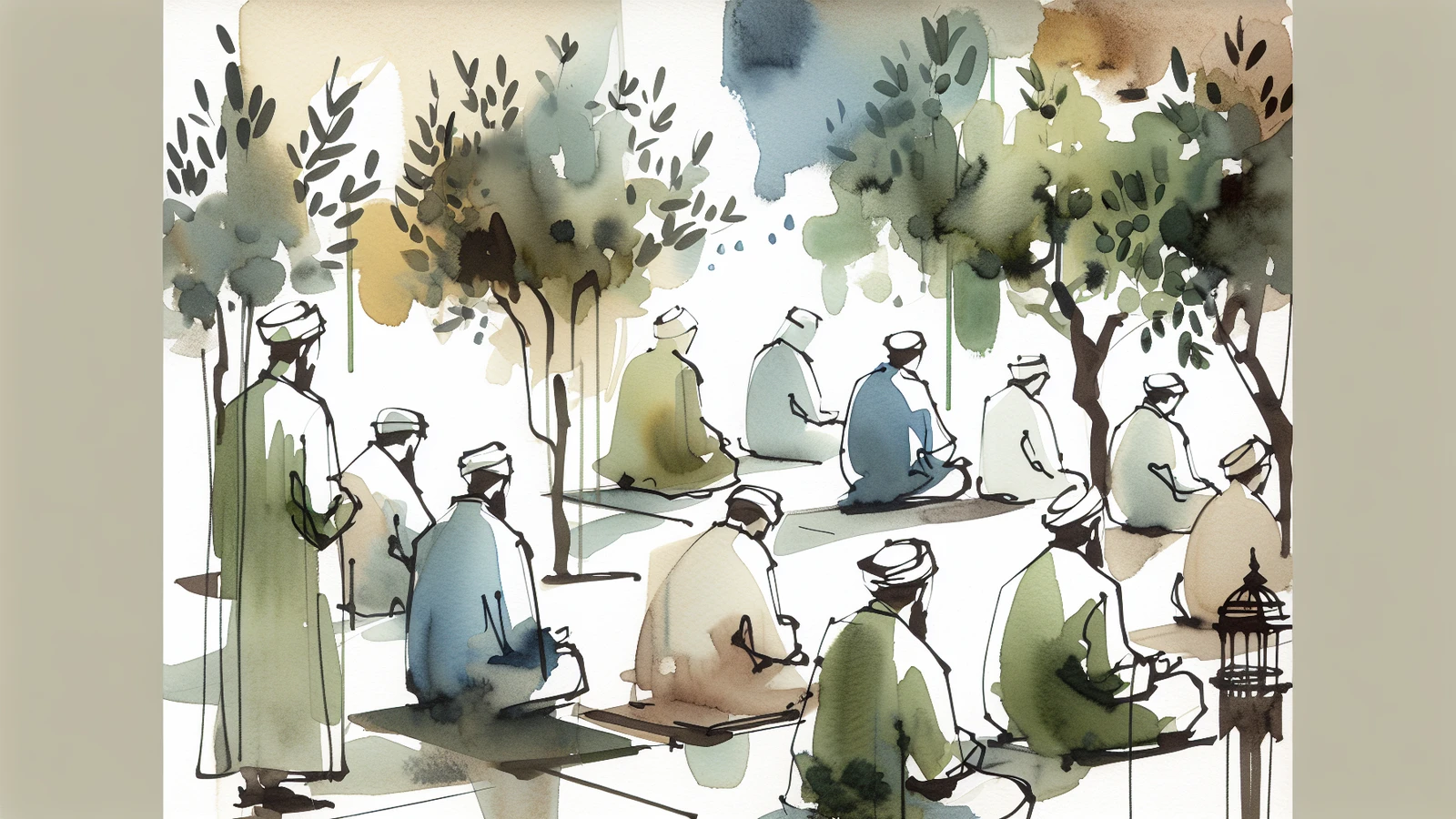
Discover how contemplative prayer transforms seekers through sacred silence and stillness across Christianity, Buddhism, Hinduism, Islam, and Judaism in this...

Contemplative Prayer: Silence and Stillness Across Traditions
Contemplative prayer has long been one of humanity's deepest responses to the desire for connection with the divine. Across cultures and centuries, people have discovered that in silence and stillness, the heart finds a unique space for communion with the sacred. This practice is not merely the absence of words, but a profound presence that allows divine reality to be encountered in ways beyond intellectual grasp. As societies grow noisier and more distracted, contemplative prayer remains a timeless path of transformation and inner peace, offering seekers a refuge from the constant chatter of modern life and an invitation into the depths of spiritual experience, connecting with the sacred art of lectio divina. This ancient practice complements other forms of prayer across traditions and shares deep connections with meditation techniques from world religions, including the diverse spiritual communication methods found in global faith communities. Those seeking deeper understanding of spiritual transformation will find resonance with how intercessory prayer bridges personal and communal spiritual practice across religious boundaries.
The Historical Evolution of Contemplative Prayer in Major World Religions
The roots of contemplative prayer reach deep into the history of many faiths, spanning millennia of human spiritual exploration. In early Christianity, the Desert Fathers and Mothers sought solitude in the wilderness, choosing silent prayer over outward speech. These remarkable ascetics, including figures like Anthony of Egypt and Evagrius Ponticus, fled the distractions of urban life to pursue unceasing prayer in the harsh beauty of the desert. Their lives embodied the biblical invitation,
“Be still, and know that I am God:” — Psalm 46:10

For them, stillness became the pathway to intimate union with God, a practice that would later influence monastic traditions throughout Christianity, embodying the same sacred silence that transcends religious boundaries.
Related Articles
- When Words Become Windows: Sacred Art Lectio Divina - Divine reading practices
- Sacred Silence: When Heaven Answers Finding Faith - Understanding divine quiet
- Meditation Mastery: Techniques from World Religions - Universal contemplative practices
Hindu philosophy, especially as articulated in the Bhagavad Gita, emphasizes meditation as a means of self-realization and liberation from the cycle of suffering. The Bhagavad Gita's timeless wisdom provides practical guidance for incorporating contemplative practice into daily life's challenges. Ancient yogic sages taught that stillness of mind reveals the fundamental unity of the individual self (atman) with ultimate reality (Brahman). The Upanishads speak of this realization as the recognition that “Thou art That” - the discovery that the deepest essence of the self is identical with the divine principle underlying all existence, a concept that echoes in the universal values found across spiritual traditions.
In Buddhism, the practice of dhyana or meditation became central to spiritual awakening and the path to enlightenment. The Buddha himself achieved his great awakening through sustained meditation under the Bodhi tree. Through focused awareness and mindful observation, practitioners cultivated insight into the three marks of existence: impermanence, suffering, and the absence of a permanent self. This contemplative approach became the foundation for various Buddhist schools, each developing distinctive meditative techniques while maintaining the core emphasis on silent, inward observation.

Islamic mystics in the Sufi tradition developed dhikr, the remembrance of God, which could be practiced in silence through inward repetition of divine names and attributes. Great Sufi masters like Rumi and Ibn Arabi wrote extensively about the transformative power of this remembrance, describing how it leads to fana, the dissolution of the ego in divine love. Jewish mystics also explored silent meditation on sacred words and divine names, particularly in the Kabbalistic tradition, seeing contemplative practice as a doorway to experiencing the hidden dimensions of divine presence.
Why Silence and Stillness Have Always Been Considered Sacred Gateways to Transformation
Contemplative prayer rests on the profound conviction that divine reality is best encountered in a posture of quiet receptivity rather than active seeking or verbal petition. Words, while powerful tools for communication and expression, can sometimes obscure the deeper dimensions of divine encounter. The teaching of Jesus,
“But thou, when thou prayest, enter into thy closet, and when thou hast shut thy door, pray to thy Father which is in secret;” — Matthew 6:6

emphasizes the value of interiority, sincerity, and undistracted attention in spiritual practice.
This wisdom transcends religious boundaries. Taoist philosophy echoes this approach, with Lao Tzu stating,
“He who knows (the Tao) does not (care to) speak (about it); he who is (ever ready to) speak about it does not know it.” — Tao Te Ching 56.1

The great Sufi mystic Rumi captured this same truth when he taught, “The quieter you become the more you are able to hear.” In this understanding, silence becomes a teacher, guiding seekers toward experiential knowledge rather than mere intellectual explanations or theological concepts. The great mystics across traditions have consistently testified that the most profound spiritual truths cannot be captured in words but must be directly experienced in the depths of contemplative stillness.
Through sustained practice of silence and stillness, practitioners discover qualities that seem to emerge naturally from this receptive state: profound humility, kenotic self-emptying, and boundless compassion that extends beyond personal boundaries and cultural divisions. As the Christian mystic Meister Eckhart observed, “Nothing in all creation is so like God as stillness.” These fruits of contemplation suggest that silence touches something fundamental in human nature, awakening capacities for love and wisdom that remain dormant in the noise and busyness of ordinary consciousness. This transformative journey through silence often parallels the dark night of the soul, where periods of apparent spiritual emptiness actually prepare the heart for deeper divine union.

Contemplative Traditions Thriving in Christianity, Buddhism, Hinduism, Islam, and Judaism
Christian mystics throughout the ages have viewed contemplative prayer as the apex of spiritual life. Teresa of Avila described the soul's journey through various “mansions” of prayer, culminating in mystical marriage with God that transcends all verbal expression. As she beautifully expressed it, contemplation is “a close sharing between friends” - an intimate dialogue that moves beyond words into pure presence and love. John of the Cross wrote of the “dark night of the soul,” a purifying process in which conventional prayer gives way to pure faith and love beyond concepts or images. Eastern Orthodox Christians developed the Jesus Prayer—“Lord Jesus Christ, Son of God, have mercy on me, a sinner”—as a silent rhythm of the heart that gradually descends from the mind into the depths of being, leading to theosis or union with the divine.
Buddhist traditions have developed an extraordinary diversity of contemplative practices. Theravada Buddhism emphasizes shamatha (calm abiding) for developing concentration and vipassana (insight) meditation for cultivating wisdom. Zen monasteries throughout East Asia have preserved the practice of zazen, seated meditation that emphasizes “just sitting” without goal or expectation, allowing the practitioner to realize their inherent Buddha nature. Tibetan Buddhism has developed sophisticated visualization practices and analytical meditation techniques, all aimed at awakening the practitioner to the empty, luminous nature of mind.
Hindu contemplative traditions encompass a vast array of practices suited to different temperaments and spiritual inclinations. Classical yoga incorporates silent mantra repetition (japa), breath control (pranayama), and absorption in the divine (samadhi) to lead practitioners through progressive stages of inner realization, as systematically described in texts like Patanjali's Yoga Sutras. The ethical foundation of these practices is found in the Yamas and Niyamas, which prepare the practitioner for deeper contemplative states. Advaita Vedanta emphasizes self-inquiry and abidance in the Self as the most direct path to liberation, drawing from the rich wellspring of sacred texts that have unveiled these timeless truths across centuries of contemplative practice.
Sufi dhikr, performed quietly within the heart, reflects the Qur'anic teaching,
“And think within thine own self on God, with lowliness and with fear and without loud spoken words, at even and at morn; and be not one of the heedless.” — Surah Al-A'raf 7:205

The great Sufi masters developed intricate practices involving breath, sacred phrases, and contemplation of divine attributes, all designed to polish the mirror of the heart until it reflects only divine light. Jewish Kabbalists engaged in profound meditations on divine names, seeking to experience the hidden layers of sacred reality through concentrated contemplation and hitbodedut (self-isolation for prayer).

The Transformative Fruits of Contemplative Prayer for Ethical and Spiritual Living
The remarkable consistency of outcomes across different contemplative traditions suggests that these practices tap into universal dimensions of human spiritual potential. The Dhammapada teaches,
“Even though a speech be a thousand (of words), but made up of senseless words, one word of sense is better, which if a man hears, he becomes quiet.” — Dhammapada 100

Through sustained practice of silence, the heart receives a peace that naturally overflows into compassionate action, authentic humility, and moral courage in the face of injustice.
Spiritual figures throughout history consistently testify that the inner stillness cultivated in contemplative prayer profoundly shapes character and ethical behavior. The clarity and love discovered in silence inspire genuine service to others, not from duty or social obligation, but from the natural overflow of a heart touched by divine presence. Contemporary research in psychology and neuroscience has begun to document these transformative effects, showing how contemplative practices literally rewire the brain for greater empathy, emotional regulation, and resilience.
Modern interfaith retreats often include extended periods of shared silence, recognizing that stillness can unite people across cultural and doctrinal boundaries in ways that theological dialogue sometimes cannot. In silence, the artificial barriers between traditions seem to dissolve, revealing the common ground of human yearning for the sacred and the universal capacity for transcendent experience.

Why Contemplative Prayer Remains Deeply Relevant for Modern Seekers
In our contemporary context of unprecedented overstimulation and digital distraction, contemplative prayer offers a radical reorientation toward what truly matters for human flourishing. People participating in centering prayer groups, silent meditation retreats, or Buddhist mindfulness training consistently testify to its life-changing power. The ancient wisdom that
“Even though a speech be a thousand (of words), but made up of senseless words, one word of sense is better, which if a man hears, he becomes quiet.” — Dhammapada 100
continues to resonate as a timeless truth, perhaps more urgently needed now than ever before.
Scientific research has begun to validate what contemplatives have known for centuries: meditative stillness produces measurable benefits including reduced anxiety, enhanced emotional balance, improved immune function, and greater cognitive flexibility. Yet contemplative prayer transcends these psychological and physiological benefits. It represents a profound act of surrender, an alignment of the soul with divine presence that transforms not just individual well-being but one's entire relationship to existence.
The practice has emerged as a powerful bridge for interfaith understanding in our pluralistic world. As communities discover their shared reverence for silence and contemplative depth, artificial barriers begin to diminish. This spirit of building bridges through interfaith tolerance finds natural expression in contemplative practice. Contemporary contemplative circles now regularly bring together Christians, Buddhists, Jews, Muslims, Hindus, and others in mutual respect and quiet fellowship, creating new possibilities for global spiritual community.
Contemplative prayer reminds humanity that divine truth is often found not in the loud or spectacular, but in the quiet, receptive heart that has learned to listen in the depths of silence. Its enduring legacy across cultures and centuries proves that beyond words, concepts, and theological formulations, there exists a deeper language of presence and love that has the power to transform individuals and communities alike, offering hope for healing in a fractured world.

Related Articles
- Meditation Practices Across Traditions - Explore diverse meditation practices across spiritual traditions
- Spiritual Transformation Through Challenge - Understanding how spiritual crisis becomes a path to growth
- Contemplative Unity - How contemplative practice unites diverse traditions through shared silence
About the Author
Elly Marimbocho is a seasoned writer with a background in Religious Studies and over a decade of experience producing long-form educational content on theology, interfaith spirituality, and world religions. Passionate about the contemplative heart of faith, Elly creates in-depth, reverent, and accessible guides that help readers engage meaningfully with religious wisdom across traditions.