The Democracy of Holiness: Why Catholics Believe Your Grandmother Might Be a Saint
Discover why All Saints Day celebrates ordinary holiness in everyday people. Learn how Catholic teaching recognizes sainthood in grandmothers, workers, and n...

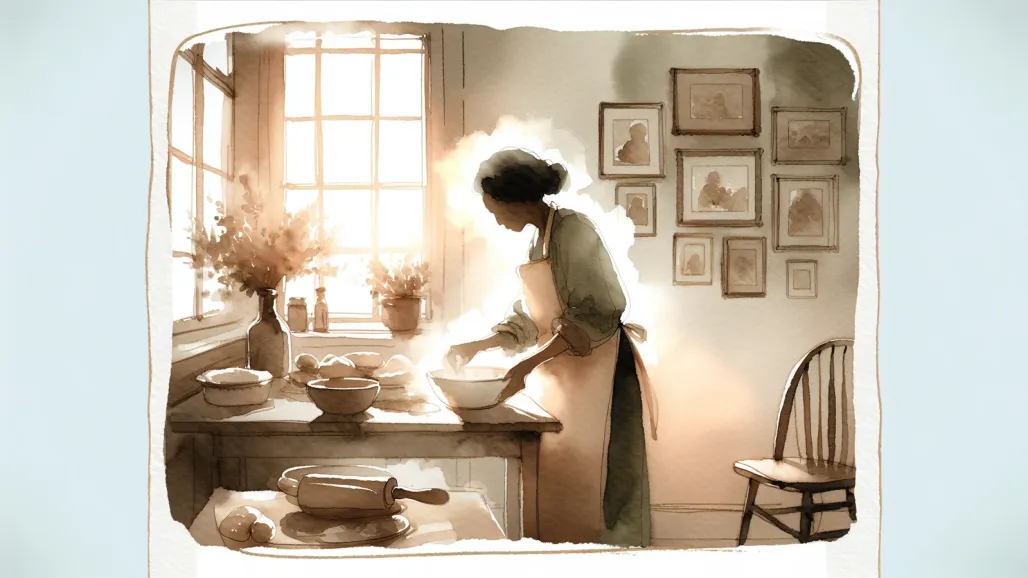
Picture your grandmother in her favorite apron, flour dusting her hands as she kneads dough for Sunday dinner.
She never performed miracles that made headlines. She never founded religious orders or converted entire nations. But she knew how to stretch a small pot of soup to feed unexpected guests. She knew how to hold a crying child until the tears stopped. She knew how to pray quietly over every meal she served, every hurt she bandaged, every worry that walked through her kitchen door.
What if the Catholic Church is right—what if your grandmother's ordinary love was actually extraordinary holiness in disguise?
On November 1st, All Saints Day, Catholics around the world recite names like St. Francis of Assisi and St. Teresa of Avila alongside a revolutionary belief that might change how you see every person who's ever fed your soul: sainthood isn't reserved for the famous few, but offered to every ordinary person who chooses love over selfishness, service over comfort, faithfulness over ease.
This All Saints Day 2025 invites us to consider that the most profound holiness might be happening not in distant monasteries, but in the kitchens, workplaces, and neighborhoods where people quietly choose goodness every single day.
The Recipe for Universal Holiness
The Catholic understanding of sainthood began shifting dramatically in November 1964 when Pope Paul VI promulgated Lumen Gentium (the Dogmatic Constitution on the Church). Like discovering that your grandmother's simple recipes were actually gourmet cuisine, the Church declared something revolutionary: all Christians are called to holiness, not just priests and nuns.
This universal call recognizes holiness in every corner of human life:
- Bishops pursue holiness through ministry and shepherding communities
- Lay people find holiness in daily work, family responsibilities, and community service
- Married couples and parents encounter holiness through faithful love and raising children
- Those experiencing poverty, illness, or persecution unite with Christ in their suffering
The moment your grandmother first held you as a baby, she was responding to that call to holiness—not through grand gestures, but through the sacred ordinary acts of nurturing, protecting, and loving unconditionally.
The Ancient Wisdom Behind Modern Recognition
This universal call isn't new theology—it's rediscovered wisdom. The early Church remembered faithful Christians who died witnessing for Christ, celebrating them in local communities before any formal canonization process existed. What began as neighbors honoring neighbors who lived and died with extraordinary faithfulness gradually developed into the structured recognition we see today.
But the core insight remained: holiness grows in ordinary soil, tended by ordinary people who make extraordinary choices about how to love.
How the Church Recognizes Official Saints
“By canonizing some of the faithful, i.e., by solemnly proclaiming that they practiced heroic virtue and lived in fidelity to God's grace, the Church recognizes the power of the Spirit of holiness within her and sustains the hope of believers by proposing the saints to them as models and intercessors.” — Catechism of Catholic Church 838
The Church's official canonization process works like a family's way of preserving and sharing their most treasured recipes. When a community recognizes extraordinary holiness in someone after their death, the local Bishop investigates their life for evidence of Gospel-centered virtue. The person becomes a “Servant of God.”
If investigation reveals consistent evidence of heroic virtue aligned with Catholic faith, they become “Venerable.” From there, proven miracles (like divine confirmation of a recipe's effectiveness) can lead to “Blessed” status, and eventually “Sainthood” with a second verified miracle.
But here's what matters most: canonization isn't about creating saints—it's about recognizing holiness that already exists. Like lighting a candle to illuminate something beautiful that was always there, the Church makes visible what God has already accomplished in ordinary human lives.
Miracles serve not as proof of personal greatness, but as God's confirmation that this life points others toward divine love. They're how the Catholic Church says to the world: “Look here—see how love transforms everything it touches.”

The Hidden Majority Who Light the World
“Blessed are the pure in heart: for they shall see God. Blessed are the peacemakers: for they shall be called the children of God. Blessed are they which are persecuted for righteousness' sake: for theirs is the kingdom of heaven.” — Matthew, “The Gospel of Matthew”, 5:8
All Saints Day honors every soul who has entered heaven—not just the canonized celebrities, but the countless anonymous holy lives whose love seasoned the world with grace. According to Catholic teaching on the Communion of Saints, sainthood includes all believers, living and dead, who are united in Christ.
Consider these unsung heroes whose holiness fed communities:
Mother Antonia Brenner: The Prison Angel
She left her comfortable life as a Beverly Hills mother to move into a Tijuana prison, providing food, shelter, and hope to prisoners society had written off. Her kitchen became a sanctuary where murderers, thieves, and drug addicts discovered they were still worthy of love and mercy.
Irena Sendler: The Social Worker Who Saved Hundreds
This Warsaw social worker smuggled Jewish children out of the ghetto during World War II, placing them with safe families at enormous personal risk. Her ordinary job became a vehicle for extraordinary courage.
Josephine Bakhita: From Slavery to Sainthood
Born in Darfur around 1869, she endured kidnapping and slavery before finding freedom in Italy. Her holiness was forged through suffering and expressed through resilience, forgiveness, and tender care for others. Canonized as a saint, her story opens a powerful window against human trafficking and for human dignity.
Each story reveals the same truth: holiness doesn't require special circumstances—it requires choosing love in whatever circumstances you find yourself.

Universal Recognition of the Sacred Ordinary
The impulse to honor hidden holiness transcends religious boundaries, suggesting something universal about how the human heart recognizes authentic goodness:
Islamic Tradition: Friends of God
Islam reveres the Awliya' Allah (“friends of God”)—those whose closeness to the Divine transforms communities through their consciousness of Allah's presence in all affairs.
“Are not the friends of God, those on whom no fear shall come, nor shall they be put to grief? They who believe and fear God — For them are good tidings in this life, and in the next! There is no change in the words of God! This, the great felicity!” — Muhammad, “Sura X. Jonah, Peace Be on Him!”, 10:62-64
Jewish Wisdom: Hidden Righteous Ones
Jewish tradition speaks of the tzaddikim nistarim—thirty-six “hidden righteous” people whose merit sustains the world. According to the Talmud, every generation contains at least this number who greet the Divine Presence daily, their righteousness protecting everyone else. This concept parallels the hidden spiritual warriors found across many traditions who serve as intercessors and advocates for humanity.
Buddhist Compassion: Bodhisattvas Among Us
Buddhism honors bodhisattvas—those capable of enlightenment who choose to remain in the world helping others. Their universal call to compassion echoes the Catholic understanding that true holiness serves rather than escapes, much like the three-fold path of awakening that transforms ordinary consciousness through wisdom, ethical conduct, and mental cultivation.
Hindu Dharma: Living in Sacred Duty
Hinduism reveres sants and mahatmas who live in harmony with dharma (sacred duty), radiating spiritual wisdom through ordinary faithful action. This principle resonates with the timeless wisdom found in sacred texts like the Bhagavad Gita and the divine feminine's protective love manifested in various goddess traditions.
“Krishna. Whoever serve Me — as I show Myself — Constantly true, in full devotion fixed, Those hold I very holy. But who serve — Worshipping Me The One, The Invisible, The Unrevealed, Unnamed, Unthinkable, Uttermost, All-pervading, Highest, Sure — Who thus adore Me, mastering their sense, Of one set mind to all, glad in all good, These blessed souls come unto Me.” — Vyāsa, “The Bhagavad-Gita”, 12.2
Sacred Recipes for Everyday Holiness
“O ALMIGHTY God, who hast knit together thine elect, in one communion and fellowship, in the mystical body of thy Son Christ our Lord; grant us grace so to follow thy blessed Saints in all virtuous and godly living, that we may come to those unspeakable joys, which thou hast prepared for those who unfeignedly love thee, through Jesus Christ our Lord. Amen.” — Unknown, Book of Common Prayer [King's Chapel], 1090-1093
The Church's Compendium of Social Doctrine reminds us that holiness isn't confined to monasteries—it flourishes in social life through working toward common good, recognizing human dignity, and standing with marginalized people.
Modern saints walk among us daily, their holiness expressed through:
The Sacred Art of Caregiving
- Parents who sacrifice sleep, dreams, and comfort to raise children with love and wisdom
- Workers who labor endlessly to support families, finding dignity in honest effort
- Elderly people who endure illness with grace, displaying trust in God through suffering
- Ordinary neighbors who choose encouragement over gossip, kindness over convenience
Environmental Stewardship as Sacred Duty
- Sikhs protecting ecosystems as expression of divine service
- Families choosing sustainable practices that honor creation's interconnectedness
- Communities working to preserve natural resources for future generations
Daily Acts of Revolutionary Love
- Healthcare workers who see divine image in every patient
- Teachers who believe in students others have given up on
- Immigrants who build new lives while maintaining cultural wisdom
- Anyone who chooses to listen genuinely, support generously, or advocate courageously

The Great Cloud of Kitchen Saints
“Wherefore seeing we also are compassed about with so great a cloud of witnesses, let us lay aside every weight, and the sin which doth so easily beset us, and let us run with patience the race that is set before us…” — Paul, “Hebrews”, 12:1
The “great cloud of witnesses” includes every grandmother who cooked with prayer, every father who worked extra shifts for his children's education, every neighbor who shoveled elderly friends' sidewalks, every person who chose forgiveness over bitterness.
All Saints Day celebrates the democracy of holiness—the radical Catholic belief that sainthood isn't about meeting religious criteria or achieving fame, but about choosing love over fear in the ordinary moments that make up most of life.
How to Join the Hidden Saints Today
Learn from lesser-known saints whose stories might inspire your own journey toward holiness Honor diverse faith traditions by respecting the dignity every person carries as divine image Take seriously your responsibilities toward family, community, and creation entrusted to your care Practice small acts of love that season the world with grace, one conversation at a time
The Grandmother's Apron as Sacred Vestment
Your grandmother may never have worn clerical robes or performed public miracles. But if she cooked with love, listened with patience, forgave repeatedly, and served without counting the cost—if she chose kindness over convenience and love over self-protection—then she participated in the same holiness that marks every saint.
The democracy of holiness means sainthood isn't reserved for the religiously elite. It's offered to every person willing to let love transform ordinary moments into sacred encounters, everyday choices into acts of worship, simple service into participation in divine life.
This All Saints Day, as you remember the famous saints whose names everyone knows, remember also the unknown saints whose love shaped your own heart—the grandmothers in flour-dusted aprons, the fathers who worked overtime, the mothers who listened endlessly, the neighbors who helped without being asked. Like the million flames lit during festivals of light or those who courageously stand by their convictions, ordinary people illuminate the world through simple acts of love.
The Catholic Church believes they might all be saints now, not because they were perfect, but because they chose love consistently enough to let God's grace transform their ordinary lives into extraordinary holiness.
And if that's true for them, it might be true for anyone willing to tie on an apron, open their heart, and serve the world one meal, one conversation, one act of love at a time.
The democracy of holiness is open for enrollment. The only qualification is willingness to let love cook through you until your ordinary life becomes someone else's taste of heaven. This universal invitation echoes across traditions, from ancient Persian merchants whose generosity opened doorways to the divine to Jewish festivals that celebrate living under God's protective care, reminding us that holiness dwells wherever love serves.
Related Articles
- The Art of Sacred Waiting: Advent's Four Candles - Christian seasons of preparation
- God in the Straw: Christmas Nativity Manger - Divine humility in ordinary places
- Intercessory Prayer: The Art of Spiritual Advocacy Across Faiths - Saints as prayer advocates
About the Holiness Hunter
Mercy Iburuoma searches for saints in the most unexpected places—kitchen sinks, factory floors, hospital corridors, and neighborhood sidewalks. Her interfaith explorations reveal how every tradition recognizes the sacred hiding in plain sight, waiting to be discovered by those willing to see halos in flour dust and hear hymns in lullabies. She believes the most powerful testimonies of faith come not from pulpits but from people who transform ordinary Tuesday afternoons into encounters with the divine through simple acts of love.
Related Articles
- The Revolution of the Heart: How Desert Revelations Rewrote Human Ethics - Quranic Ethics
- Rosh Hashanah: How the Shofar's Ancient Call Awakens 5,000 Years of Memory - Rosh Hashanah
- Intercessory Prayer: The Art of Spiritual Advocacy Across Faiths - blessing prayer
- World Religion 101: A Beginner's Guide to Global Faiths - spiritual journey
- Ten Commandments: Ancient Laws, Modern Relevance - ten commandments
![Book of Common Prayer [King's Chapel]](https://oceanlibrary.com/server/files/858520a530e6809db907d9501d416129/ea3902a880e3e4641146a7faa1ac8a0e.webp)