Lantern Festival: Illuminating the Path to Spiritual Enlightenment
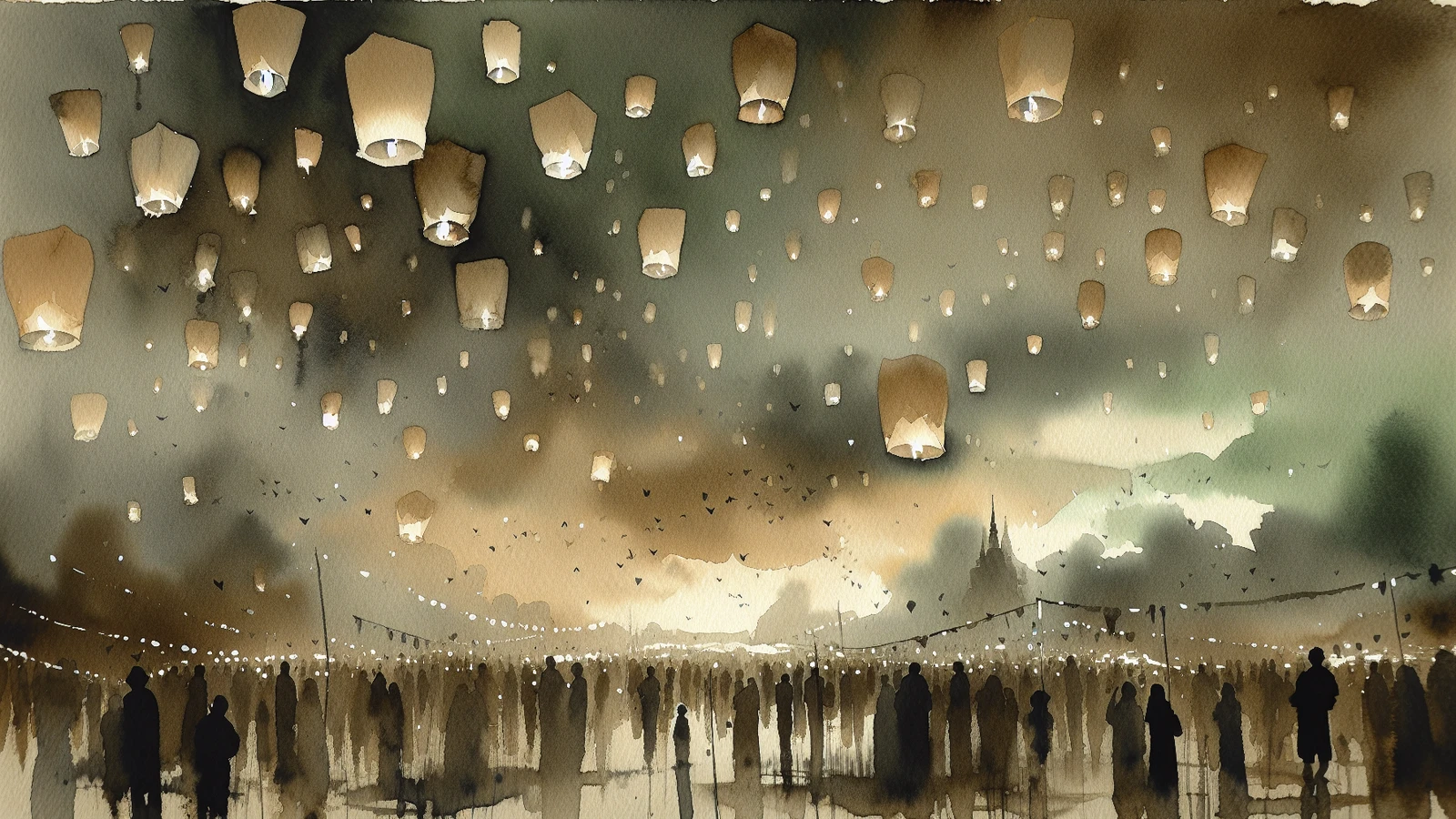
Experience Lantern Festival's profound spiritual wisdom through Taoist, Buddhist, and Confucian traditions. Illuminate your path to enlightenment and joy.
As winter wanes and the first full moon of the lunar year rises, communities across East Asia gather beneath glowing lanterns to mark a festival both joyful and profound. The Lantern Festival, known in Chinese as Yuan Xiao Jie, is far more than a visual spectacle. It signals the close of Chinese New Year and opens a spiritual space for reflection, reunion, and renewal. From temple courtyards to bustling city squares, the night shimmers with light not only to illuminate the world around us, but to awaken the light within.
In the dance of color and flame, the Lantern Festival reveals its deeper purpose: to harmonize the rhythms of heaven and earth, to bind communities in shared hope, and to rekindle spiritual clarity after the turning of the year. Much like Chinese New Year, this festival bridges the material and spiritual realms through ancient wisdom. Rooted in Confucian, Taoist, and Buddhist traditions, this festival offers a luminous lens through which to understand the interconnectedness of personal virtue, collective joy, and cosmic balance.
Lanterns Across Faiths: Where Light Meets Wisdom
The Lantern Festival is deeply rooted in Confucian, Taoist, and Buddhist traditions, serving as a symbolic beacon that lights the path toward spiritual awakening. In Taoist cosmology, the full moon represents fullness, completion, and the harmonization of yin and yang. The circular shape of the lanterns echoes this wholeness, serving as a metaphor for unity between heaven, earth, and humanity.
The Tao Te Ching speaks to this cosmic harmony:
“The Tao produced One; One produced Two; Two produced Three; Three produced All things.” — Tao Te Ching, Chapter 42 This progression from unity to multiplicity is reflected in the festival's structure, where individual lanterns join together to create a collective illumination that transforms entire communities.

Buddhism also contributes to the spiritual fabric of this festival. Temples often host ceremonies where monks light lanterns and chant sutras, creating an atmosphere of meditative reverence. This practice echoes the illuminating wisdom found in Vesak celebrations, where light symbolizes the Buddha's teachings dispelling ignorance. The Buddhist understanding of enlightenment as the dispelling of ignorance finds perfect expression in the lighting of lanterns. As the Dhammapada teaches,
“All that we are is the result of what we have thought: it is founded on our thoughts, it is made up of our thoughts. If a man speaks or acts with a pure thought, happiness follows him, like a shadow that never leaves him.” — Dhammapada, verse 2

Confucian elements appear in the festival's emphasis on family gathering and moral reflection. The lanterns become vehicles for transmitting wisdom from one generation to the next, with riddles and stories that carry ethical teachings. Confucius taught,
“To have associates in study coming to one from distant parts — does not this also mean pleasure in store?” — Analects, Book 1, Chapter 1 This sentiment captures the communal spirit of the festival, where strangers become friends in the shared wonder of light.

From Temples to Towns: How Lantern Festival Evolved
Historically, the Lantern Festival dates back over 2,000 years to the Han Dynasty, when Emperor Ming encouraged the lighting of lanterns in honor of the Buddha. This imperial endorsement transformed what may have begun as a local Buddhist observance into a national celebration that gradually incorporated elements from China's other major philosophical traditions.
Over time, Confucian ethics merged with Taoist cosmology and Buddhist devotion, evolving the festival into a multi-layered celebration that integrates moral reflection with celestial observation. The lanterns, once simply lit in temples, began to appear in homes, on boats, and along busy streets, democratizing the sacred and making spiritual practice accessible to all social classes.
The festival's evolution reflects the syncretic nature of Chinese spirituality, where different traditions complement rather than compete with each other. This harmonious blending demonstrates the Chinese philosophical principle that truth can be found through multiple paths, each offering unique insights into the nature of existence.
During the Tang Dynasty, the festival reached new heights of cultural sophistication. Poets composed verses inspired by the lantern displays, artists created intricate designs, and musicians performed special compositions. The festival became a showcase for cultural achievement while maintaining its spiritual core. As the poet Li Bai might have observed, the lanterns transformed ordinary nights into occasions of extraordinary beauty and meaning.

Lighting Within: The Lantern as a Mirror of the Soul
While lanterns light the external world, they also symbolize the light of inner clarity that spiritual practice seeks to cultivate. In Confucian thought, the cultivation of moral virtue is essential to societal harmony. The Great Learning states,
“What the Great Learning teaches, is — to illustrate illustrious virtue; to renovate the people; and to rest in the highest excellence.” — Great Learning, verse 1

In this view, the Lantern Festival becomes a time to rekindle the light within—to examine one's conduct, renew filial duties, and recommit to ethical living. Children learn these values through stories and rituals, while elders pass on teachings embedded in lantern riddles and symbolic designs. The riddles themselves serve as metaphors for the spiritual journey, where surface appearances hide deeper truths that can only be discovered through careful contemplation.
Buddhist concept of enlightenment as the dispelling of ignorance adds another layer to the festival's meaning. This understanding resonates across traditions, much like the universal balance found in Yin and Yang. Each lantern represents the potential for awakening that exists within every person. The Buddha taught,
“Even though a speech be a thousand (of words), but made up of senseless words, one word of sense is better, which if a man hears, he becomes quiet.” — Dhammapada, verse 100 The simple act of lighting a lantern becomes a profound statement of faith in the possibility of illumination.

Taoist philosophy contributes the understanding that light and darkness are complementary forces rather than opposing ones. The Tao Te Ching observes,
“All in the world know the beauty of the beautiful, and in doing this they have (the idea of) what ugliness is; they all know the skill of the skilful, and in doing this they have (the idea of) what the want of skill is.” — Tao Te Ching, Chapter 2 The lanterns remind us that both light and shadow are necessary for complete understanding.

Sacred Acts of Light: How Lanterns Carry Our Prayers
The actual practices of the Lantern Festival vary by region and tradition, but certain elements remain constant across different communities. This diversity within unity mirrors other celebrations like Eid al-Fitr, where local customs enhance universal themes. The lighting of lanterns is always performed with intentionality, whether in temples, homes, or public spaces. Many people write wishes or prayers on paper before placing them inside lanterns, transforming the objects into vessels for spiritual communication.
Temple ceremonies during the festival often include the chanting of sutras, the offering of incense, and the lighting of hundreds of lanterns simultaneously. These collective rituals create a powerful atmosphere of shared devotion and mutual support. The Buddha taught, “Thousands of candles can be lighted from a single candle, and the life of the candle will not be shortened. Happiness never decreases by being shared.” — Buddhist Teaching on Compassion.
Family gatherings center around the sharing of tangyuan, sweet rice balls that symbolize unity and completeness. The round shape echoes the full moon and the circular lanterns, reinforcing the theme of wholeness and harmony. The festival provides an opportunity for families to prioritize virtue and togetherness over material concerns.

When Streets Glow and Spirits Rise Together
Though deeply personal, the Lantern Festival is also profoundly communal. Public spaces are transformed into rivers of light, where families walk together, lovers exchange lanterns, and strangers share riddles. This unity mirrors the Taoist vision of harmony between all beings and reflects the fundamental interconnectedness of all existence.
The communal aspect of the festival demonstrates the Confucian principle that individual cultivation contributes to social harmony. When people come together to create beauty and share joy, they enact the possibility of a more harmonious world. Communal joy is not merely entertainment—it is a spiritual enactment of cosmic order. Just as the moon reflects the sun's light, so too do human gatherings reflect heavenly patterns. The shared wonder of lanterns rising into the night sky becomes a glimpse into the order of the cosmos and humanity's place within it.
The festival also serves as a reminder of the Buddhist teaching about the interdependence of all phenomena. Each lantern's light is enhanced by the presence of others, creating a collective illumination that no single lantern could achieve alone. This demonstrates the truth that individual spiritual development and community well-being are inseparable.
Circles of Meaning: What Lanterns Really Say
The symbols used in Lantern Festival decorations carry deep spiritual significance that extends beyond mere ornamentation. The circular shape of traditional lanterns represents the cyclical nature of existence, the eternal return of seasons, and the completeness of spiritual understanding. Dragons, phoenixes, and other mythical creatures depicted on lanterns symbolize transformation, renewal, and the transcendence of ordinary limitations.
The colors used in lantern making also carry meaning. Red symbolizes joy, good fortune, and the life force itself. Gold represents wisdom and spiritual achievement. White suggests purity and the clarity of enlightened understanding. These colors work together to create a visual language that communicates spiritual truths without words.
The practice of releasing lanterns into the sky transforms the festival into a form of prayer in motion. This embodied spirituality shares common ground with spiritual practices across traditions, where physical acts carry spiritual intentions. As the lanterns rise, they carry human hopes and aspirations toward heaven, creating a visible connection between earth and sky. This practice reflects the Taoist understanding that heaven and earth are in constant communication, with humanity serving as the bridge between the two realms.
Old Light in New Forms: The Lantern Festival Today

Today, the Lantern Festival continues to evolve, blending ancient rituals with contemporary expression. LED lanterns float alongside traditional silk ones, and temple chants accompany modern music. Yet at its heart remains a sacred invitation: to pause, reflect, and renew one's spiritual commitments.
In urban areas, the festival has adapted to contemporary life while maintaining its essential character. Office buildings display lanterns in their lobbies, shopping centers host lantern exhibitions, and technology companies create digital lantern displays. These modern expressions demonstrate the festival's adaptability and its continued relevance in an increasingly connected world.
The global spread of the Lantern Festival reflects the universal human need for occasions of beauty, reflection, and community. Cities around the world now host their own lantern festivals, each adapted to local cultures while honoring the tradition's spiritual core. The Tao Te Ching reminds us,
“Therefore the sage puts his own person last, and yet it is found in the foremost place; he treats his person as if it were foreign to him, and yet that person is preserved.” — Tao Te Ching, Chapter 7

Bringing the Light Home: How You Can Join the Journey
For those outside East Asia, there are many respectful ways to engage with the spiritual essence of the Lantern Festival. One might visit a local temple event or lantern exhibition, approaching the experience with humility and openness to learning. Creating a simple paper lantern at home can serve as a meditation on light and clarity, especially when combined with reflection on the year's spiritual growth.
Writing a personal intention or prayer and placing it within a lantern can transform the act into a sacred offering. Reading sacred texts from the Taoist, Confucian, and Buddhist traditions during this season can deepen one's understanding of the festival's spiritual dimensions. The key is to approach these practices with sincere intention rather than mere curiosity.
The festival also offers an opportunity for interfaith dialogue and understanding. The universal themes of light overcoming darkness, community supporting individual growth, and the search for meaning resonate across religious and cultural boundaries. As Lao Tzu taught,
“The journey of a thousand li commenced with a single step.” — Tao Te Ching, Chapter 64

One Lantern, Many Paths: The Spirit of Illumination
Whether one lights a lantern in a quiet temple or watches them drift across a city square, the act remains the same: illuminating the world outside as a reflection of the world within. The Lantern Festival offers a sacred invitation to participate in humanity's eternal longing for light, meaning, and connection.
In our fast-paced modern world, the festival provides a necessary pause—a moment to remember that spiritual development requires both solitude and community, both inner work and outer expression. The gentle glow of lanterns reminds us that even small acts of beauty and kindness can illuminate the darkness and inspire others to find their own light.
For in honoring this ancient celebration, we are not only observing a tradition—we are participating in the timeless human quest for enlightenment, one lantern at a time. The festival teaches us that enlightenment is not a distant goal but a present possibility, available to anyone willing to kindle the light within and share it with others.
As we watch the lanterns rise into the night sky, we are reminded that our own spiritual journey is both individual and collective, both earthly and cosmic. In this moment of illumination, we glimpse the interconnectedness of all existence and our place within the greater pattern of light and love that encompasses all things.
Behind the Words
Elly Marimbocho is a seasoned writer with a background in Religious Studies and over a decade of experience producing long-form educational content on theology, interfaith spirituality, and world religions. Passionate about the contemplative heart of faith, Elly creates in-depth, reverent, and accessible guides that help readers engage meaningfully with religious wisdom across traditions.
More Spiritual Insights
Explore the profound spiritual wisdom woven throughout Eastern traditions, where ancient festivals and philosophical teachings illuminate pathways to enlightenment and inner peace.
Related Articles
- Beyond Lanterns and Lotus: Vesak's Three-Fold Path to Awakening - spiritual awakening
- Ocean Library: An Adventure Through Sacred Texts with Immersive Audio Technology - Bible verses