The Prisoner Who Conquered Kingdoms: How a Man in Chains Freed Human Consciousness
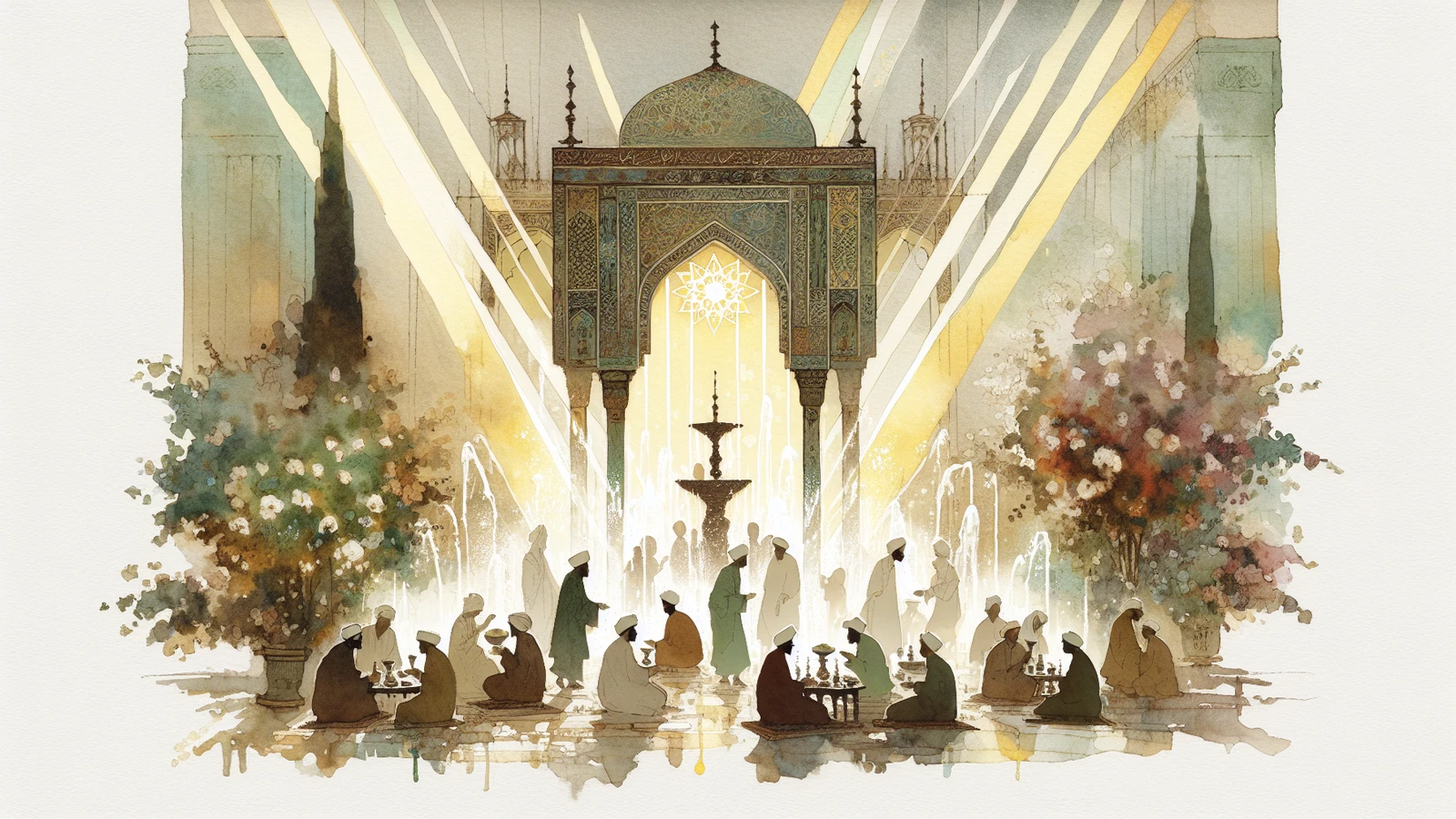
Bahá'u'lláh conquered hearts from prison, founding a global faith that transforms millions. His birth celebration reveals the power of spiritual revolution.
Picture your family's wealthiest relative—the one with every comfort, every privilege, every door open to success and ease.
Now imagine them voluntarily walking away from luxury to spend forty years in exile, prison, and banishment, all because they believed humanity deserved something better than the divided, unjust world they inherited. Imagine them writing their most profound wisdom while chained in dungeons, composing love letters to humanity from cells meant to break their spirit.
What kind of vision could be so compelling that someone would choose chains over comfort, exile over ease, suffering over safety—all to plant seeds of hope in a world determined to reject them?
On November 12, 1817, a man was born into Persian nobility who would revolutionize how humanity thinks about itself. Bahá'u'lláh (meaning “Glory of God”) emerged from forty years of imprisonment and exile not broken, but blazing with a message that still feeds souls hungry for unity: every human being belongs to the same family, every culture contributes essential wisdom to civilization, and every heart carries the same divine spark regardless of where they were born—principles that align with the universal values found across spiritual traditions.
This October 23, 2025, as Bahá'ís worldwide celebrate his birth during the Twin Holy Birthdays, his revolutionary vision for human unity continues nourishing communities across more than 200 countries. In a world still fragmenting along lines of race, religion, and nationality, his teachings offer ancient wisdom seasoned with urgent hope: the most sacred work is creating spaces where everyone belongs, echoing the sacred symbols that speak a universal language of spirituality across cultures.
“If we Bahá'ís cannot attain cordial unity among ourselves, then we fail to realize the main purpose for which the Báb, Bahá'u'lláh and the Beloved Master lived and suffered.” — Shoghi Effendi, “Living the Life”, 7.1
Why Bahá'u'lláh Chose Exile Over Comfort: Understanding His Revolutionary Choice
Born Mírzá Ḥusayn-ʻAlí Núrí in Tehran, Persia, Bahá'u'lláh grew up surrounded by wealth and political influence. His father served as a minister in the Shah's court, ensuring a life of comfort and status that came with birthright rather than effort.
But even as a young man, Bahá'u'lláh chose a different path—serving the poor, visiting the sick, advocating for those society had forgotten. Like someone born into privilege who prefers volunteering in underserved communities to attending exclusive social events, he chose justice over comfort long before any spiritual calling announced itself—a pattern also seen in other revolutionary spiritual leaders who challenged their era's social conventions.
When the Báb (the herald of Bahá'u'lláh's mission) began teaching in 1844, Bahá'u'lláh immediately recognized something that resonated with his deepest convictions: the message that all people deserve dignity, that spiritual truth transcends religious boundaries, and that humanity was ready for a new chapter in its spiritual development.
The Báb's execution in 1850 and the persecution of his followers didn't deter Bahá'u'lláh—it deepened his commitment to the vision of unity that both men shared. Like a family member who refuses to abandon a sibling facing injustice, Bahá'u'lláh stood with the persecuted Bábí community even when it meant losing everything he'd inherited.
What Happened in the Black Pit: Bahá'u'lláh's Divine Revelation
In 1852, Bahá'u'lláh was thrown into the Siyáh-Chál (the Black Pit)—a dungeon reserved for criminals and enemies of the state. Chained to other prisoners by a 100-pound iron collar, in conditions that would break most spirits, something extraordinary happened: he experienced the divine revelation that would transform his understanding of his life's purpose.
“Thus, He hath revealed: 'Those shafts were God's, not Thine!' And also He saith: 'In truth, they who plighted fealty unto thee, really plighted that fealty unto God.' And were any of them to voice the utterance: 'I am the Messenger of God,' He also speaketh the truth, the indubitable truth.” — Bahá'u'lláh, 'Abdu'l-Bahá, “Bahá'í Sacred Writings”, 1.33
In that pit of despair, Bahá'u'lláh later described, the “Maiden of Heaven” appeared to him—a mystical figure representing divine revelation—announcing that he was the promised one the Báb had foretold. Like the transformative spiritual experiences that have shaped healing prayers across traditions, this moment of divine encounter became a source of comfort and guidance that would sustain him through decades of exile. Like discovering a treasured family letter hidden in the darkest corner of an old chest, this revelation illuminated Bahá'u'lláh's true calling: to serve as God's messenger for an age when humanity was ready to see itself as one family.

After his release, Bahá'u'lláh faced forty years of exile that took him from Baghdad to Constantinople, Adrianople, and finally to the prison city of 'Akká (in present-day Israel). But these decades of banishment became the fertile ground where he developed his most profound teachings—letters to world leaders calling for justice, books outlining principles for global civilization, prayers that continue inspiring souls seeking connection with the Divine.
Bahá'u'lláh's Sacred Writings: Books That Continue Transforming Hearts
During his four decades of imprisonment and exile, Bahá'u'lláh wrote extensively, creating a body of spiritual literature that continues inspiring communities worldwide:
The Kitáb-i-Aqdas (The Most Holy Book): His central work outlining laws and principles for Bahá'í community life and global civilization.
The Hidden Words: Poetic, mystical teachings that distill spiritual wisdom into accessible insights for daily contemplation.
Tablets of Bahá'u'lláh: Guidance for society, justice, and economics—practical wisdom for creating communities that reflect spiritual principles.
Epistle to the Son of the Wolf: One of his final texts, summarizing his mission with gentle firmness: “Give ear, O distinguished divine, unto the voice of this Wronged One. He verily, counselleth thee for the sake of God, and exhorteth thee unto that which will cause thee to draw nigh unto Him under all conditions.”
Written primarily in Persian and Arabic, often in poetic and symbolic forms, these works continue speaking to spiritual seekers across cultures and languages. Like family wisdom that somehow remains relevant no matter who receives it, Bahá'u'lláh's teachings translate across cultural boundaries while maintaining their essential power to transform hearts.
Today, his shrine in 'Akká, Israel, surrounded by the beautiful Bahjí gardens, serves as a UNESCO World Heritage Site and the holiest place for Bahá'ís worldwide. A perpetual candle burns at his resting place, symbolizing that the Light of Unity he proclaimed continues illuminating hearts around the world.

Core Bahá'í Principles: Unity, Equality, and Global Peace
Bahá'u'lláh's teachings offer a comprehensive vision for human unity based on principles that transcend cultural boundaries:
The Oneness of Humanity
“The purpose of that which hath been sent down from the heaven of the Will of God in this most exalted, this most holy Revelation, is the unity of the world and love and fellowship among its peoples.” — Bahá'u'lláh, “Additional Tablets and Extracts from Tablets Revealed by Bahá'u'lláh”, 32
Every person deserves equal treatment regardless of race, nationality, or background—not as charity, but as recognition of fundamental human dignity.
Independent Investigation of Truth
“Thou art, in truth, that All-Powerful One Whom the pursuits of Thy servants can never frustrate nor the clamour of the people deter from Thy purpose” — Bahá'u'lláh, “Additional Tablets and Extracts from Tablets Revealed by Bahá'u'lláh”, 31
Every person has the right and responsibility to seek truth independently, beyond inherited tradition or social pressure—a principle that encourages the kind of thoughtful exploration found in studying world religions with an open mind.
Harmony of Science and Religion
“Craftsmanship is a book among the books of divine sciences, and a treasure among the treasures of His heavenly wisdom” — Bahá'u'lláh, “Additional Tablets and Extracts from Tablets Revealed by Bahá'u'lláh”, 118
True religion and authentic science must agree—both are pathways to understanding reality and should work together rather than in opposition.
Equality of Women and Men
Full gender equality is essential for civilization's progress—society can't reach its potential while restricting the contributions of half its members.
World Peace and Unity of Religions
All religions originate from the same divine source, expressing universal principles of love, justice, and service through different cultural forms. Lasting peace requires both spiritual awakening and practical systems for collective security.
These aren't abstract ideals but practical principles that guide how Bahá'ís live, work, raise families, and serve their communities.
How to Celebrate Twin Holy Birthdays 2025: October 23-24
Every November 12th, Bahá'í communities worldwide celebrate Bahá'u'lláh's birth alongside that of the Báb in a two-day observance called the Twin Holy Birthdays. These celebrations occur on the first and second days after the eighth new moon following Naw-Rúz (the Bahá'í New Year), connecting the birthdays to natural cycles rather than fixed calendar dates.
Devotional Gatherings
Communities offer prayers from the writings of both the Báb and Bahá'u'lláh, often reading the Tablet of Visitation aloud. Songs celebrate their teachings, stories recount their journeys of sacrifice and service, and scriptures that continue feeding spiritual hunger are shared.
Community Meals That Welcome All
Like the best family gatherings, Twin Holy Birthdays feature abundant meals shared with friends, neighbors, and anyone interested in joining—Bahá'í or not. Persian dishes often highlight the celebration, with foods like Sabzi polo (herb rice), baklava, and dishes featuring fresh herbs, lentils, chickpeas, and Persian tea.
But the specific menu matters less than the spirit of inclusion—creating spaces where people from different backgrounds can taste both delicious food and the sweetness of genuine community.
Artistic Offerings and Service
Poetry, music, calligraphy, and youth-led plays tell Bahá'u'lláh's story through creative expression. Many communities organize service projects—volunteering, sharing meals with those in need, and translating celebration into action that embodies his teachings about justice and compassion.
Bahá'í holy days welcome everyone with no required rituals, no pressure—just space to reflect, connect, and experience what unity feels like around tables where everyone belongs.

How Bahá'u'lláh's Message Connects All World Religions
Bahá'u'lláh's life parallels patterns found in spiritual traditions worldwide, yet his message transcends the divisions that often separate them:
Like Moses, he led his people out of persecution toward promised freedom. Like Jesus, he endured suffering and exile while teaching universal love. Like Muhammad, he revealed divine guidance and reformed spiritual practice. Like Buddha, he called for detachment from ego and materialism.
But unlike many religious histories that create “us versus them” mentalities, Bahá'u'lláh's message was radically inclusive. He wrote to Pope Pius IX, Napoleon III, and Queen Victoria, urging them to support justice, arms reduction, and spiritual awakening. His words carried both prophetic authority and compassionate invitation.
Today, the Bahá'í Faith has become one of the most geographically widespread religions after Christianity, present in more than 200 countries. Bahá'í scriptures have been translated into over 800 languages, making their teachings accessible to communities worldwide—a testament to the power of sacred texts that speak across cultural boundaries.
This global reach demonstrates that hunger for unity transcends cultural boundaries—people everywhere recognize the nourishment that comes from belonging to something larger than tribal identity.
Why the Birth of Bahá'u'lláh Matters Today
Bahá'u'lláh's birth reminds us that the most profound revolutions often begin not with violence but with vision—someone brave enough to imagine humanity as one family sharing one planet, requiring one approach to justice that includes everyone.
Born into wealth but choosing exile, raised in privilege but serving the powerless, imprisoned by enemies but freeing human consciousness—his life embodies the kind of love that transforms suffering into service, persecution into perseverance, and division into unity.
Whether you're Bahá'í, Buddhist, Muslim, Christian, Jewish, or still exploring, his birth anniversary calls us to honor our common humanity. In our time of religious conflict, racial tension, and economic inequality, his message resonates with fresh urgency: “Do not limit your vision to your needs. Enlarge it to hold all humans.”
This November 12th, as Bahá'í communities worldwide gather for the Twin Holy Birthdays, they're not just commemorating historical figures—they're practicing the unity those figures died to establish. Every prayer shared across cultural lines, every meal offered to strangers, every service project that bridges differences embodies Bahá'u'lláh's conviction that humanity's greatest feast happens when everyone gets invited to the table.
The prisoner who conquered kingdoms did so not through force but through faith—faith that love is stronger than hatred, that unity is more powerful than division, and that every human heart carries the same divine spark regardless of the cultural kitchen where it first learned to cook.
Bahá'u'lláh's chains have long since turned to dust, but the consciousness he freed continues expanding—one heart, one community, one act of unity at a time. His revolution wasn't political but spiritual: the recognition that we're all family members who've simply been separated by artificial walls.
The table he envisioned—where every culture contributes its gifts, every person finds belonging, and every difference becomes an ingredient that enriches the shared feast—is still being prepared. The question isn't whether his vision will succeed, but whether we're brave enough to claim our places at the table and help serve the meal.
Further Reading on Unity Across Traditions
While Bahá'í sacred texts are not yet available in the Ocean Library, explore similar themes of universal unity in:
- The Holy Quran - Islamic teachings on unity of humanity and divine guidance for all peoples
- The Bhagavad Gita - Hindu wisdom on universal consciousness and spiritual unity across all beings
- The Dhammapada - Buddhist teachings on interconnection and compassionate service to all
- Building Bridges: The Art of Interfaith Tolerance - Contemporary approaches to unity across religious traditions
- Sacred Symbols: The Universal Language of Spirituality - How sacred symbols speak a universal language transcending cultural boundaries
About the Author
Mercy Iburuoma is an interfaith writer at Ocean Library who believes the most sacred meals happen when people from different traditions contribute their unique gifts to tables where everyone belongs. She has spent years studying how different faith traditions approach unity and justice, from Persian mysticism to contemporary interfaith movements. When she's not writing about spiritual revolutionaries, you'll find her hosting gatherings where diverse communities discover their shared humanity over shared meals. She has a deep love for sacred texts and a gift for finding the extraordinary in ordinary family moments, especially when those moments reveal how divine love cooks through willing hearts to feed humanity's deepest hunger for belonging.