The Sacred Hunger: When Emptiness Becomes Fullness
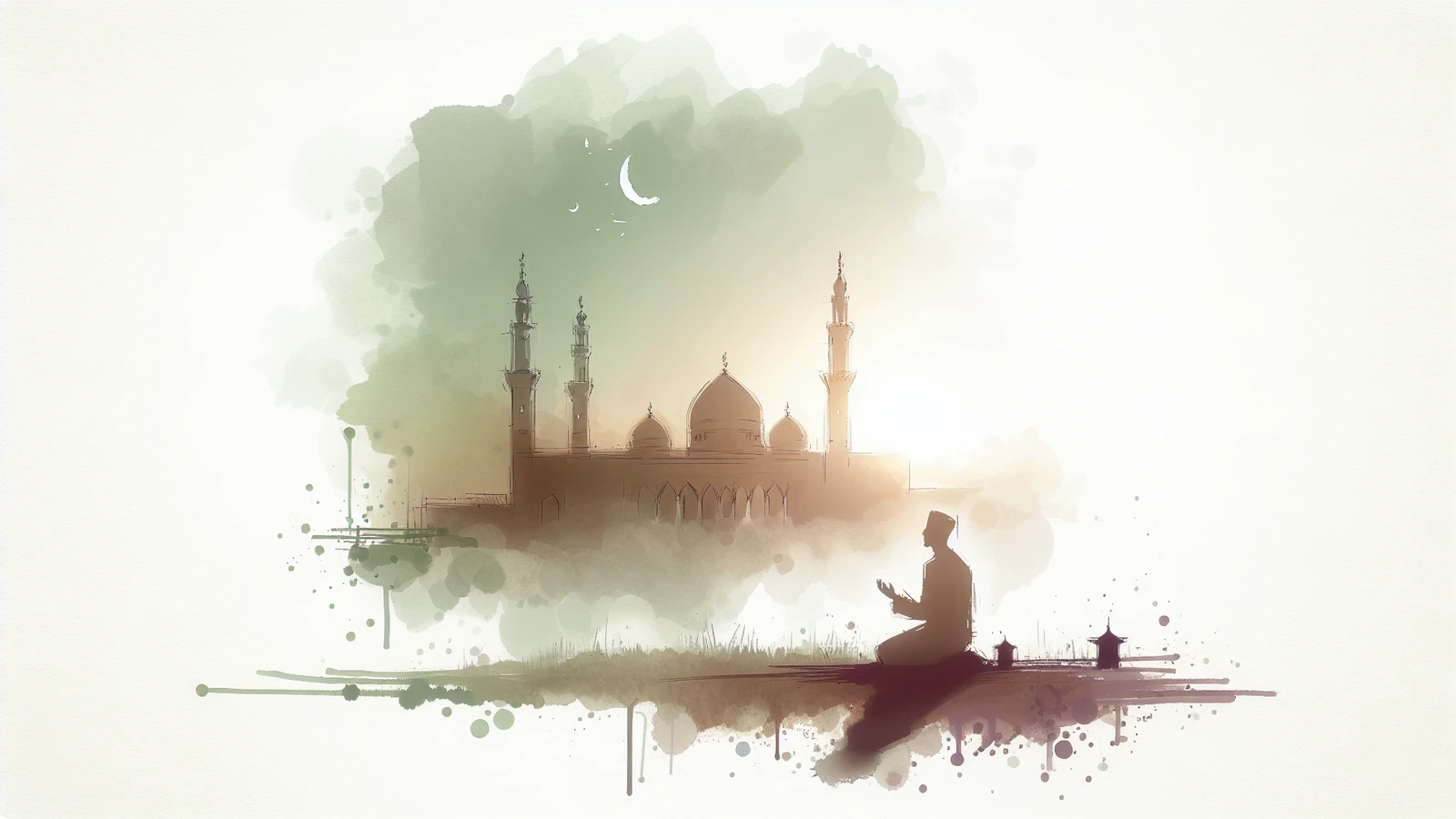
Discover how 1.8 billion Muslims transform voluntary fasting into spiritual strength during Ramadan, rewiring consciousness for empathy and divine connection.
For twenty-nine days, the moon has been growing fat in the desert sky. Tonight, in a small apartment in Jakarta, a mother holds her breath as she scans the horizon. Across the world in London, a businessman checks his phone for the fourth time in ten minutes. In Cairo, children press their faces against windows, eyes wide with anticipation. They are all waiting for the same thing—a sliver of light that will trigger the most extraordinary human experiment ever conducted.
Tomorrow, 1.8 billion people will simultaneously choose to do something that defies every biological imperative: they will voluntarily starve themselves for thirty days. Not from desperation or protest, not from vanity or medical necessity, but from a hunger deeper than the body's need for food—the soul's hunger for something sacred.
Welcome to Ramadan, where the greatest feast begins with the longest fast, and where the ancient art of divine starvation transforms ordinary humans into spiritual athletes of the impossible.
The Messenger's Revolutionary Download
Picture this: It's the year 622 CE, and a community of spiritual refugees has just fled persecution in Mecca for the oasis of Medina. They're traumatized, displaced, rebuilding their lives from scratch. Their leader—a former merchant turned revolutionary prophet—receives a message that will seem either inspired or insane: “O you who have believed, decreed upon you is fasting as it was decreed upon those before you that you may become righteous” (Quran 2:183).
In a world where survival was always uncertain, where the next meal was never guaranteed, Muhammad ibn Abdullah was instructing his followers to voluntarily give up food. For a month. Every year. Forever.
But this wasn't about deprivation—it was about liberation. The Arabic word sawm doesn't just mean “to fast”; it means “to refrain,” “to abstain,” “to hold back.” It's the spiritual technology of conscious restraint, the divine discipline of chosen limitation. As historian Karen Armstrong notes in her work Islam: A Short History (2000), the rituals of Islam, including fasting, were not abstract; they were concrete practices that built a powerful sense of community and shared purpose among the early Muslims.
This practice of sawm forms one of the five foundational pillars that create the architectural framework of Islamic spiritual life, each pillar supporting the others in building a complete system of divine connection.
Muhammad wasn't asking people to suffer—he was teaching them to transcend. The man who would spend the last ten nights of Ramadan in such intense worship that his wife Aisha said he would “tighten his waist-belt” (an idiom for spiritual intensity) was showing humanity something profound: that our greatest strength comes not from what we consume, but from what we can choose not to consume.
This was cognitive revolution disguised as religious ritual.

The Alchemy of Voluntary Deprivation
But here's where it gets mystical. The moment the first light of dawn breaks across the horizon and the faithful take their last sip of water, something extraordinary begins happening in both body and soul. What appears to be subtraction—no food, no drink, no physical pleasures from sunrise to sunset—becomes the most sophisticated addition program ever devised.
How Fasting Breaks the Tyranny of Endless Wanting
Within hours of beginning the fast, something remarkable occurs in the human psyche. The endless chatter of desire—I want this, I need that, I deserve the other thing—begins to quiet. The body, denied its usual stream of sensory satisfaction, stops being the master and becomes the student.
As the Prophet Muhammad made crystal clear: “If a person does not refrain from falsehood in words and deeds, Allah has no need for him to abstain from his food and drink.” The real fast, he was saying, isn't from food—it's from the toxic habits that poison our souls. The empty stomach becomes a training ground for the disciplined heart.
The great 11th-century scholar Imam al-Ghazali understood this perfectly when he wrote in his masterwork Ihya 'Ulum al-Din (The Revival of the Religious Sciences) that true fasting involves “the restraining of all the senses from sin.” The hunger is just the gateway drug to holiness.
In our age of instant everything—instant food, instant entertainment, instant gratification—Ramadan becomes a month-long boot camp for the will. Every growling stomach is a small victory over impulse. Every moment of thirst is a declaration of independence from the dictatorship of desire. The fasting person discovers something revolutionary: they are stronger than their cravings.

When Hunger Awakens Compassion for Others
But the real genius of Ramadan reveals itself around day three or four, when something extraordinary happens in the human heart. The fasting person, weakened by hunger, suddenly becomes stronger in compassion. The empty stomach becomes a receiver, tuning in to the frequency of human suffering with startling clarity.
This isn't accidental—it's engineered. When the privileged banker in Dubai feels his stomach clench with hunger, he experiences for the first time what the refugee in Somalia feels every day. When the comfortable suburban mother in Michigan reaches for water and remembers she can't drink, she touches the daily reality of millions who have no water to refuse.
This empathy isn't meant to remain a feeling—it's designed to become action. Ramadan is the month when charitable giving skyrockets, when community kitchens multiply, when the wealthy remember their obligations to the poor. The Prophet made this connection explicit in his teachings, linking the physical fast to the spiritual imperative of feeding others.
From community centers organizing massive Iftar dinners for the homeless to families sending meals to neighbors, Ramadan creates a global network of compassion that operates with precision timing. As one Muslim student put it: “My hunger is temporary, but it makes me think about those for whom it is not. I cannot just be grateful for my food; I have to do something for others.”
Opening the Heart to Divine Connection Through Sacred Emptiness
But perhaps the most profound alchemy occurs in the relationship between the human and the divine. The Quran calls Ramadan the month in which it was first revealed: “The month of Ramadan is that in which was revealed the Quran, a guidance for the people and clear proofs of guidance and criterion” (Quran 2:185).
This isn't mere historical trivia—it's spiritual technology. The fasting body, freed from the constant distraction of digestion, becomes a more sensitive instrument for receiving divine transmission. The mind, no longer hijacked by the blood sugar roller coaster, operates at a different frequency. The heart, emptied of the noise of constant consumption, becomes quiet enough to hear the whispers of eternity.
Every evening, as the sun sets and the fast is broken, millions gather for the Tarawih prayers, where long portions of the Quran are recited with haunting beauty. Over the course of the month, the entire Quran is read, transforming communities into temporary monasteries where the ancient words echo through modern spaces. These extended prayer sessions represent one of humanity's most diverse spiritual communication methods, where vocal recitation becomes meditative practice.
Many Muslims make it their goal to complete the entire Quran during Ramadan—a practice called khatam. But this isn't a reading marathon; it's a sustained meditation, a month-long conversation with the divine text that forms the backbone of Islamic consciousness.

The Science of Sacred Starvation
What modern neuroscience is now discovering, Islamic tradition has known for 1,400 years: voluntary fasting doesn't just change the body—it rewires the brain. When glucose levels drop, the brain begins producing ketones, which research suggests can improve cognitive function, increase mental clarity, and even promote neuroplasticity.
But the traditional Islamic understanding goes deeper than biochemistry. The fasting state—sawm—is described as a condition where the physical self steps back, allowing the spiritual self to step forward. It's not about weakening the body to punish it, but about creating space for aspects of human consciousness that are usually crowded out by the endless cycle of consumption and satisfaction.
The rhythm of Ramadan—fasting all day, gathering to break the fast at sunset, spending extra time in prayer and reflection through the night—creates what researchers might call an “altered state of consciousness” that persists for an entire month. The fasting person operates in a different reality, where time moves differently, priorities shift, and the ordinary boundaries between self and other begin to dissolve. This sustained practice shares remarkable similarities with meditation techniques from world religions, where disciplined practice rewires consciousness toward greater awareness and compassion.
The Democracy of Deprivation
Perhaps most remarkably, Ramadan creates a spiritual democracy that transcends every human division. From the oil executive in Kuwait to the street sweeper in Karachi, from the PhD student in London to the farmer in rural Nigeria—all experience the same hunger, the same thirst, the same challenge, the same triumph.
This shared vulnerability becomes shared strength. The CEO and the janitor break their fasts at exactly the same moment, their stomachs growling in perfect synchronization. The royal and the refugee stand in the same prayer lines, their foreheads touching the same ground in identical surrender.
It's the only human experience that creates instant equality without requiring anyone to give up their dignity. Rich and poor, educated and illiterate, young and old—all become beginners in the school of sacred hunger.
Ancient Wisdom, Modern Application
How does this 1,400-year-old spiritual technology translate into contemporary life? The applications are as diverse as they are powerful.
Transforming Your Ramadan Practice Today
Transform the fast from mere deprivation into conscious development. Choose one destructive habit—gossip, social media scrolling, complaining—and fast from it alongside the food fast. Watch how the discipline of physical fasting strengthens your ability to abstain from spiritual toxins.
Make the Quran your companion, not your homework. Instead of rushing through verses, spend time with small sections, letting their meanings penetrate your daily decisions. Ask yourself: “How does this verse want to change me today?”
Turn your hunger into a prayer for the hungry. Every pang of hunger becomes an intercession for someone whose hunger isn't voluntary. Let your temporary discomfort generate permanent compassion.
Understanding Ramadan as a Global Spiritual Phenomenon
Approach Ramadan as an anthropological marvel rather than a religious oddity. If you have Muslim colleagues or neighbors, ask about their experience with genuine interest: “How does fasting change your daily rhythm?” or “What have you discovered about yourself through this practice?”
Understand that the Muslim world operates on different energy during Ramadan. Days may seem slower, but evenings come alive with community gatherings, shared meals, and extended prayers. It's not withdrawal from the world—it's engagement at a different frequency.
Consider attending an open Iftar dinner at a local mosque or Islamic center. These aren't conversion attempts; they're invitations into a universal human experience of hunger, gratitude, and community.
“The believer is not one who eats his fill while his neighbor goes hungry.” — Prophet Muhammad, Sahih al-Bukhari
The Fullness of Emptiness
As the month of Ramadan draws to its close each year, something remarkable happens to those who've completed the journey. They are, objectively, weaker—they've lost weight, their blood sugar is low, their energy reserves depleted. But subjectively, they report feeling stronger, clearer, more connected to themselves and to something greater than themselves.
This is the paradox at the heart of Ramadan: emptiness that creates fullness, weakness that generates strength, hunger that satisfies the deepest appetite. It's the alchemy of chosen limitation, the magic of voluntary constraint.
In a world that insists more is always better, faster is always preferred, and instant gratification is a human right, Ramadan offers a radical countercultural message: the path to spiritual abundance runs through physical moderation. The way to feast on the infinite is to fast from the finite. This conscious relationship with food and consumption reflects the deeper wisdom found in religious dietary laws and sacred sustenance practices across faith traditions.
For thirty days each year, 1.8 billion people prove that humans are capable of extraordinary things when they align their bodies with their values, their appetites with their aspirations, their hungers with their hopes. They demonstrate that the most profound nourishment comes not from what enters the mouth, but from what emerges from the heart.
The sacred hunger continues, transforming ordinary humans into temporary angels, one empty stomach at a time. And when the month concludes, this profound spiritual discipline culminates in the joyous celebration of Eid al-Fitr, where the lessons learned through voluntary hunger transform into expressions of gratitude, community, and compassionate action.
Further Explorations on Sacred Practice
-
The Fortress of Words: Quranic Protection Verses - Discover how Islamic verses create spiritual armor and divine protection through sacred recitation
-
When Sleep Becomes Prophecy: Islamic Dream Interpretation - Explore how Islamic tradition understands divine communication through dreams and prophetic visions
-
Sacred Sustenance: Religious Dietary Laws - Journey through how different faith traditions sanctify eating and approach food as spiritual practice
-
The Revolution of the Heart: Desert Revelations and Quranic Ethics - Understand how Quranic teachings transformed human ethics and created a moral revolution
-
Meditation Mastery: Techniques from World Religions - Discover contemplative practices across traditions that transform consciousness through sacred discipline
-
The Five Pillars of Islam - Discover how the Five Pillars create a spiritual architecture for divine surrender
-
Mystical Prayer and Communication - Explore the mystical dimensions of prayer and spiritual communication across traditions
-
Sacred Food Traditions - Examine how different faith traditions transform eating into sacred practice
About the Sacred Guide
Rev'd Dr. Ayotunde Oyadiran approaches the mysteries of sacred practice with both scholarly precision and mystical insight. His interfaith explorations of spiritual disciplines—from Islamic fasting to Christian contemplation—reveal the universal principles that transform human consciousness across traditions. With expertise spanning church history and the science of spiritual transformation, Dr. Oyadiran illuminates how ancient practices speak to contemporary seekers hungry for authentic transcendence. His writings guide readers through the profound territories where voluntary limitation becomes spiritual liberation.
References
Armstrong, Karen. Islam: A Short History. Modern Library, 2000.
Al-Ghazali, Imam. Ihya 'Ulum al-Din (The Revival of the Religious Sciences).
The Holy Qur'an: A New Translation. Translated by M.A.S. Abdel Haleem. Oxford University Press, 2004.
Sahih al-Bukhari. Translated by M. Muhsin Khan.
Sahih Muslim. Translated by Abdul Hamid Siddiqui.
Khan, Yasir Qadhi. Ramadan and the Quran: A Manual of Spiritual Transformation. Kube Publishing, 2017.
OceanLibrary.com. “The Quranic Foundation of Islamic Social Justice.” Islamic Studies Collection.
OceanLibrary.com. “The Role of Sawm in Personal and Communal Development.” Islamic Spirituality Section.