Sacred Symbols: The Universal Language of Spirituality
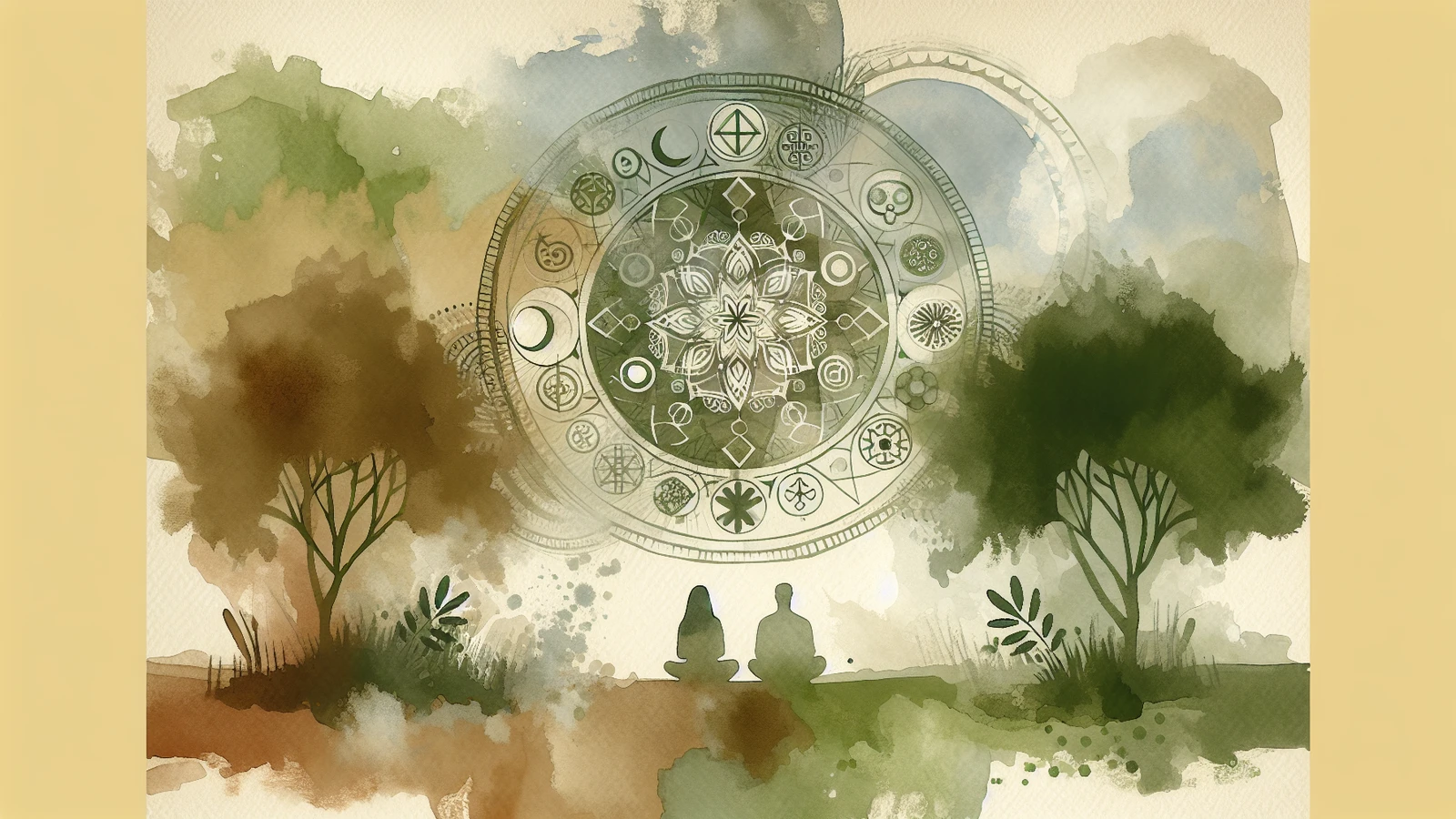
Discover how sacred symbols transcend religious boundaries to form humanity's first spiritual language, from ancient cave paintings to modern interfaith unit...
The stone was smooth, worn by countless hands. Vanessa Uwase placed it gently atop the memorial, her fingers lingering on its cool surface. Around her, thousands of similar stones created a landscape of memory at the Kigali Genocide Memorial—each one a prayer without words, a symbol beyond doctrine, a sacred act born from unspeakable loss.
Vanessa's own story embodies the power of symbols to transcend horror. During the genocide, she was a toddler found clinging to her dying mother's body on a blood-soaked roadside. Grace Uwamahoro, a 10-year-old Hutu schoolgirl, risked everything to save this Tutsi baby. In a world gone mad with tribal hatred, Grace “refused to let the baby go.” Her act became a living symbol of humanity's capacity to choose love over fear.
Now, decades later, Vanessa works at the memorial where 250,000 victims rest. She moves among the preserved skulls and faded clothing, guiding visitors through chambers of remembrance. But it's the simple stones that speak loudest—placed by survivors, each one carrying a universe of grief and love.
“The memorial is a representation of our history, and it is a final resting place for many souls that were lost. Working here helps me to reconnect with them somehow and to heal.”
In Jewish tradition, stones on graves symbolize eternal memory—unlike flowers, they never decay. Here in Rwanda, survivors independently arrived at the same practice. No priest or rabbi instructed them. The human heart, confronted with loss beyond language, instinctively reached for symbols.
This is how sacred symbols are truly born: not in committee rooms or theological debates, but in the raw moments when words fail and only gesture remains. A stone becomes prayer. A place becomes holy. Memory becomes healing. And in this transformation, we glimpse the universal language that connects all human seeking—the wordless vocabulary of the sacred that predates every scripture and will outlast every creed. Like the prayer beads found across all traditions, symbols unite what doctrine often divides.
Why Symbols Emerged Before Sacred Texts
Forty thousand years ago, in the depths of caves lit only by flickering torches, our ancestors pressed their hands against cold stone and blew ochre pigment around them, leaving ghostly handprints that still speak across millennia. They carved spirals into rock faces, painted animals with reverent detail, and arranged stones in perfect circles under starlit skies.
These weren't idle decorations. Long before the first scripture was written, before temples rose or alphabets emerged, humans were already fluent in symbol. Carl Jung recognized this profound truth: symbols aren't merely signs pointing to something else. They are “dynamic expressions” that bridge the conscious and unconscious, the seen and unseen, the human and divine.
Consider the spiral—found in every ancient culture from Celtic Ireland to Aboriginal Australia, from Native American petroglyphs to African rock art. No missionary carried this symbol across continents. No empire imposed it through conquest. Yet everywhere humans have lived, we've traced this same primordial shape, recognizing in its coiling form something essential about existence: growth, journey, return, infinity.
This is humanity's first spiritual language, and arguably our most honest. Words can lie, deceive, manipulate. But a symbol speaks directly to what Jung called the collective unconscious—that deep reservoir of shared human experience that transcends culture, time, and creed. When a grieving mother in Rwanda places a stone, she joins an ancient conversation that began when the first human looked at the stars and sensed something greater. This universal yearning connects all seekers, whether they're exploring world religions for the first time or deepening their understanding of humanity's shared spiritual heritage through practices like intercessory prayer.
The question isn't why symbols became sacred. The question is how we ever imagined they could be anything else.
What Transforms a Symbol Into Sacred Art?
“Symbols have been used to convey knowledge to the initiated and to conceal it from the uninitiated since the dawn of civilization.” – Jack Benjamin
David Chidester explained that symbols are deemed sacred in two ways: (2). First, its sacredness lies in the fact that a religious community views the symbol in this way. It is accorded respect and reverence by those within the religious tradition. Second, it is rendered sacred through claims of ownership, which produce an intense type of energy.
The seminal sociologist Emile Durkheim postulated that humans over time forget their religious duties, and they need to be reminded of them. Therefore, symbols serve as a constant reminder of the religious beliefs and obligations of a community’s people.
Religions use symbols to:
- Represent divine realities too vast for words.
- Connect believers to tradition and community.
- Mark holy space and time
- Guide meditative or ritual practice.
- Transmit values across generations.
Sacred symbols are polyvalent; they often hold multiple meanings at once. This variability depends on the situation, how it is interpreted, and how much the observer knows about it. As explained by Mircea Eliade in Images and Symbols, symbols “do not simply point to the sacred, they manifest it.” In other words, the symbol becomes sacred when it is experienced.
Five Sacred Symbols That Unite Humanity

1. The Cross: From Execution to Redemption
The transformation of the cross stands as history's most radical symbolic revolution. For centuries, Romans perfected crucifixion as psychological warfare—victims displayed naked along highways, dying slowly while passersby averted their eyes. The cross meant shame, torture, the absolute negation of human dignity. To wear a cross in the 1st century would be like wearing an electric chair today.
Then came a Friday afternoon in Jerusalem that changed everything.
When Jesus died on the cross, early Christians faced an impossible task: proclaiming a crucified Messiah to a world that knew crucifixion meant divine curse. Paul acknowledged this scandal directly:
“For the preaching of the cross is to them that perish foolishness; but unto us which are saved it is the power of God. ” 1 Corinthians 1:18

The genius of Christianity wasn't in hiding the cross but in transforming it. What Rome intended as ultimate degradation became ultimate glory. The instrument of torture became throne. The symbol of shame became badge of honor. The Book of Symbols captures this alchemy: the cross represents “redemptive self-sacrifice and atonement between human and divine.”
Constantine's vision of a blazing cross with the words “In this sign, conquer” completed the reversal. Within decades, crosses crowned churches, hung from necks, marked graves. Today, two billion Christians trace this shape in blessing, wear it in devotion, die grasping it in hope. The execution device became medicine—the most recognized symbol on earth, adorning hospitals and healing centers, promising that suffering can be transformed into salvation.
2. The Star of David: Resilience Through History
The Magen David, or Star of David, was not originally exclusive to Judaism. Six-pointed stars were used in magical and alchemical texts across cultures. The Star of David only became a distinctly Jewish symbol in the mid-14th century, when the Holy Roman Emperor Charles IV granted the Jews of Prague the right to carry a flag, and they chose the six-pointed star.
It gained full sacred status after the Holocaust, when it was reclaimed from being a badge of persecution to a symbol of resilience and faith.
Today, it’s seen on synagogues, Jewish tombstones, and the flag of Israel.
Although the hexagram is not widely recognized in other religions, history has shown that these religions has used the symbol once; for example, in Buddhism it is used as a meditation aid to achieve a sense of peace and harmony, and in Hinduism it is a symbol of the goddess Lakshmi, the goddess of fortune and material abundance. Also, in Islam, the hexagram adorned many mosques around the world. Until 1945, the symbol was also found on the Moroccan flag.
Gershom Scholem's essay “The Curious History of the Six-Pointed Star” notes that the Star of David began with little meaning to Judaism, only gaining depth through communal experience and historical suffering. The Star of David's journey from simple geometric shape to powerful Jewish symbol illustrates how meaning develops through community experience and historical context.
3. The Crescent Moon: Marking Sacred Time
Unlike the cross or the star, the crescent moon and star are not found in the Quran or early Islamic traditions. Their sacredness came later, through culture and history. The Ottoman Empire adopted the crescent as a state emblem when the Turks conquered Constantinople (Istanbul) in 1453 C.E., and over time it became widely recognized as a symbol of Islam, especially in calendars and mosques. The crescent is chosen because Islam follows a lunar calendar, and the moon's phases govern sacred times such as Ramadan, Hajj, and Eid. The crescent became a timekeeper of devotion.
In the Qur’an (Surah 2:189), it is written:
“They will ask thee of the new moons. SAY: They are periods fixed for man’s service and for the Pilgrimage. There is no piety in entering your houses at the back, but piety consists in the fear of God. Enter your houses then by their doors; and fear God that it may be well with you.” Qur’an Sura II. The Cow, 2:189

Although it's not a doctrinal symbol, it reflects the essence of submission to Allah that defines the Islamic way of life.
4. The Lotus: Rising Pure from Muddy Waters
No flower has captured the imagination of Eastern spirituality like the lotus. In Hinduism, the lotus is the seat of the gods Vishnu, Lakshmi, and Brahma, symbolizing purity, fertility, beauty, and spiritual enlightenment. In Buddhism, the lotus flower is associated with Buddha himself. Just as the lotus flower emerges from the mud but remains untouched by it, the Buddha rises pure and untouched by the negative aspects of the world and achieves enlightenment.
The white lotus flower symbolizes the purity of body, mind, and spirit, while the pink lotus represents Buddha himself.
In the Bhagavad Gita, Chapter 5:10, Krishna says:
“One who performs his duty without attachment, surrendering the results unto the Supreme Lord, is unaffected by sinful action, as the lotus leaf is untouched by water.”
5. The Tree of Life: Connecting Heaven and Earth
The Tree of Life is one of the oldest shared sacred symbols across Abrahamic faiths. In Genesis, it grows in the Garden of Eden as a source of eternal life. In Kabbalah (Jewish mysticism), it represents the ten Sefirah, or divine emanations.
In Islam, the Quran mentions a “tree of immortality” (Surah 20:120) and the blessed olive tree (Surah 24:35) as symbols of divine light and guidance.
The tree becomes sacred because it conveys unity and an eternal connection between creation and the Creator.
The Silent Language That Transcends Words

Silence, Solitude, and Stillness
The most profound part of the spiritual language is silence.
- In Christian monasticism, silence is kept in order to hear God.
- In Sufism, silence deepens the heart's awareness.
- In Buddhism, silence is the gateway to mindfulness and awakening.
- In Quaker meetings, silence is the form of worship itself.
In a noisy world, spiritual traditions remind us that silence is not emptiness but presence. These contemplative practices, much like meditation techniques from world religions and healing prayers, demonstrate how different traditions arrive at similar truths about the power of inner stillness.
When Human Experience Becomes Sacred Expression
The universal language of spirituality didn’t begin with institutions; it began with encounter. The encounter began with fire, a star, and a small voice. But as faith communities formed, these experiences became rooted in rituals, texts, and teachings. Each religion refined the dialect but kept the same spiritual connection:
- Wonder
- Reverence
- Transformation
- Service
Sacred symbols and expressions became sacred through centuries of use, shaped by scriptures, rituals, and the belief of millions.
Why Sacred Symbols Matter in Modern Times
In a global world with religious conflict, the universal language of spirituality offers something special:
The universal language of spirituality provides a means of connecting without erasing differences. This language allows us to listen deeply, pray authentically, and walk together, even when our religions diverge.
Interfaith movements today thrive not on debate, but on shared silence, service, and awe. This principle undergirds interfaith healing practices and universal moral values that transcend religious boundaries, echoing the timeless principles found in Ten Commandments: Ancient Laws, Modern Relevance.
Bahá’u’lláh in the second Bishárát (Glad-Tidings) wrote:
“O people! Consort with the followers of all religions in a spirit of friendliness and fellowship.” Bahá’u’lláh, Fountain of Wisdom, 47

This universal language is not a new religion; it's a reminder of what our oldest ones already taught.
Embracing Our Shared Spiritual Heritage

Return with me to Kigali, to Vanessa placing her stone among thousands. In that simple act lies the entire mystery of sacred symbols. The stone carries no doctrine, requires no creed, demands no conversion. Yet it speaks what no theology can fully capture: love persists beyond death, memory is holy, the human heart refuses to let go.
This is why symbols endure when empires fall and languages die. They don't argue or convince—they simply are. A cross speaks to a Christian of love conquering death. A star whispers to a Jew of resilience through horror. A crescent reminds a Muslim that time itself is sacred. A lotus shows a Buddhist that purity can rise from mud. A tree tells all who see it that heaven and earth are connected.
These symbols don't erase our differences—they honor them while pointing to something deeper. When we see someone wearing an unfamiliar sacred symbol, we're witnessing not just their faith but their fluency in humanity's oldest language. They too have felt the pull of the infinite. They too have reached for images to hold the unholdable. Just as prayer beads unite spiritual seekers across faiths, these symbols serve as tangible connections to the intangible divine.
In our fractured age, this recognition offers hope. We may not share scriptures, but we share symbols. We may worship differently, but we all know the human need to make the invisible visible, to touch the untouchable, to speak the unspeakable.
The universal language of spirituality doesn't begin with conversion or end with conformity. It begins with recognition: in that symbol worn by a stranger, carved in ancient stone, or held in trembling hands, lives the same longing that moves in me. The shapes differ, but the reaching is the same. The forms vary, but the yearning is universal.
This is our inheritance—not division but a shared vocabulary of the sacred, spoken in different dialects but pointing always toward the same luminous truth: we are more than flesh, more than time, more than the sum of our sorrows. And in every symbol we create, bless, and pass on, we proclaim this defiant hope to a world that desperately needs to remember its own holiness.
References
- Alexandra Corneliu Arion (2023). SYMBOL, Real and the sacred in the phenomenology of Mircea Eliade (1907-1986).
- Bahá’í International Community (2025). Bisharat (good tidings) Bahá’u’lláh
- Carl G. Jung (1964), et al. Man and Symbols
- Gershom Scholem, “The Curious History of the Six-Pointed Star: How the Magen David Became the Jewish Symbol,” Commentary Magazine, vol. 8, no. 3 (September 1949): 243-251
- The Qur’an—Yusuf Ali Translation
- Ronnberg, A., & Martin, K. (2010). The Book of Symbols. Taschen.
- supremeknowledge.org (2025). The text in question is from Bhagavad Gita, specifically chapter 5. https://www.supremeknowledge.org/chapter-5/bhagavad-gita-chapter-5-verse-10/#:~:text=Gita%205.10:%20A%20person%20who,a%20result%20of%20sinful%20actions
- https://www.france24.com/en/live-news/20230920-a-chance-to-heal-rwanda-genocide-survivor-on-unesco-memorial?utm
- https://blog.nli.org.il/en/lbh-haggadah-parodies/
- https://jamesbishopblog.com/2020/05/15/what-is-a-sacred-symbol/
- https://www.floraly.com.au/blogs/news/lotus-flower-meanings?srsltid=AfmBOopwW20BZchmt7uHse8-VSN65XsUAR5uK1V05cbZLktHwGa4_PXC
- https://www.ceeol.com/search/journal-detail?id=2331
Further Reflections
Discover how sacred symbols, prayer practices, and spiritual advocacy connect hearts across faiths, revealing the universal language that transcends religious boundaries while honoring distinct traditions.
From the Author's Desk
Mercy Iburuoma is a writer who recently began exploring the world of interfaith writing. She has deep love for sacred texts and a gift for translating complex spiritual ideas into engaging prose. She draws extensively from her readings and is passionate about sharing spiritual knowledge through her ongoing exploration of Eastern spiritual practices and sacred symbol traditions across cultures.
Related Articles
- World Religion 101: A Beginner's Guide to Global Faiths - spiritual journey
- Dark Night of the Soul: Spiritual Crisis as a Path to Growth - spiritual awakening
- Guru Granth Sahib: The Living Guru of Sikhism Explained - Guru Granth Sahib
- Ocean Library: An Adventure Through Sacred Texts with Immersive Audio Technology - Bible verses