Chinese New Year: A Celebration of Renewal in Eastern Faiths
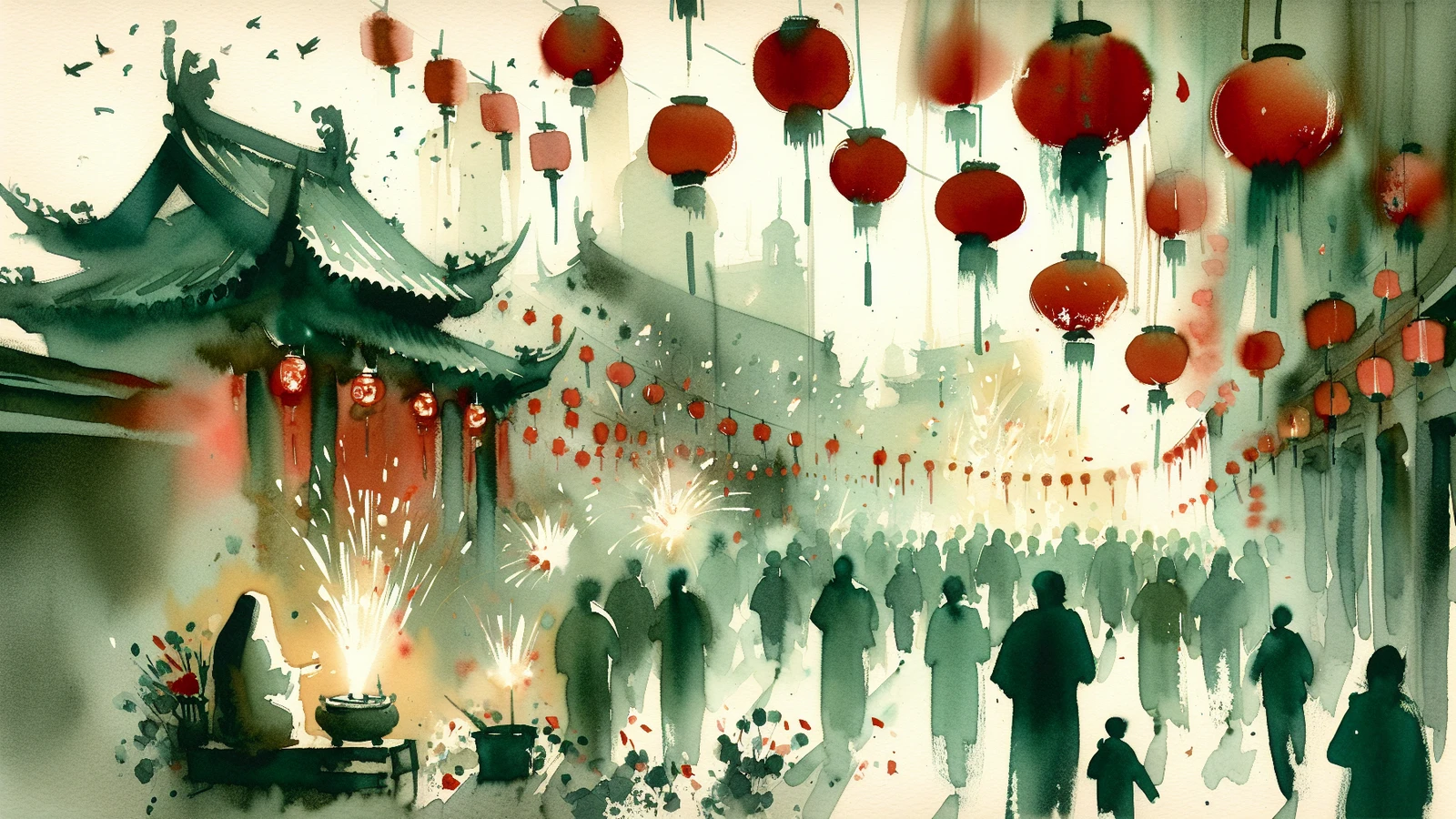
Experience Chinese New Year's profound spiritual transformation through Taoism, Confucianism, and Buddhism—discover cosmic renewal and ancestral wisdom.
Each winter, as the moon prepares for its rebirth, nearly two billion people across the globe mark the occasion with thunderous fireworks, ancestral rituals, and streets adorned in crimson. Chinese New Year, also known as Spring Festival or Lunar New Year, transcends mere cultural celebration to become a profound spiritual observance of renewal, deeply rooted in Eastern religious worldviews that honor cosmic cycles, harmony, and the sacred rhythm of existence.
At its essence, Chinese New Year represents the release of the old and the welcoming of the new—not merely in material terms, but spiritually. Drawing from Taoist cosmology, Confucian reverence for ancestors, and Buddhist concepts of rebirth and karma, this festival weaves together the spiritual foundations of multiple traditions, much like the Buddhist celebration of Vesak honors renewal through enlightenment.
“(It is the way of the Tao) to act without (thinking of) acting; to conduct affairs without (feeling the) trouble of them; to taste without discerning any flavour; to consider what is small as great, and a few as many; and to recompense injury with kindness. (The master of it) anticipates things that are difficult while they are easy, and does things that would become great while they are small. All difficult things in the world are sure to arise from a previous state in which they were easy, and all great things from one in which they were small. Therefore the sage, while he never does what is great, is able on that account to accomplish the greatest things.” — Tao Te Ching, Chapter 63

This wisdom echoes through every aspect of the New Year celebration, where small, mindful acts accumulate into profound spiritual transformation.
When Heaven's Clock Strikes Midnight: Why Ancient Calendars Hold Divine Secrets
Chinese New Year follows a lunisolar calendar, aligning itself with the new moon that heralds spring's arrival. This timing reflects more than astronomical precision—it signifies a sacred rhythm where the forces of yin and yang, of stillness and emergence, enter new balance. In Taoist cosmology, this transition represents the reassertion of yang, the principle of brightness and expansion, into the world.
“THE CREATIVE works sublime success, Furthering through perseverance.” — I Ching, Hexagram 1

This fundamental principle underlies the New Year celebration, where the transition from winter's receptive stillness to spring's creative energy mirrors the eternal dance of complementary forces that govern all existence.
This rhythm of stillness transforming into activity, of winter yielding to spring, reveals a profound spiritual truth: renewal is not manufactured but flows from the cosmos itself.
“With all the sharpness of the Way of Heaven, it injures not; with all the doing in the way of the sage he does not strive.” — Tao Te Ching, Chapter 81

Chinese New Year embodies this principle through its emphasis on blessing, sharing, and collective renewal.
The Monster That Taught Humanity How to Heal: What Nian Really Represents

Central to the festival lies the legend of Nian, a monstrous being who once emerged each New Year to devour crops and livestock. Villagers discovered that Nian feared red decorations, loud noises, and fire. These defensive rituals—now manifested in fireworks, lanterns, and banners—symbolize not mere tradition but profound spiritual cleansing.
Nian represents more than a mythical beast; it embodies the past year's burdens—misdeeds, misfortune, and spiritual stagnation. In confronting Nian through sound and flame, communities collectively cast off that which must not pass into the new year.
“Even though a speech be a thousand (of words), but made up of senseless words, one word of sense is better, which if a man hears, he becomes quiet.” — Dhammapada, verse 100

The explosive sounds of celebration become mantras of transformation, driving away negative energies and creating space for fresh beginnings.
This purification extends beyond the symbolic. Homes are thoroughly cleaned before the new year begins, debts are settled, and quarrels resolved. The physical act of cleaning becomes a spiritual practice, each swept corner representing inner purification.
“All that we are is the result of what we have thought: it is founded on our thoughts, it is made up of our thoughts.” — Dhammapada, verse 1

The New Year cleaning rituals create space for new, positive thoughts to take root.
How the Dead Shape the Living: The Sacred Art of Ancestral Communion
Chinese New Year finds its most sacred expression in the home, where families gather for reunion feasts after first honoring ancestors with offerings of incense, food, and prayer. In Confucian practice, this constitutes no mere formality but a living relationship and ethical obligation.
“While you do not know life, how can you know about death?” — The Analects, Book 11, Chapter 12

Yet the New Year celebration bridges this gap, creating communion between the living and the departed. To honor one's forebears is to return to the source of one's being. The new year cannot properly begin without first remembering those who came before.
“Give prominent place to loyalty and sincerity.” — Confucius, The Analects, 25

During New Year preparations, families engage in acts of virtue—cleaning, cooking, and caring for others—that honor both ancestors and future generations. This practice reflects the Confucian understanding that individual existence is inseparable from familial and ancestral connections.
The ancestral altar becomes a bridge between worlds, a place where the living and dead commune.
“The filial piety of now-a-days means the support of one's parents. But dogs and horses likewise are able to do something in the way of support. Without reverence, what is there to distinguish the one support given from the other?” — A profound contemplation on true filial piety
The Invisible Rivers of Energy: How Ancient Homes Become Prayer Machines
Taoist influence permeates the season through practices aimed at aligning the home with cosmic balance. From careful placement of objects to the wearing of symbolic colors, each action reflects belief that spiritual energy—qi—must flow unhindered through living spaces.
“(The Tao) produces (all things) and nourishes them; it produces them and does not claim them as its own; it does all, and yet does not boast of it; it presides over all, and yet does not control them. This is what is called ‘The mysterious Quality’ (of the Tao).” — Tao Te Ching, Chapter 53

During New Year preparations, homes are arranged to honor this cycle, removing obstacles to positive energy flow while creating space for new life to emerge. Red decorations serve multiple purposes: they repel negative forces, attract good fortune, and symbolize the life force itself.
In this worldview, disorder in the home or body is not accidental but signals misalignment with the Way.
“All in the world know the beauty of the beautiful, and in doing this they have (the idea of) what ugliness is; they all know the skill of the skilful, and in doing this they have (the idea of) what the want of skill is.” — Lao-tzu, Tao Te Ching, 13

The New Year cleaning and decorating rituals transcend aesthetic concerns to become spiritual practices of harmony and balance.
Why Buddhists Burn Their Prayers: The Radical Act of Letting Go
In Buddhist communities, the festival becomes a time of repentance, almsgiving, and reflection on karma. Temples fill with incense and chanting as individuals offer gratitude and seek clarity for the year ahead.
“All conditioned things are impermanent. Strive on with diligence.” — Dīghanikāya, Long Discourses 2.156

The New Year provides an opportunity for intensive spiritual work.
The Buddhist understanding of karma adds depth to New Year observances. Actions performed during this sacred time are believed to carry enhanced karmic weight, making it an ideal period for generating merit through generosity, compassion, and mindfulness.
“All that we are is the result of what we have thought: it is founded on our thoughts, it is made up of our thoughts.” — Dhammapada, verse 1
Buddhist temples often host special ceremonies during the New Year period, including the burning of written prayers and wishes, symbolizing the release of attachments. These practices align with the Buddhist teaching that “attachment is the root of suffering.” The act of letting go becomes both literal and metaphorical, clearing space for wisdom to emerge.
The Secret Language of Dinner: How Sacred Foods Channel Divine Blessings
Traditional foods carry profound spiritual meanings that extend far beyond sustenance, similar to how sacred texts nourish the soul. Fish represents abundance and surplus, its Chinese name sounding like “year after year” in pronunciation. Dumplings, shaped like ancient Chinese money, symbolize wealth and prosperity. Rice cakes represent elevation and advancement in life, their sticky texture suggesting family unity and cohesion.
The character fu, meaning blessing or good fortune, is often displayed upside down to indicate that blessings have arrived—a visual pun that transforms homes into prayer spaces. These gestures are acts of intention, ways of programming the environment for positive outcomes.
“Therefore the sage puts his own person last, and yet it is found in the foremost place; he treats his person as if it were foreign to him, and yet that person is preserved. Is it not because he has no personal and private ends, that therefore such ends are realised?” — Tao Te Ching, Chapter 7

Even the red envelopes given to children, known as hongbao, transcend mere gift-giving to become transmissions of prosperity and longevity. They transfer moral and spiritual goodwill from elders to youth, reinforcing the intergenerational flow of virtue and ensuring that wisdom passes from old to young.
When Light Becomes Prayer: The Mystery of Ascending Wishes

The culmination of the New Year season is the Lantern Festival, where illuminated orbs float through streets and skies. This luminous expression of hope and clarity parallels the lighting of candles in other sacred contexts, representing the triumph of light over darkness, wisdom over ignorance.
In releasing these lights, communities acknowledge that clarity must be born anew, that wisdom is not static but must ascend fresh each year. Each lantern becomes a vessel of prayer, a symbol of the soul's brightness.
“As the bee collects nectar and departs without injuring the flower, or its colour or scent, so let a sage dwell in his village.” — Dhammapada, verse 95

Traditional lanterns often bear wishes written by their creators, transforming them into vehicles for aspiration and intention. As they rise, they carry human hopes toward heaven, creating a bridge between earthly concerns and celestial possibilities.
Transform Your New Year: Ancient Wisdom for Modern Renewal
As the Spring Festival opens the door to a new cycle, it calls every participant to deep inward turning. Through sacred story, ethical reflection, cosmic symbolism, and embodied ritual, it becomes a profound spiritual architecture of renewal—not merely a beginning, but a rebirth.
In honoring ancestors, sweeping altars, offering food, and lighting the sky, Chinese New Year embodies a vision where time is not merely counted but consecrated. Renewal becomes not an idea but a practice—one born of reverence, rooted in heaven's rhythm, and carried in the actions of everyday life.
As modern life often fragments our attention and disconnects us from nature's rhythms, celebrations like Chinese New Year become crucial sanctuaries for remembering our place within a greater pattern.
“Heaven and earth do not act from (the impulse of) any wish to be benevolent; they deal with all things as the dogs of grass are dealt with.” — Tao Te Ching, Chapter 5

This wisdom reminds us that spiritual growth, like the seasons, follows its own sacred timing.
Let us approach each new year not merely with resolutions, but with reverence. To participate in this sacred renewal is to join an eternal procession—a dance of ancestors, elements, virtues, and heavens—where we are each both guests and torchbearers. In cleansing our homes, honoring our roots, and awakening our hearts, we do not merely celebrate time passing. We mark time made sacred.
Through Chinese New Year, we are reminded not simply of tradition, but of our timeless capacity to be reborn in wisdom, rooted in the eternal turning of heaven and earth.
“Therefore the sage manages affairs without doing anything, and conveys his instructions without the use of speech.” — Tao Te Ching, Chapter 64

Each New Year celebration is both that first step and the continuation of humanity's eternal spiritual journey.
Related Articles
Continue exploring Chinese traditions and their profound spiritual symbolism, deepening your understanding of how Taoist philosophy influences Chinese spiritual practices and how different traditions approach spiritual healing and renewal.
About the Author: A Decade of Sacred Storytelling
Elly Marimbocho is a seasoned writer with a background in Religious Studies and over a decade of experience producing long-form educational content on theology, interfaith spirituality, and world religions. Passionate about the contemplative heart of faith, Elly creates in-depth, reverent, and accessible guides that help readers engage meaningfully with religious wisdom across traditions.
Further Reading
Explore the rich tapestry of Eastern spiritual traditions through their colorful festivals and profound symbolic wisdom that continues to illuminate paths to renewal and awakening.