The Divine Shield: When Humanity Calls for Protection
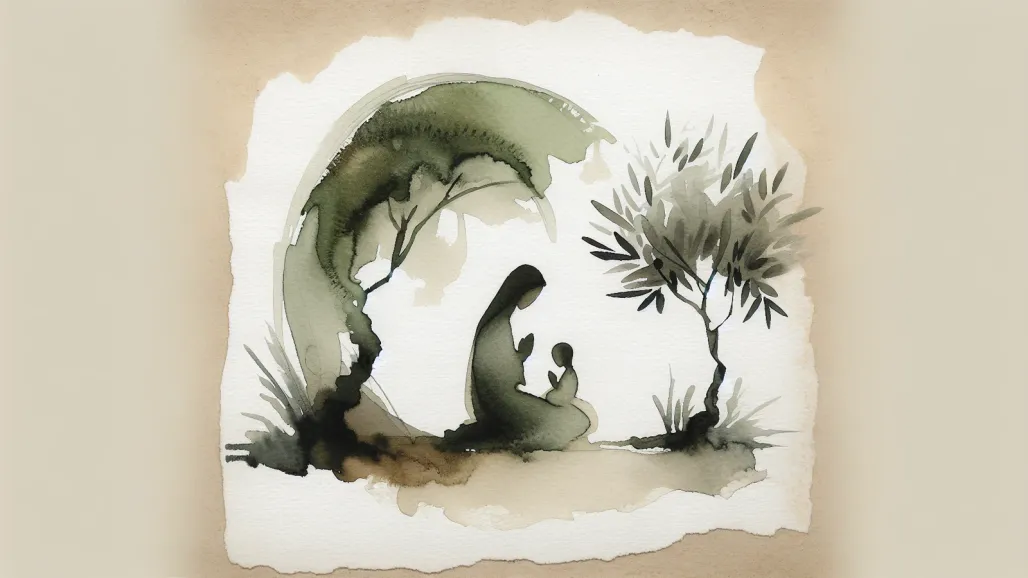
Discover protection prayers across faiths—from Psalm 91 to Buddhist loving-kindness. Learn how humanity shields itself with sacred words and divine armor.
Watch a mother tuck her child into bed. In Tel Aviv, she whispers ancient Hebrew words over the small, sleeping form. In Cairo, another mother breathes Arabic verses into the darkness. In Delhi, Sanskrit syllables float like guardian angels above a cradle. They're all doing the same thing—weaving an invisible shield around what they love most. These sacred symbols and words transcend cultures, connecting humanity through shared protective instincts and timeless spiritual wisdom.
This is humanity's oldest magic: the protection prayer. From the moment we understood danger, we've reached for something stronger than stone walls or steel doors. We've called out to the universe itself, asking for a shield that can't be seen but can somehow turn away the arrow, the illness, the nightmare. This universal need for divine protection resonates across all traditions. And remarkably, across every culture and continent, we've discovered the same truth: when you're truly afraid, words become weapons. Prayers become armor. Faith becomes fortress.
The Ancient Armor of Words

Picture a Roman soldier, 2,000 years ago, strapping on bronze armor before battle. Now picture his Jewish contemporary wrapping himself in something else entirely—words from an ancient psalm:
“He that dwelleth in the secret place of the most High shall abide under the shadow of the Almighty. I will say of the LORD, He is my refuge and my fortress: my God; in him will I trust.” (Psalm 91:1-2, KJV)

This is Psalm 91, the “Soldier's Psalm.” For three millennia, warriors have carried these words into battle. Mothers have sung them over sick children. Travelers have muttered them on dangerous roads. The psalm continues with promises that echo through the ages:
“He shall cover thee with his feathers, and under his wings shalt thou trust: his truth shall be thy shield and buckler. Thou shalt not be afraid for the terror by night; nor for the arrow that flieth by day.” (Psalm 91:4-5, KJV)
Why? Because somewhere deep in the human psyche, we know that protection isn't just physical. The real battles—against fear, despair, the unknown—require different armor.
The Jewish tradition understood this. Every night, millions still recite the Shema before sleep, not just as theology but as a force field: “Hear, O Israel, the Lord our God, the Lord is One.” It's both declaration and shield, transforming bedtime vulnerability into an act of cosmic trust.
When Heaven Sends Its Warriors

Christianity took this ancient understanding and added something new: celestial special forces. Enter Michael the Archangel, heaven's general, sword drawn against the darkness. Catholics especially have long called upon him:
“Saint Michael the Archangel, defend us in battle. Be our protection against the wickedness and snares of the Devil...”
But here's what's fascinating: this isn't passive protection. It's active warfare. The apostle Paul painted it vividly in his letter to the Ephesians—believers donning “the full armor of God.” Truth as a breastplate. Faith as a shield. Salvation as a helmet. This isn't metaphor for Paul; it's spiritual technology. Christians aren't just praying for protection; they're armoring up for cosmic combat.
And at the heart of it all, the prayer Jesus himself taught contains that crucial line:
“And lead us not into temptation, but deliver us from evil: For thine is the kingdom, and the power, and the glory, for ever. Amen.” (Matthew 6:13, KJV)

Simple words that echo across two thousand years, whispered by billions who understand that some dangers can't be faced alone.
The Throne That Guards the Universe

Five times a day, from Mecca to Manhattan, Muslims recite words that many believe form the most powerful protection in existence. Ayat al-Kursi—the Throne Verse—doesn't ask for protection. It declares why protection is already there:
“Allah! There is no deity save Him, the Alive, the Eternal. Neither slumber nor sleep overtaketh Him. Unto Him belongeth whatsoever is in the heavens and whatsoever is in the earth... His throne includeth the heavens and the earth, and He is never weary of preserving them. He is the Sublime, the Tremendous.” (Quran 2:255, Pickthall)
The logic is breathtaking: if God's throne encompasses everything, if His power never tires, then what can possibly harm you without His permission? Muslims recite this before sleep, before travel, in moments of fear. It's not a request—it's a reminder of who's really in charge.
But Islam goes further. The last two chapters of the Quran—Al-Falaq and An-Nas—are called “The Two Protectors.” Short enough to memorize, powerful enough to recite when the shadows grow long. They seek refuge from everything: the evil eye, the whispered temptation, the darkness that creeps. Prophet Muhammad himself used them, teaching that protection begins with recognizing what you're up against.
The Science of Sacred Sound

Travel east, and protection takes on a different frequency—literally. In Hindu tradition, the universe began with a sound: Om. And sounds, they discovered, can reshape reality. The Gayatri Mantra, three thousand years old, doesn't just ask for protection—it reprograms consciousness through sacred sound, calling upon divine light to illuminate and guide the mind.
Watch a Hindu grandmother chant this at dawn, and you're seeing something profound. Each Sanskrit syllable vibrates at specific frequencies. Modern science has measured it—these ancient sounds actually alter brainwave patterns. The sages knew what neuroscientists are just discovering: repetitive sacred sound creates measurable changes in the brain's fear centers, similar to findings about healing prayers and their therapeutic effects.
Then there's the Mahamrityunjaya Mantra—the “Great Death-Conquering Mantra.” Dedicated to the divine as healer and protector, it's chanted over the sick, the troubled, the afraid. The prayer asks for liberation from death's fear and for the strength to face life's challenges with courage. Not because it's magic, but because it works on levels we're only beginning to understand. Sound as medicine. Vibration as shield.
The Unexpected Protection of Love

Buddhism offers perhaps the most radical protection of all: loving-kindness. The Metta Sutta doesn't call down heavenly armies or invoke divine shields. Instead, it teaches something that sounds almost naive until you try it:
“May all beings be happy. May all beings be safe. May all beings be free from suffering.”
Here's the Buddhist insight: hatred can't drive out hatred. Fear can't conquer fear. But loving-kindness? It's like a force field that negativity can't penetrate. As the Buddha taught:
“Hatred is never appeased by hatred in this world. By non-hatred alone is hatred appeased. This is a law eternal.” (Dhammapada 1.5, Max Müller)

Monks in Thailand chant protection verses called Parittas, but the real protection comes from the mind state they create—one where there's literally no room for harm to take hold.
The Tibetan tradition adds another layer with mantras like “Om Mani Padme Hum”—six syllables that invoke Avalokiteshvara, the bodhisattva of compassion. The protection comes not from the deity fighting your battles, but from becoming so filled with compassion that you transcend the battlefield entirely.
The Living Shield of Ethics
Jainism takes protection to its logical extreme: if you harm nothing, nothing will harm you. Their fundamental prayer, the Namokar Mantra, doesn't ask for anything. It simply honors—the enlightened ones, the teachers, all who walk the spiritual path. The prayer is pure reverence, creating protection through alignment with universal harmony.
The protection comes from living the universe's deepest law: non-violence. The Jain teaching is clear: when you create no harm, you attract no harm. It sounds impossibly idealistic until you meet a Jain monk who walks barefoot to avoid stepping on insects, who wears a cloth over his mouth to protect microorganisms. Their very existence is a prayer for protection—not just for themselves, but for every living being.
When the Ancestors Stand Guard

In the forests of Africa, the mountains of Peru, the outback of Australia, protection comes from different sources. Here, the ancestors never really leave. They hover just beyond the veil, watching over their descendants. Indigenous protection prayers aren't shouted at the sky—they're whispered to grandmothers who crossed over last year, to warrior spirits who still guard the tribe.
Watch a Lakota sun dance, a Yoruba ceremony, an Aboriginal initiation. Protection here means staying in right relationship—with the land, the spirits, the ancestors. Break that relationship, and no prayer can save you. Maintain it, and you're held in an embrace older than memory.
The Modern Mystery
Here's what's remarkable: in our age of antibiotics and insurance policies, protection prayers haven't disappeared—they've intensified. This reflects universal values that guide human hope and resilience across all cultures. Military chaplains report that soldiers in Iraq and Afghanistan requested Psalm 91 more than any other scripture. Hospital chapels worldwide echo with prayers in every language. Parents watching the news reach for the same words their ancestors used against plague and invasion.
Why? Because we've discovered what every generation learns anew: we can't protect ourselves from everything. Not from the drunk driver running the red light. Not from the diagnosis that changes everything. Not from the darkness that sometimes settles in our own minds. At some point, everyone discovers the limits of human protection. And in that moment, we do what humans have always done—we call out to something greater.
Learning the Language of Protection
So how do we modern souls engage with this ancient technology? First, understand that protection prayers aren't magic spells. They're not about forcing the universe to build a wall around your life. They're about something deeper—aligning yourself with forces of protection that already exist.
Start where you are. If you come from a tradition, explore its protection practices deeply. Don't just recite—understand. Why these words? What worldview do they express? How have others used them in extremity? These questions connect to the broader exploration of world religions and their protective practices.
If you're between traditions, listen to how different cultures approach protection. Notice the patterns: the appeal to greater powers, the use of sacred sound, the importance of ethical living, the power of community. These aren't superstitions—they're technologies of consciousness that have helped humans navigate danger for millennia.
The Shield You Can't See
As I write this, somewhere a soldier is whispering Psalm 91 in a foxhole. A mother is chanting the Gayatri Mantra over her sick child. A Muslim traveler is reciting Ayat al-Kursi before a dangerous journey. A Buddhist monk is radiating loving-kindness toward those who wish him harm.
They're all participating in the same ancient truth: that consciousness affects reality, that words have power, that aligning ourselves with the protective forces of the universe—however we understand them—makes a real difference. Not always in the ways we expect. Sometimes the protection is from fear itself. Sometimes it's the strength to face what can't be avoided. Sometimes it's the peace that comes from knowing we're not alone. This aligns with the healing power found in healing prayers across traditions.
The divine shield isn't made of steel or stone. It's woven from faith, sound, intention, and the collective power of billions of humans who have faced the dark and chosen to light a candle rather than curse it. Every protection prayer ever uttered still echoes somewhere, creating an invisible sanctuary that surrounds us all.
Listen. Can you hear it? It's the sound of humanity refusing to face the unknown undefended. It's the whisper of every mother over every child, every warrior before every battle, every frightened soul in every dark night: “Protect us. Guard us. Deliver us. We place ourselves in hands stronger than our own.”
And somehow, mysteriously, miraculously—it works. Not always as we imagine. But always as we need.
Sources and Further Reading
- Al-Bukhari, M. I. (2000). Sahih al-Bukhari. Darussalam.
- Al-Ghazali, A. H. (2004). The Remembrance of Death and the Afterlife. Islamic Texts Society.
- An-Nawawi, Y. I. (1999). Riyad-us Saliheen: The Meadows of the Righteous. Darussalam.
- Baháʼuʼlláh. (1983). Prayers and Meditations. Baháʼí Publishing Trust.
- Berg, P. S. (2004). The 72 Names of God: Technology for the Soul. Kabbalah Centre International.
- Catholic Church. (1890). Prayer to Saint Michael the Archangel.
- Donin, H. H. (1972). To Be a Jew: A Guide to Jewish Observance in Contemporary Life. Basic Books.
- Dundas, P. (2002). The Jains (2nd ed.). Routledge.
- Eliade, M. (1964). Shamanism: Archaic Techniques of Ecstasy. Princeton University Press.
- English Standard Version Bible. (2011). Crossway Bibles.
- Geertz, C. (1973). The Interpretation of Cultures. Basic Books.- Gill, S. D. (1987). Native American Religions: An Introduction. Wadsworth Publishing Company.
- Goswami, T. (16th Century). Hanuman Chalisa.
- Griffith, R. T. H. (1889). The Hymns of the Rigveda.
- Jaini, P. S. (1998). The Jaina Path of Purification. Motilal Barnasidas Publishers.
- Jewish Publication Society. (1985). Tanach: The Holy Scriptures.
- Mbiti, J. S. (1969). African Religions and Philosophy. Heinemann.
- NIV Study Bible. (2011). Zondervan.
- Piyadassi Thera. (1999). The Book of Protection. Buddhist Publication Society.
- Saheeh International. (1997). The Qur'an: English Meanings. Al-Muntada Al-Islami.
- The Báb. (1976). Selections from the Writings of the Báb. Baháʼí World Centre.
- Thera, N. (1999). The Heart of Buddhist Meditation. Samuel Weiser.
- Walker, B. (1968). Hindu World: An Encyclopedic Survey. Allen & Unwin.
- Wallace, V. A. (2001). The Inner Kalacakratantra. Oxford University Press.
Related Articles
- When Words Fail the Soul: A Journey Through Ecstatic Utterance - Holy Spirit
- Intercessory Prayer: The Art of Spiritual Advocacy Across Faiths - blessing prayer
- Life Beyond Death: Afterlife Beliefs Across World Religions - spiritual protection
The Author's Voice
Rev'd Dr. Ayotunde Oyadiran is a Priest of the Anglican Church who brings a unique perspective to the exploration of faith and spirituality. Holding a PhD in Church History and an MSc in Ecology and Environmental Biology, he bridges the worlds of faith, science, and human experience. As the author of over three books, Dr. Oyadiran has explored themes of spirituality, personal growth, and environmental stewardship. He also works as a coach and trainer on peak performance, helping individuals unlock their potential and achieve their goals. His passion is empowering others to live purposeful, high-impact lives that integrate faith, wisdom, and excellence.
Continue Your Spiritual Journey
- Explore diverse afterlife beliefs across world religions and discover humanity's universal protective instincts
- Sacred Sustenance: Religious Dietary Laws - Discover how food becomes sacred protection