Moral Compass: Universal Values in a Diverse World
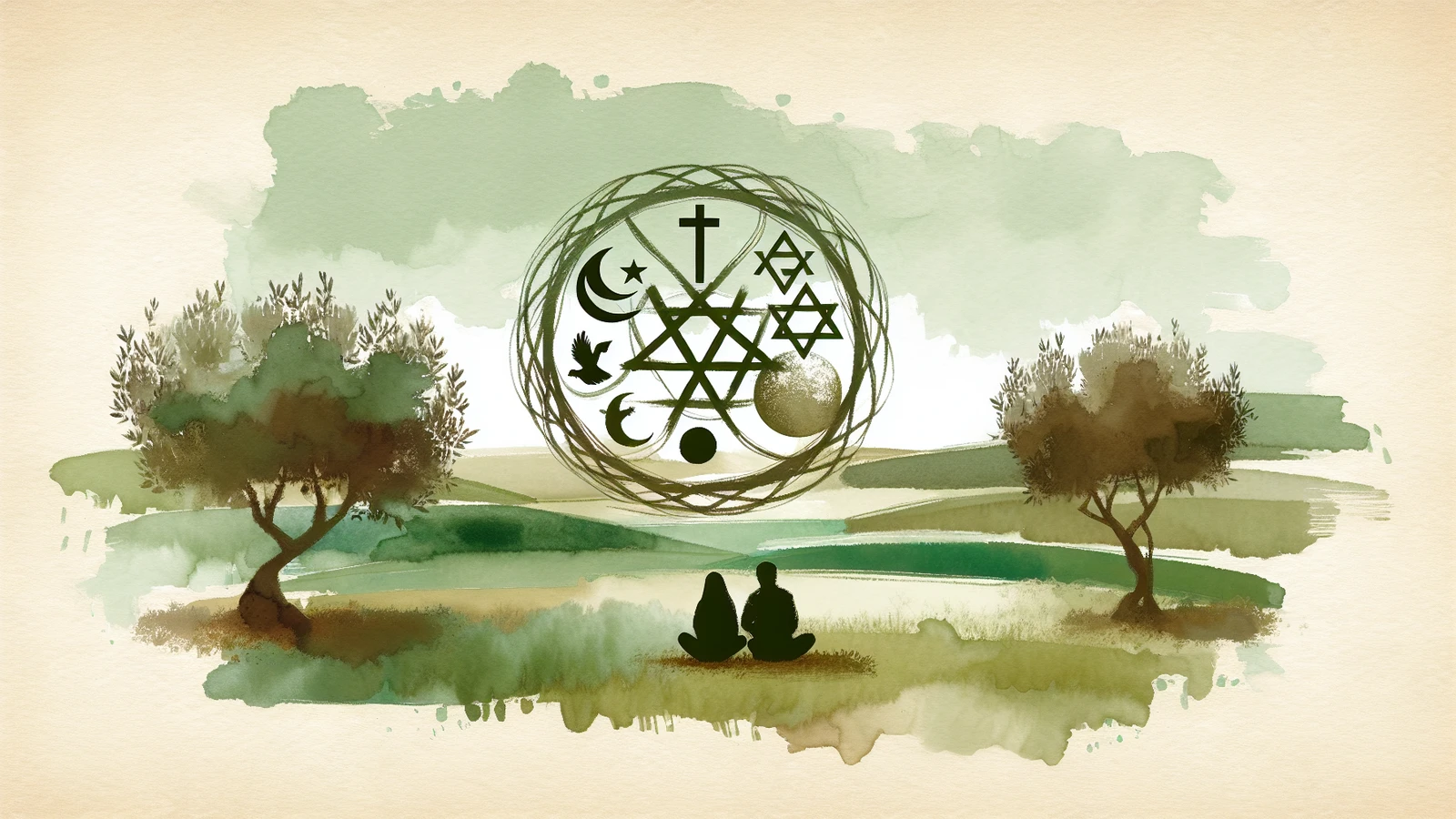
Discover how universal values like love, compassion, and justice unite all faiths. Explore the shared moral wisdom that bridges Buddhism, Christianity, Islam...
The prison cell was cramped, airless, and designed to break the human spirit. Yet as dawn light filtered through the bars, something extraordinary unfolded. A Buddhist monk sat in meditation, radiating compassion toward his captors. In the adjacent cell, a Muslim unrolled a makeshift prayer mat, whispering verses about justice and mercy. Across the corridor, a Christian pastor clutched a worn Bible, praying for those who had imprisoned him. A Jewish rabbi traced sacred words in the dust, remembering the command to love one's neighbor.
They had been arrested together at a protest against ethnic cleansing—strangers united only by their refusal to remain silent while innocents suffered. Now, in this place meant to divide and conquer, they discovered something profound: though their prayers rose in different languages to different conceptions of the Divine, the moral truths beating in their hearts were identical. Love. Compassion. Justice. The inherent worth of every human soul.
This scene, repeated throughout history from Nazi resistance cells to apartheid prisons to modern detention centers, reveals a startling truth: the moral compass that guides humanity's conscience isn't fractured into religious fragments but forms a unified field, its needle pointing steadfastly toward our shared humanity.
In an age when religious differences are weaponized for division, understanding these universal values becomes not just academic exercise but survival strategy. How do we build bridges when doctrine divides? What common ground exists beneath the surface differences of ritual and belief? And perhaps most urgently: can humanity's diverse spiritual traditions unite around shared moral truths before our divisions tear us apart?
Why Universal Values Transform Human Connection

The moment of moral clarity often arrives disguised as conflict. A devoted football fan chooses between watching the championship match or visiting his hospitalized friend. A strict vegetarian Buddhist finds herself stranded with only meat available after a natural disaster. These aren't merely lifestyle preferences colliding with circumstances—they're the crucibles where our deepest values reveal themselves.
Values emerge from the interplay of experience, culture, and consciousness. The football enthusiast who once prioritized entertainment above all discovers, through his friend's grateful tears, that human connection transcends any game. The Buddhist, accepting meat to survive, realizes that compassion includes self-preservation—that rigid rules sometimes yield to life's greater wisdom.
But beneath these shifting, contextual values lies something more profound. While cultural preferences evolve and personal priorities transform with experience, certain moral truths remain constant across every human society: the mother who shields her child from danger, the stranger who risks safety to help another, the community that shares scarce resources during crisis.
William S. Hatcher illuminates this distinction between relative and absolute values:
“Once we acknowledge that human beings are the supreme value in creation, we act on that knowledge. We treat human beings as the ultimate value, as ends rather than means” — William S. Hatcher, Universal Values, 85.
This recognition—that human dignity stands as the ultimate value—births a constellation of moral truths: love, compassion, justice, integrity, fairness. These aren't arbitrary human constructs but discoveries about the nature of reality itself. They emerge wherever humans gather, from Amazon tribes to Arctic communities, from ancient civilizations to modern megacities.
Yet recognizing these values and living them are vastly different challenges. History overflows with those who proclaimed high ideals while perpetrating horrors. This gap between knowing and doing points to a profound limitation in human nature, one that Udo Schaefer articulates:
“If man is left to himself in his moral striving, equipped only with the compass of his rationality, he will go astray. Because he is 'ignorant' of what will profit him in all worlds of God, he is in need of divine guidance.” — Udo Schaefer, Bahá'í Ethics in Light of Scripture, Vol. 1, 4169
This isn't a call to abandon reason but to recognize its limits. The same rationality that can justify genocide can also compose symphonies. What makes the difference? Every great spiritual tradition suggests the answer: moral truth must be not just understood but experienced, not just reasoned but revealed, not just thought but lived through practices that transform the heart.
How Sacred Traditions Express Shared Values
Metta in Buddhism: The Practice of Boundless Love

In the pre-dawn darkness of monasteries from Tibet to Thailand, a practice unfolds that has remained unchanged for 2,500 years. Monks settle into meditation, but instead of seeking personal enlightenment, they systematically radiate love outward—first to themselves, then to loved ones, then to strangers, then to enemies, finally to all beings in all universes. This is Metta, loving-kindness meditation, Buddhism's radical technology for transforming the human heart. This practice exemplifies the meditation mastery that spans diverse spiritual traditions.
The practice emerged from a crisis. When the Buddha sent monks to meditate in a remote forest, local spirits, disturbed by their presence, manifested terrifying visions. The monks fled back to the Buddha, who taught them Metta as protection. Armed with loving-kindness, they returned. The spirits, touched by the monks' genuine goodwill, became protectors rather than tormentors.
This story encodes a profound truth: love literally changes reality. Modern practitioners report that Metta practice doesn't just alter their internal states but transforms their relationships, their communities, even hostile situations. A prison meditation teacher watches hardened criminals weep as they send love to victims they've harmed. A therapist uses Metta to maintain compassion while treating perpetrators of abuse.
The Buddha articulated this practice's ultimate vision:
“As a mother at the risk of her life watches over her own child, her only child, so also let everyone cultivate a boundless (friendly) mind towards all beings.” — Siddhartha Buddha, The Sutta Nipata, 148

The Law of Christ: Love as Divine Command
The scene in the upper room crackled with tension. Judas had just departed into the night to betray Jesus. The remaining disciples, sensing catastrophe approaching, huddled closer. In this moment of impending doom, Jesus didn't strategize escape or organize resistance. Instead, he revolutionized ethics forever:
“A new commandment I give unto you is that you love one another; as I have loved you, you also love one another. By this shall all men know that ye are my disciples, if ye have love one to another.” — John, The Gospel of John, 13:34

“New” seems strange—hadn't Jewish law always commanded love of neighbor? This echo resonates through the Ten Commandments, which established divine law as the foundation for human morality. But Jesus added three revolutionary elements: love “as I have loved you” (sacrificially, unconditionally), love as the identifying mark of discipleship (not ritual, not doctrine, but love), and love among believers as witness to the world.
The early church took this seriously to a degree that baffled Roman society. During plagues, when Romans fled cities abandoning even family members, Christians stayed to nurse the sick—both Christian and pagan. The emperor Julian complained that “these Galileans feed not only their own poor but ours as well.”
Paul documents an even more radical example:
“But now I go unto Jerusalem to minister unto the saints. For it hath pleased them of Macedonia and Achaia to make a certain contribution for the poor saints which are at Jerusalem. It hath pleased them verily; and their debtors they are.” — Paul, Romans, 15:25-27

The Macedonians and Achaians were themselves impoverished, many enslaved, yet they begged Paul to let them contribute to struggling believers they'd never met in Jerusalem. This wasn't charity from excess but sacrifice from scarcity—love made tangible through economic justice.
Islamic Brotherhood: Justice and Equality in Action

The revelation came to Muhammad in Medina, a city torn by tribal warfare where vengeance cycles had claimed generations. Into this culture of retaliation, the Quran introduced a revolutionary framework for justice:
“If two bodies of the faithful are at war, then make ye peace between them: and if the one of them wrong the other, fight against that party which doth the wrong, until they come back to the precepts of God: if they come back, make peace between them with fairness, and act impartially; God loveth those who act with impartiality. Only the faithful are brethren; wherefore make peace between your brethren; and fear God, that ye may obtain mercy.” — Muhammad, Sura XLIX. The Apartments, 49:9

This isn't passive peacekeeping but active justice-making. The command creates a three-stage process: first, attempt reconciliation; if one party remains oppressive, actively oppose the oppression; once justice is restored, ensure impartial fairness. The passage concludes with the fundamental principle: all believers are siblings.
History's most beautiful example of this brotherhood unfolded when Muhammad established the Muhajirun-Ansar covenant. The Muhajirun—refugees who'd fled Meccan persecution with nothing but faith—arrived in Medina destitute. The Ansar (helpers) didn't merely offer charity. They literally split their possessions in half, shared their homes, divided their date groves, and integrated these strangers as family.
Al-Bukhari records how they worked the fields together, the established Ansar and refugee Muhajirun laboring side by side, sharing harvests equally. When inheritance laws were revealed, many Ansar tried to legally adopt Muhajirun to ensure they'd inherit property. This wasn't tolerance or charity—it was a radical reimagining of human relationships based on spiritual kinship transcending blood, tribe, and nationality.
Jewish Wisdom: Love Your Neighbor as Yourself
“Thou shalt not take vengeance, nor bear any grudge against the children of thy people, but thou shalt love thy neighbour as thyself: I am the LORD.” — Moses, Torah - Vayikra (Leviticus), 19:18

Rabbi Hillel, when challenged by a skeptic to teach the entire Torah while standing on one foot, responded: “What is hateful to you, do not do to your fellow. This is the entire Torah; the rest is commentary. Go and learn it.” This wasn't reductionism but recognition that all 613 commandments flow from this single principle: the other is yourself in different form.
The command's structure reveals profound psychology. It doesn't say “love your neighbor instead of yourself” (self-abnegation) or “love your neighbor if you love yourself” (conditional). Rather, it assumes self-love as natural and makes it the measure for loving others. The Hebrew word for neighbor, “re'a,” means friend, companion, fellow—suggesting not distant charity but intimate connection.
Abraham embodied this principle in ways that still astound. When he saw dust clouds on the horizon that might be travelers, he would run—a 99-year-old man running in desert heat—to invite strangers for meals. The Talmud says his tent had four doors, open to all directions, so no traveler would have to circle to find entry.
But his most remarkable act was advocating for Sodom. These were people who criminalized hospitality, who tortured visitors—yet Abraham bargained with God for their salvation. “Will you destroy the righteous with the wicked?” he challenged, negotiating down from fifty righteous people to ten. He loved these cruel neighbors enough to risk divine wrath on their behalf. This is love not as sentiment but as fierce commitment to others' potential for redemption.
Building Bridges Through Interfaith Understanding
These examples from Buddhism, Christianity, Islam, and Judaism reveal a startling pattern: the most profound teachings of each tradition point toward identical values. Not similar—identical. The mother protecting her child (Buddhism), the Macedonians sharing from poverty (Christianity), the Ansar splitting possessions with refugees (Islam), Abraham running to serve strangers (Judaism)—these aren't different values but the same truth refracted through different cultural prisms.
This recognition opens revolutionary possibilities. When we engage across faith boundaries, we don't dilute our traditions but discover their depths. The Christian who learns Metta meditation doesn't become less Christian but more capable of embodying Christ's love. The Muslim who studies Jewish teachings on justice doesn't compromise Islamic principles but enhances understanding of divine fairness. The Buddhist who contemplates the crucifixion doesn't abandon non-theism but deepens appreciation for compassionate sacrifice.
Creating a Global Ethic Through Expanded Ecumenism
The word “ecumenical” originally meant “the whole inhabited earth.” While Christianity narrowed it to mean unity among Christian denominations, our interconnected age demands we restore its global meaning. Just as Catholics and Pentecostals discovered they could maintain distinct practices while sharing core values, humanity's diverse faiths can unite around universal principles without sacrificing their unique gifts.
Consider how Christian ecumenism actually works. A Catholic mass with its incense, liturgy, and eucharistic mystery differs dramatically from a Pentecostal service's spontaneous worship and speaking in tongues. Yet both communities feed the hungry, shelter the homeless, and practice forgiveness. Their unity isn't uniformity but harmony—different instruments playing complementary parts in the same symphony.
This model scales up. The Parliament of the World's Religions, gathering since 1893, demonstrates that Hindus, Buddhists, Jews, Christians, Muslims, Indigenous traditions, and others can collaborate on global challenges while maintaining distinct identities. They've produced declarations on climate action, economic justice, and women's rights—not by diluting their traditions but by drawing from each tradition's deepest wells of wisdom.
Developing a Shared Moral Framework Across Faiths

I still persist in our engagement with different faiths. We know that every religion carries the same universal values in diverse doctrinal ways, but establishing a moral framework where our diversities are appreciated is important to yeast the universal values across the entire earth.
It may appear unnecessary at first, but the existing crimes that are against universal values shows an existing gap despite our numerous religions. Do you think people would kill if they have fully embraced universal values into their spirit?
Considering such people, we must understand that they may not possess an inward guide through past experiences. Remember, values are derived from our value judgment of our experiences, and adjusted through more experiences and awareness. An experience of compassion, honesty, and kindness when we cooperate together will definitely inspire change for such people in the world.
This is the idea: though universal values are upheld in the world, it will always leave behind potency for evil unless it comes from an agreed perspective through interreligious relationships. This can happen through interfaith dialogue.
The Power of Interfaith Dialogue
“The new paradigm of heilsgeschichte, that revelation is progressive and embraces all religions, is a far more solid basis for such a dialogue than any pragmatic adaptation to changed conditions and historical necessities.” — Udo Schaefer, Bahá'í Ethics in Light of Scripture, Vol. 1, 1676
This truth can be seen in the emergence of Christianity from Judaism, Buddhism from Hinduism, and Baha'i from Babi. It is one reason religions are diverse today. The fact that they are broken into many from a few should make interfaith dialogue more easier.
Interfaith dialogue allows for consent and willingness to form a shared moral framework. A good start is with mother faiths. Christians dialogue with Judaizers, Buddhist with Hindus, Bahá'í with Babi, and other geographically connected religions like Confucianism, Taoism, and Jainism dialoguing together.
Practicing Universal Values in Daily Life
“Consort with all religions with amity and concord,” — Bahá'u'lláh, The Kitáb-i-Aqdas, 144

- Cultivate friendships with people of different faiths: Since religions resent hatred and harm to humans, making friends with other faiths is easier.
- Support other faith projects. When we support each other, we share universal values with ourselves.
- Voluntarily contributing to the development of inter-faith modules for universal values. This can be done through research contribution, and distribution of interfaith materials etc.
Integrating Universal Values into Your Spiritual Journey
The prison cell where our story began holds one final lesson. Those four religious leaders—Buddhist, Muslim, Christian, Jew—discovered that their greatest act of resistance wasn't just standing against injustice but standing together. Upon release, they didn't return to separate lives. They formed an interfaith council that became a powerful force for reconciliation in their war-torn region. Their shared suffering had revealed shared truth: the moral compass within each tradition pointed to the same true north.
This is our invitation and challenge. In a world fracturing along religious lines, we can choose ancient wisdom over modern prejudice. The universal values embedded in every tradition—love, compassion, justice, human dignity—aren't abstract ideals but practical tools for healing our wounded world.
Start where you are. Study your own tradition's teachings on universal values, then explore how other faiths express these same truths. The Bhagavad Gita offers timeless wisdom about dharma and righteous action that resonates across traditions. When you discover that your Muslim neighbor's commitment to justice mirrors your own, that your Buddhist colleague's compassion practice enriches your understanding of love, that your Jewish friend's emphasis on repair of the world (tikkun olam) aligns with your vision of service—then interfaith understanding transforms from nice idea to lived reality.
The moral compass that guides humanity isn't broken—it's simply held by many hands. When we recognize that these diverse hands all point toward the same values, we discover that our differences aren't divisions but dimensions of a truth too vast for any single tradition to contain. In this recognition lies humanity's hope: not in abandoning our particular paths but in discovering they lead to the same summit, where all who value human dignity can stand together, facing the dawn of a more compassionate world.
About the Author
Mercy Iburuoma is a writer who recently began exploring the world of interfaith writing. She has deep love for sacred texts and a gift for translating complex spiritual ideas into engaging prose. Passionate about making spiritual knowledge accessible to everyone, she brings warmth, clarity, and curiosity to every piece she creates. Her work explores spiritual themes from world religions, Kundalini wisdom, and the transformative dark night of the soul.
Continue Reading
- World Religion 101: A Beginner's Guide to Global Faiths - Discover the core beliefs of nine major world religions and their surprising connections
- Intercessory Prayer: The Art of Spiritual Advocacy Across Faiths - Discover how intercessory prayer connects hearts across faiths. Explore Christia...
- Sacred Symbols: The Universal Language of Spirituality - Sacred symbols transcend religious boundaries to form humanity's shared spiritual vocabulary