The Promises That Outlived Empires: Ancient Voices Speaking Future Truth
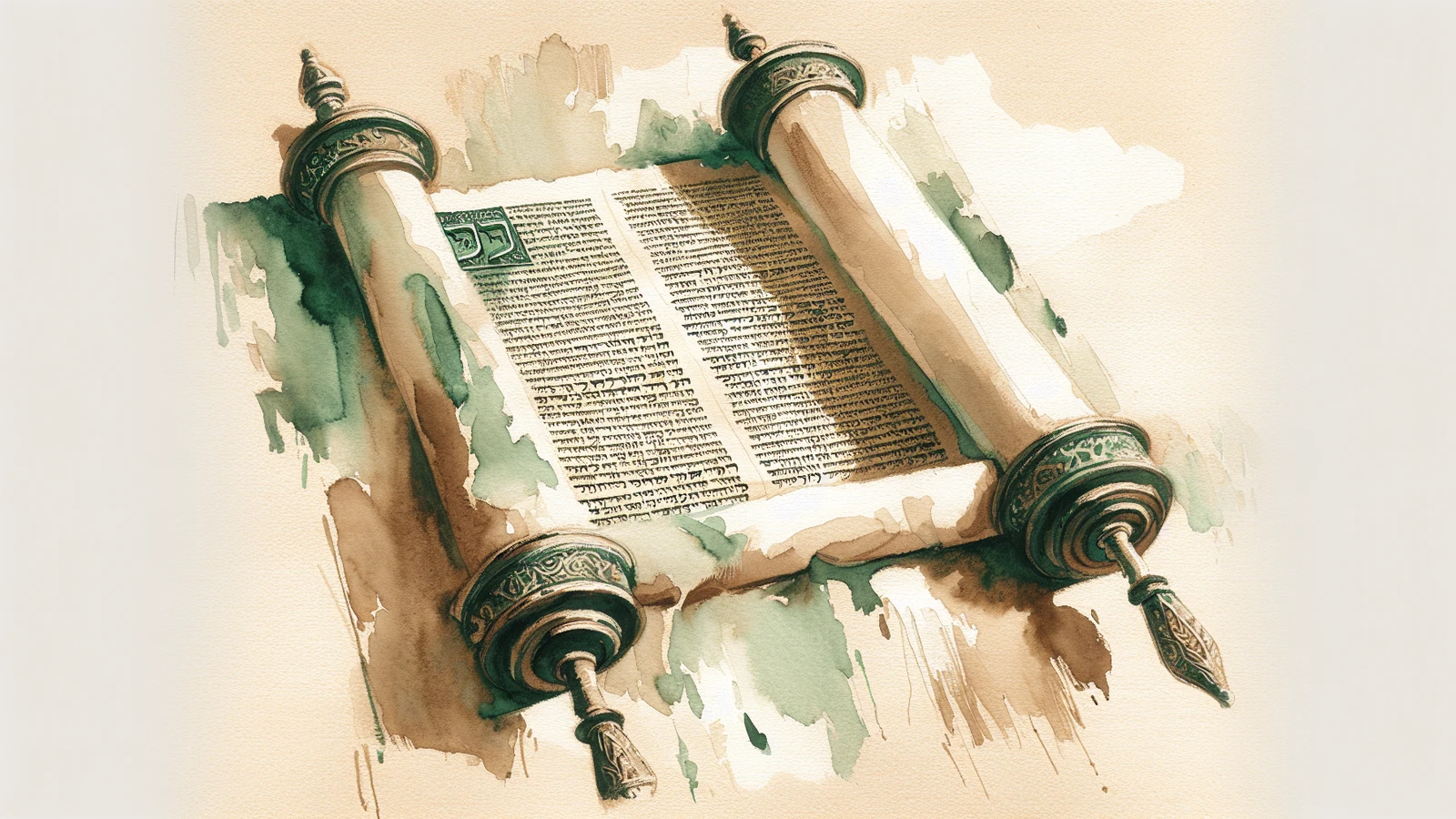
Hebrew Bible prophecies survived empires and millennia, preserving divine promises that continue shaping human destiny through turbulent historical periods.
Picture this: A voice echoing across three thousand years, making claims so audacious they should have been forgotten within a generation. Promises so specific they invite mockery. Predictions so impossible they defy rational belief.
Yet here we sit, in the 21st century, watching some of these ancient prophecies play out in real time while others hover on the horizon like storm clouds pregnant with possibility.
This is the story of the Hebrew Bible's prophecies—ancient words that refuse to die, promises that have outlived the empires that tried to silence them, and visions of a future so radically different from our present that they either represent humanity's greatest hope or its most persistent delusion. These prophetic traditions resonate across faiths, from Islamic prophecy to Christian apocalyptic visions and the divine messages found in dreams across cultures.
The prophets weren't fortune tellers. They were revolution-speakers, future-seers, divine mouthpieces who dared to claim they could hear tomorrow's voice speaking through today's chaos.
“The prophet does not announce what will happen, but what should happen—and by announcing it, helps make it real.” — Abraham Joshua Heschel And the most astonishing thing? Some of their impossible predictions have already come true.
Revolutionary Voices Against Empire: The Dangerous Business of Speaking Tomorrow
Forget everything you think you know about prophecy. The biblical prophets weren't mystics gazing into crystal balls or shamans interpreting omens. They were often reluctant revolutionaries, spiritual dissidents who found themselves compelled to speak truths that made them enemies of the state.
Picture Jeremiah, weeping as he proclaimed the destruction of Jerusalem to a people who wanted only good news. Imagine Ezekiel, acting out bizarre symbolic dramas in exile, insisting that dead bones would dance again. Consider Isaiah, painting word-pictures of a future so radically peaceful it sounded like fantasy to a world that knew only war.
“Prophetic speech is not primarily about predicting the future, but about confronting the present and creating a different future.” — Rabbi Jonathan Sacks
The prophets operated on a revolutionary premise: that linear time could be punctured, that divine knowledge could leak through the membrane separating present from future, that human history was following a script already written in the mind of the eternal.
But here's what makes their words dangerous even today: They didn't just predict generic “better times ahead.” They made specific, measurable, falsifiable claims about the future of a particular people in a particular place. Claims that could be proven wrong by the simple passage of time.
Some of their bets have already paid off spectacularly. Others are still pending, gathering interest across the centuries.
From Exile to Resurrection: The Impossible Homecoming

Consider the audacity of this prediction: A people scattered to the four corners of the earth, their homeland destroyed, their language nearly dead, their Temple reduced to rubble—this people would return. Not just spiritually, but physically. Not just individually, but nationally. Not just temporarily, but permanently.
When Jeremiah made this prediction to Jews heading into Babylonian exile, it must have sounded like cruel mockery:
“For thus says the Lord: When seventy years are completed for Babylon, I will visit you, and I will fulfill My promise to you and bring you back to this place.” — Jeremiah 29:10
Seventy years. Specific. Measurable. Verifiable.
And then it happened. Cyrus the Great issued his decree. The exiles returned. The Temple was rebuilt. First fulfillment: complete.
But the prophets weren't finished. Ezekiel's vision of the Valley of Dry Bones painted an even more impossible picture—a people not just returned from exile, but resurrected from what appeared to be national death:
“Thus says the Lord God to these bones: I will cause breath to enter you, and you shall live. I will lay sinews on you, will bring flesh upon you, cover you with skin and put breath in you; and you shall live.” — Ezekiel 37:5-6
For nearly two thousand years, this looked like poetic metaphor. Dead bones don't dance. Scattered peoples don't reconstitute as nations. Ancient languages don't come back to life.
Then 1948 happened.
The establishment of Israel wasn't just political—it was prophetic vindication. Like the preservation of Torah scrolls across millennia, the return represented impossible continuity against all odds. Hebrew spoken in the streets. Exiles returning from every continent. A nation literally resurrected from the graveyard of history.
The dry bones had learned to dance.
Visions Yet Unfulfilled: The Unfinished Symphony
But if the return prophecies have been fulfilled, the most spectacular predictions remain outstanding. And they're so audacious they make the resurrection of Israel look like a warm-up act.
The centerpiece is the Messianic vision—a future so radically different from human experience that it requires either complete transformation of human nature or divine intervention on an unprecedented scale.
Listen to Isaiah painting this impossible future:
“He shall judge between the nations, and shall arbitrate for many peoples; they shall beat their swords into plowshares, and their spears into pruning hooks; nation shall not lift up sword against nation, neither shall they learn war anymore.” — Isaiah 2:4
World peace. Not temporary ceasefires or regional treaties, but the complete elimination of war as a human institution. Military academies converted to agricultural colleges. Defense budgets redirected to healing the earth.
In our world of perpetual conflict, this sounds like fantasy. But the prophets weren't painting metaphors—they were making specific predictions about future reality.
Zechariah pushes the vision even further:
“And the Lord will be king over all the earth; on that day the Lord will be one and His name one.” — Zechariah 14:9
Universal recognition of divine sovereignty. The end of religious conflict. Spiritual unity for the entire human species.
These aren't gradual improvements or evolutionary developments. They're revolutionary transformations that would require either miraculous intervention or such complete transformation of human consciousness that our species would become virtually unrecognizable—a universal peace that echoes the ethical foundation found in the Ten Commandments.
The Awaited Leader: The Human Divine Agent

At the center of these unfulfilled prophecies stands a figure both entirely human and utterly extraordinary—the Messiah. This vision of a transformative leader echoes across traditions, from Buddhism's Maitreya to Islam's Mahdi, connecting to universal spiritual leadership across cultures. But strip away centuries of theological overlay and you discover something surprising: The Jewish vision of this future leader is radically this-worldly.
According to Maimonides' systematic analysis, the Messiah will be:
- A human being, not a divine figure
- A descendant of King David
- A master of Jewish law and wisdom
- A military leader who defeats Israel's enemies
- A political figure who rebuilds the Temple and regathers the exiles
- A catalyst who ushers in the era of universal peace
“The Messiah himself, according to Jewish tradition, will be a human being descended from King David who will bring about a series of world-changing events.”
No supernatural birth. No divine nature. No new religion. Just a human being so remarkable, so perfectly aligned with divine will, that his leadership triggers the final transformation of human civilization.
This is revolution through perfection rather than revolution through destruction—change so complete it appears miraculous while remaining entirely natural.
Sacred Architecture of Tomorrow: The Temple That Waits

Perhaps the most concrete of the unfulfilled prophecies involves the rebuilding of the Temple in Jerusalem. This sacred architecture represents the ultimate sacred space, a physical location where divine presence dwells. Ezekiel received architectural blueprints for a future sanctuary so detailed they read like an engineering manual (Ezekiel 40-48).
For nearly two thousand years, this has remained the most tangible symbol of Jewish hope. Three times daily, observant Jews pray: “Restore the worship to Your sanctuary.” Not metaphorically. Literally.
The Third Temple represents something unprecedented in human religious experience: the return of the divine presence to a physical location, the re-establishment of a worship system that bridges heaven and earth through ritual and sacrifice.
In our secular age, this sounds archaic. But the prophets insist it's inevitable—the final piece in humanity's spiritual restoration.
Mathematical Impossibilities Made Real: The Probability Problem
Here's what makes these prophecies either compelling or terrifying, depending on your worldview: They've established a track record.
The mathematical probability of a scattered people maintaining their identity for two millennia, returning to their original homeland, reviving their ancient language, and reestablishing their sovereignty was essentially zero. Yet it happened.
If the impossible return has occurred, what does that suggest about the impossible peace, the impossible Temple, the impossible transformation of human nature?
The prophets' batting average is unsettling. They've proven they can see around corners, speak across centuries, predict the unpredictable—much like the prophetic dreams that bridge divine and human realms across traditions. Their outstanding predictions deserve serious consideration simply because their completed predictions were so improbable.
Technology Meets Ancient Vision: The Acceleration Factor
We live in an unprecedented moment. For the first time in human history, we possess the technological capability to fulfill—or permanently prevent—the prophetic vision.
We can beat swords into plowshares through nuclear disarmament and the redirection of military technology toward peaceful purposes. We can achieve universal knowledge through global communication networks. We can solve scarcity through technological abundance.
Or we can use the same technologies to make the prophetic vision impossible—through environmental destruction, nuclear warfare, or the collapse of civilization itself.
The prophets spoke of a future that seemed impossibly distant. Suddenly, it seems impossibly close.
Creating Tomorrow's Promise: The Choice That Waits

The Hebrew Bible's prophecies pose a question that every generation must answer: Are we reading promises or warnings? Descriptions of inevitable future or invitations to participate in creating that future?
Rabbi Sacks suggested that prophecy is less about predicting tomorrow than about creating it.
“Prophecy is not passive prediction but active participation in shaping the future through moral imagination and spiritual courage.” — Contemporary Jewish thought Perhaps the prophets weren't just describing the future—they were programming it, planting seeds of possibility that would grow across the centuries until they became inevitable.
The Messianic vision of universal peace, spiritual unity, and divine presence isn't just a prediction to wait for—it's a blueprint to build toward.
In our age of global crisis and unprecedented possibility, the ancient voices speak with new urgency. The promises that outlived empires are asking a simple question:
Will you help make them true?
The prophecies have waited three thousand years. They can wait a little longer. But not forever.
The future they describe is either approaching rapidly or slipping away permanently. And unlike the ancient exiles who could only dream of return, we live in a generation that might actually witness the impossible transformation they promised.
The dry bones have already danced once. The question is whether they'll dance again—this time with the whole world joining the choreography.
References
- Chabad.org. (n.d.). Why Do Jews Believe in Mashiach? Retrieved from https://www.chabad.org/library/article_cdo/aid/101679/jewish/Why-Do-Jews-Believe-in-Mashiach.htm
- Maimonides, M. (n.d.). Mishneh Torah. “Hilkhot Melakhim U'Milchamoteihem” (“Laws of Kings and Their Wars”), Chapter 11. Retrieved from https://www.chabad.org/library/article_cdo/aid/945236/jewish/Hilchot-Melachim-Chapter-11.htm
- Sacks, J. (2005). To Heal a Fractured World: The Ethics of Responsibility. Schocken.
- Telushkin, J. (1991). Jewish Literacy: The Most Important Things to Know About the Jewish Religion, Its People, and Its History. William Morrow.
- The Hebrew Bible (Tanakh). (n.d.). (Various translations). The Book of Isaiah, The Book of Jeremiah, The Book of Ezekiel, etc. Retrieved from https://www.sefaria.org/texts/Tanakh
Related Articles
- Sacred Text Preservation - Discover how sacred texts survived against impossible odds across centuries
- Divine Communication Through Dreams - Explore how different traditions interpret divine communication through dreams
- Eschatological Visions - Understanding humanity's visions of the afterlife and final transformation across faiths
Further Explorations on Sacred Prophecy
-
The Letters That Refused to Die: Torah Sacred Writing - Discover how Hebrew scriptures were preserved through millennia of persecution and exile
-
When Sleep Becomes Prophecy: Islamic Dream Interpretation - Explore how Islamic tradition understands prophetic communication through divine dreams
-
The Geometry of Survival: Star of David History - Learn how Jewish symbols evolved to represent survival and spiritual identity
-
Rosh Hashanah: The Shofar's Ancient Call - Experience how Jewish holy days awaken ancient memories and prophetic hope
About the Author
Rev'd Dr. Ayotunde Oyadiran is a Priest of the Anglican Church who brings a unique perspective to the exploration of faith and spirituality. Holding a PhD in Church History and an MSc in Ecology and Environmental Biology, he bridges the worlds of faith, science, and human experience. As the author of over three books, Dr. Oyadiran has explored themes of spirituality, personal growth, and environmental stewardship. He also works as a coach and trainer on peak performance, helping individuals unlock their potential and achieve their goals. His passion is empowering others to live purposeful, high-impact lives that integrate faith, wisdom, and excellence.