The Letters That Refused to Die: A Journey Into Sacred Writing
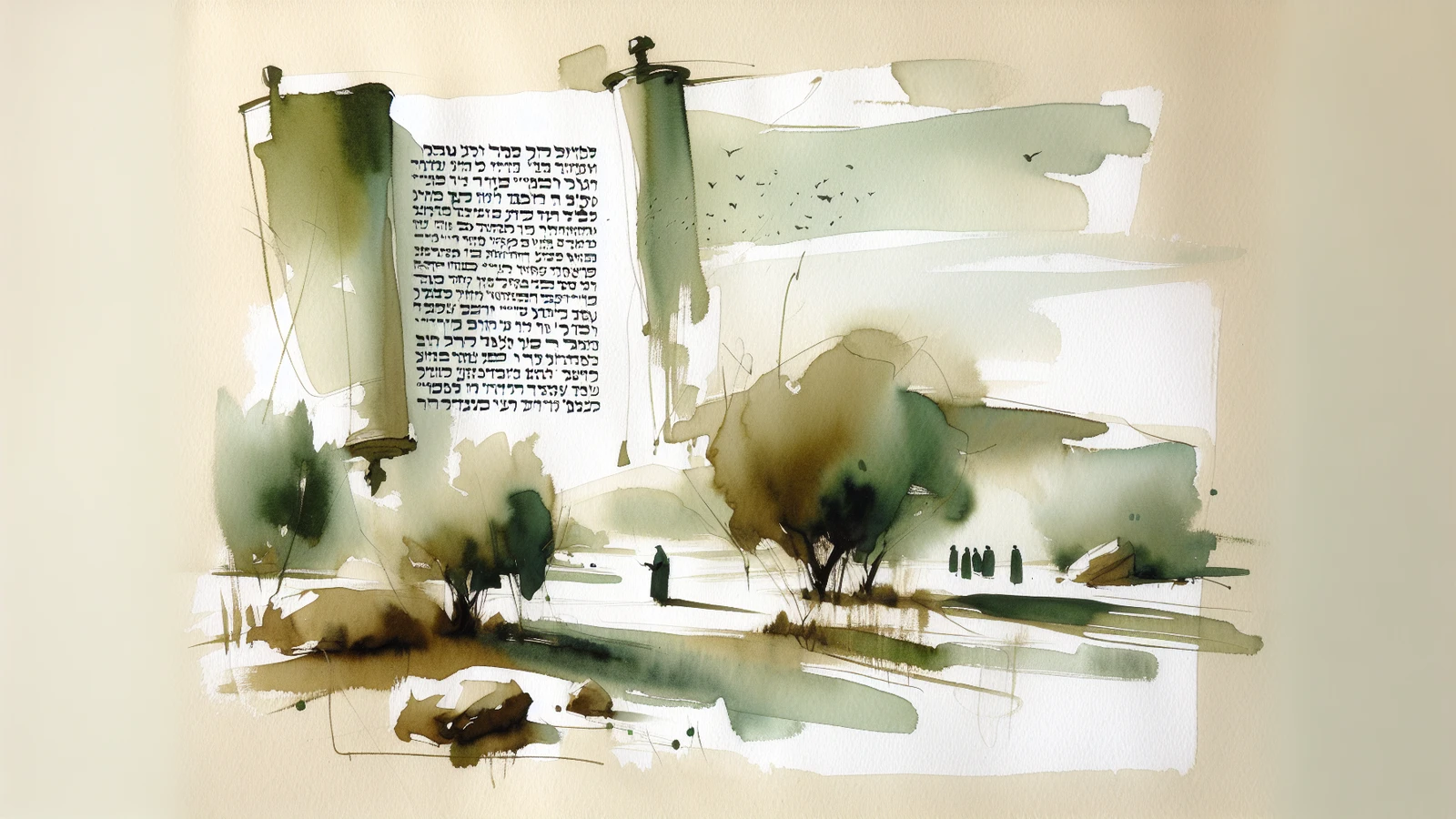
Discover how 304,805 handwritten Torah letters survived three millennia unchanged through sacred scribal tradition, preserving the most extraordinary text.
Picture this: In a windowless room in Jerusalem, an elderly man hunches over parchment that once wrapped the ribs of a kosher animal. His hand—steady despite eight decades of life—guides a quill made from the wing of a turkey across cream-colored hide. But this is no ordinary writing. Every stroke carries the weight of Sinai. Every letter bears the DNA of eternity.
He is a sofer, a sacred scribe, and he is performing one of humanity's most extraordinary acts: copying the exact words that Moses received from the divine, letter by letter, with no room for error. Not one. In three thousand years.
Welcome to the world of the Torah scroll—where obsession becomes devotion, where perfectionism transforms into prayer, and where the survival of an entire people hangs on the precision of 304,805 handwritten letters. This sacred text joins humanity's greatest spiritual treasures, standing alongside the Bhagavad Gita in its profound impact on billions of lives.
When Precision Becomes Sacred: The Impossible Promise
Here's what's astonishing: Every Torah scroll in every synagogue in every corner of the world contains exactly the same text. Not approximately the same. Not mostly the same. Exactly the same. Down to the last letter, the last crown, the last space between words.
Consider the mathematical impossibility of this achievement. Three millennia of copying by hand. Wars, persecutions, dispersions across continents. Scribes working in caves, in ghettos, in hidden attics. Yet somehow, the text remains unchanged. This isn't preservation—this is resurrection, performed over and over again, one painstaking letter at a time.
“If even a single letter is found to be cracked, smudged, or improperly formed, Jewish law requires that the entire sheet of parchment be declared invalid and replaced.”
The masorah—the tradition of textual transmission—created a system so rigorous that it makes modern quality control look casual. But why? What drives a people to such extremes of precision?
The Art of Divine Calligraphy: The Scribe's Sacred Obsession

Watch a sofer at work and you witness something bordering on the mystical. Before writing each name of God, he pauses. Recites a blessing. Purifies his intention. He cannot be distracted, cannot be hurried, cannot make a single mistake without invalidating months of work.
The rules read like a manual for impossibility:
- The parchment must come from a kosher animal, prepared in ritual purity
- The ink must be black as night, made from kosher ingredients
- Every letter must be perfectly formed—not touching its neighbors, not too close, not too far
- The Hebrew letters must include their traditional crowns (tagin), tiny decorative marks that scribes have faithfully reproduced for centuries
But here's what transforms craft into sacrament: the scribe writes l'shem mitzvat Sefer Torah—“for the sake of the commandment of a Torah scroll.” This intention elevates every stroke from mere copying to an act of divine service.
The scribe doesn't just write the Torah. In a very real sense, the Torah writes itself through him.
Where Thunder Became Text: The Living Mountain
“And all the people saw the voices and the flames...” — Exodus 20:18
The Torah begins with revelation—not just words spoken on a mountain, but the moment when the infinite tried to squeeze itself into finite language. Jewish tradition holds that at Mount Sinai, God didn't just speak to Moses; the entire people heard the divine voice. But human ears could only bear so much of eternity at once.
What we have in the Torah scroll is the residue of that encounter—thunder translated into text, the voice of creation captured in letters that still vibrate with their original power.
The five books tell a story that every human recognizes—a narrative that parallels the universal themes found in sacred literature across all cultures:
- Genesis: The dream of beginnings, when everything was possible
- Exodus: The nightmare of oppression and the miracle of liberation
- Leviticus: The blueprint for building a society worthy of the divine presence
- Numbers: The long, hard journey through the wilderness of becoming
- Deuteronomy: The final words of the teacher who won't live to see the promised land
But these aren't just stories from long ago. They're the eternal human story, playing out in every generation, in every life that moves from bondage toward freedom, from chaos toward purpose. The moral framework established in these texts continues to guide humanity today, as seen in the enduring relevance of the Ten Commandments, which emerged from this same sacred tradition. This sacred writing tradition resonates across cultures, from Guru Nanak's revolutionary teachings that founded Sikhism to the practices of spiritual intercession found throughout world religions.
Global Unity Through Sacred Words: The Democracy of Devotion

Every Sabbath, in synagogues from Alaska to Zimbabwe, the same portion is chanted. Not read—chanted, in a melody that turns words back into the music they were before they became text. This practice of sacred reading echoes across traditions, from Lectio Divina in Christian monasteries to the rhythmic recitation of sacred texts in Islamic tradition, where Quranic verses serve as spiritual protection. This weekly rhythm creates something unprecedented in human history: a global community united not by geography or politics, but by shared attention to the same sacred words.
“This shared practice creates a powerful sense of unity, a spiritual rhythm that connects Jewish communities globally and across time.”
The Torah reading isn't passive consumption. It's participatory resurrection. When the scroll is lifted high after the reading, the congregation rises and chants: “V'zot ha-Torah asher sam Moshe“—”This is the Torah that Moses placed before the children of Israel.“ Present tense. Not ”placed“ but ”places.“ The giving happens again, every week, every time the scroll is opened. This cyclical return to sacred text mirrors the rhythm of Jewish holy days like Rosh Hashanah, where ancient calls awaken collective memory.
Surviving the Impossible: Letters That Outlived Empires
The Torah has survived what shouldn't be survivable. Babylonian exile. Roman destruction. Medieval persecution. Modern genocide. When the Nazis burned synagogues, they were really trying to burn time itself—to sever the chain of transmission that linked their victims to Sinai.
They failed.
Today, in the Memorial Scrolls Trust in London, 1,500 Torah scrolls rescued from destroyed Czech and Slovak communities wait like sleeping witnesses.
“Each rescued scroll carries within it the voices of those who can no longer speak, the prayers of those who can no longer pray, yet through these scrolls, their spirit endures.” — Memorial Scrolls Trust Each scroll carries the DNA of a vanished world—the fingerprints of scribes whose names are lost, the prayers of congregations who perished, the unbroken chain of transmission that even death couldn't break.
These scrolls are more than artifacts. They're time machines, carrying forward not just text but the living breath of communities that refused to let their story end. They stand as testimony to the power of preservation, connecting to the broader narrative of how the Day of Atonement has carried forward the Torah's message of forgiveness and renewal across millennia. Like the spiritual celebrations found in other traditions, these sacred texts create bridges of meaning that span centuries and unite communities through shared devotion to the divine word.
Sacred Thresholds: The Doorpost Prophecy

In Jewish homes, a tiny scroll called a mezuzah guards every doorway. This tradition of sanctifying thresholds resonates with other faiths' practices of protection prayers and sacred symbols that mark the boundaries between sacred and ordinary space, much like the sacred celebrations that transform ordinary time into holy moments across different cultures. Inside, handwritten on parchment no bigger than your palm, are the words:
“Hear, O Israel: The Lord our God, the Lord is one. You shall love the Lord your God with all your heart, with all your soul, and with all your might... And you shall inscribe them on the doorposts of your house and on your gates.” — Deuteronomy 6:4-9
Every time a family passes through their door, they're walking through the Torah itself. The grand narrative of cosmic covenant has been miniaturized into a domestic sacrament. The epic has become intimate.
Divine Technology: The Code That Codes Itself
Modern scholars study the Torah as literature, as history, as mythology. But they miss the deepest mystery: the Torah isn't just a book about transformation—it's a technology for transformation. Like the sacred texts found across world religions, it operates as a living system that shapes consciousness and community. The very act of engaging with it changes the reader.
The Hebrew letters themselves are considered carriers of divine energy. The spaces between letters, the crowns on certain characters, the precise spacing of columns—every element is part of a meaning-making system that operates on multiple levels simultaneously. Surface narrative. Hidden mathematics. Mystical symbolism. Ethical instruction.
It's as if the text were designed by an intelligence that understood how consciousness itself works—how story shapes identity, how repetition creates habit, how community forms around shared attention to the sacred.
Why These Letters Matter: The Eternal Question

So what makes 304,805 letters so precious that an entire people would spend three millennia obsessing over their exact transmission?
Perhaps it's this: In a world where everything changes, corrupts, or disappears, the Torah scroll represents something else—a promise that some things can endure unchanged. That precision matters. That words carry power. That the conversation between heaven and earth, once begun, never has to end.
Every time a sofer dips his quill in black ink, every time a congregation rises for the Torah reading, every time a child learns to trace Hebrew letters, the promise is renewed: Some things are too important to let go. Some conversations are too vital to allow silence.
“The Torah is not merely a book to be read, but a living tradition to be experienced, studied, and transmitted from generation to generation.” — Rabbi Joseph Telushkin
The letters refuse to die because the people who carry them have learned the secret of making time stop, one perfect character at a time.
In our age of digital text and disposable words, perhaps we need the Torah's reminder: Some things deserve to be written in permanence, preserved with obsessive care, and passed down unchanged from generation to generation.
The question isn't whether the Torah is true.
The question is whether we're still capable of treating anything as if it were sacred enough to last forever.
References
- Aish.com. (n.d.). What is the Torah? Torah Facts & History. Retrieved from https://www.aish.com/what-is-the-torah/
- Chabad.org. (n.d.). What Is a Torah Scroll?
- Donin, H. H. (1982). To Be a Jew: A Guide to Jewish Observance in Contemporary Life. Basic Books.
- Klein, R. (2006). A Practical Guide to Jewish Life. Jewish Lights Publishing.
- Memorial Scrolls Trust. (n.d.). About the Trust. Retrieved from http://www.memorialscrollstrust.org/index.php/about
- Telushkin, J. (1991). Jewish Literacy: The Most Important Things to Know About the Jewish Religion, Its People, and Its History. William Morrow.
- Wikipedia. (n.d.). Torah scroll. Retrieved from https://en.wikipedia.org/wiki/Torah_scroll
Related Articles
- Sacred Texts Unveiled: A Comprehensive Guide to the World's Holy Books - Explore how different traditions preserve and transmit their sacred writings
- When Words Become Windows: The Sacred Art of Lectio Divina - Discover the Christian practice of sacred reading that transforms text into encounter
- The Divine Shield: When Humanity Calls for Protection - Learn how different faiths use sacred words for spiritual protection
About the Author
Rev'd Dr. Ayotunde Oyadiran is a Priest of the Anglican Church who brings a unique perspective to the exploration of faith and spirituality. Holding a PhD in Church History and an MSc in Ecology and Environmental Biology, he bridges the worlds of faith, science, and human experience. As the author of over three books, Dr. Oyadiran has explored themes of spirituality, personal growth, and environmental stewardship. He also works as a coach and trainer on peak performance, helping individuals unlock their potential and achieve their goals. His passion is empowering others to live purposeful, high-impact lives that integrate faith, wisdom, and excellence.