Yom Kippur: The Universal Power of Atonement and Forgiveness
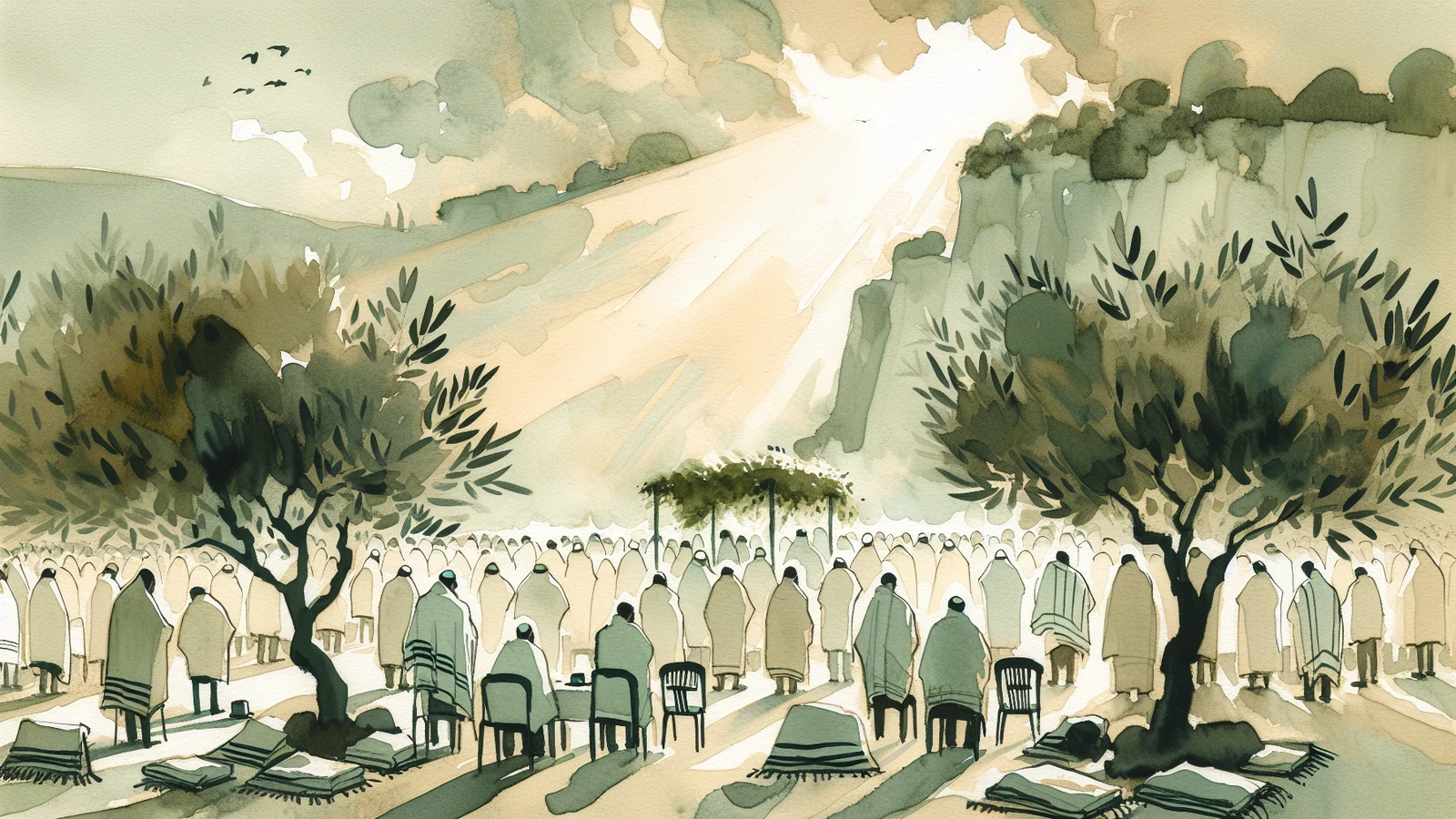
Navigate Yom Kippur with meaning through fasting wisdom, prayer guidance, and atonement practices. Transform your spiritual journey on the holiest day.
In a world that constantly rushes forward, Yom Kippur asks us to stop. Just for one day. Not to celebrate, not to feast—but to reflect, repent, and return. Imagine a full day where the world seems to quiet itself, where even the most secular streets of Jerusalem grow hushed, and where hearts—millions of them—turn inward in unison. This isn't merely a ritual. It's a sacred architecture of the soul, a masterpiece of spiritual engineering that has endured for millennia.
Yom Kippur, the Day of Atonement, invites us into one of the most powerful spiritual experiences known to any faith: the possibility of true forgiveness. This Jewish holy day is ancient, solemn, and strikingly relevant. Each year, as it arrives on the 10th day of the Hebrew month of Tishrei, it offers a rare opportunity for deep moral reckoning. Not only are sins confessed and apologies offered—entire communities come together to repair what was broken. But what makes Yom Kippur truly remarkable is not just its theological depth, but its universal heartbeat. At its core, it speaks to something every human being longs for: a fresh start, a clean slate, a chance to become who we truly aspire to be.
From Golden Calf to Sacred Ritual: The Birth of Yom Kippur
The story of Yom Kippur begins in the Torah, in the wilderness of Sinai. Following the dramatic incident of the Golden Calf—when the Israelites, impatient for Moses' return, fashioned an idol from their gold—Moses ascended Mount Sinai once more to seek God's forgiveness on behalf of the people. According to Jewish tradition, he returned with a message of mercy—and that day of divine pardon became the seed of Yom Kippur.
Leviticus 16 outlines the ancient rituals commanded for this sacred day. The High Priest, or Kohen Gadol, would enter the Holy of Holies—the innermost chamber of the Tabernacle—only on this day, to offer incense and sprinkle blood, enacting a complex ritual of purification. This moment, when the veil between human and divine thinned, symbolized the entire nation's yearning to be cleansed and restored.
“For on that day shall the priest make an atonement for you, to cleanse you, that ye may be clean from all your sins before the LORD.” — Leviticus 16:30 — The promise of complete cleansing

The ritual included the famous scapegoat ceremony, where the High Priest would place his hands on a goat's head, symbolically transferring the sins of the people onto the animal, which was then led into the wilderness. This powerful image of sins being carried away speaks to the human need for tangible release from guilt and shame.
This ritual drama speaks of something more than priestly duty. It tells of a people seeking wholeness, of a broken world straining toward harmony, of the human heart learning to kneel and rise again. The ceremonies were elaborate, precise, and deeply meaningful—a choreography of redemption that acknowledged both human frailty and divine mercy. This ancient healing prayer tradition continues to resonate across millennia.

Teshuvah: The Four-Step Journey Back to Your Authentic Self
Yom Kippur revolves around the concept of teshuvah, often translated as repentance, but more accurately meaning “return.” It is a return to God, to one's values, to one's truest self. During the Ten Days of Awe—from Rosh Hashanah to Yom Kippur—Jews engage in intensive self-examination, seeking forgiveness from both God and fellow human beings.
Maimonides, the medieval Jewish philosopher and physician, wrote that sincere teshuvah requires four essential steps: recognizing the wrongdoing, expressing genuine regret, making concrete amends where possible, and resolving not to repeat the behavior. He taught that complete teshuvah occurs “when the person finds themselves in the same situation and refrains—not out of fear or weakness, but because they have changed.”
This is not passive forgiveness or cheap grace. Yom Kippur demands emotional honesty, moral clarity, and real action. The prayers, the fasting, the confessions—all serve as instruments for inner transformation. The liturgy is filled with striking imagery: “We are like clay in the potter's hands,” acknowledging our malleability and potential for change. And in a world of finger-pointing and defensiveness, the vulnerability of saying, “I was wrong” feels revolutionary.
The tradition emphasizes that forgiveness between people must be sought directly—God cannot forgive what we've done to others until we've made things right with them first. This requirement transforms Yom Kippur from a private spiritual experience into a community-wide practice of reconciliation, embodying the balance of opposites that characterizes mature spiritual practice.
Why 25 Hours Without Food Transforms Your Soul
Central to Yom Kippur is its 25-hour fast, observed from sunset to the next nightfall. No food, no water, no physical comfort. It's not about punishment—it's about clarity. In the absence of earthly distractions, the soul has room to breathe. The body's hunger becomes a metaphor for the soul's deeper hungers: for meaning, for connection, for forgiveness.
Isaiah's words, read on Yom Kippur morning, redefine the purpose of fasting:
“Is not this the fast that I have chosen? to loose the bands of wickedness, to undo the heavy burdens, and to let the oppressed go free, and that ye break every yoke?” — Isaiah 58:6 — True fasting transforms society

The fast is accompanied by other physical restrictions: no washing for pleasure, no wearing of leather shoes, no sexual relations, no anointing with oils. These prohibitions create a deliberate discomfort that mirrors the soul's distress over its failures. Yet they also create equality—rich and poor, young and old, all experience the same human vulnerability.
Fasting becomes a mirror, revealing where we've grown callous to others' pain. It's an embodied way of crying out, “I want to be different.” And by participating in this shared vulnerability, communities are bound together in the sacred work of renewal.
The Revolutionary Power of Saying “We Have Sinned”

One of the most striking features of Yom Kippur is its language. The central confession prayer, Vidui, is said in the plural. “We have sinned, we have betrayed, we have stolen…” The list continues through the Hebrew alphabet, acknowledging every conceivable moral failure.
This communal voice reflects an understanding that we are all responsible for one another. Even private failures ripple outward, affecting families, communities, and society. The spiritual ecology of Yom Kippur recognizes that the world can only be healed if we acknowledge our part in its wounding.
As Rabbi Abraham Joshua Heschel once said, “In a free society, some are guilty, but all are responsible.” This collective confession doesn't erase individual responsibility. Rather, it invites solidarity—a shared yearning for a more just and compassionate world. We confess sins we may not have committed individually because we recognize our interconnectedness and shared humanity.
How Every Major Faith Embraces the Path to Forgiveness
Though uniquely structured in Judaism, the longing for atonement transcends religious boundaries. In Christianity, confession and absolution remain central sacraments, rooted in the teachings of Jesus who emphasized forgiving
“Then came Peter to him, and said, Lord, how oft shall my brother sin against me, and I forgive him? till seven times? Jesus saith unto him, I say not unto thee, Until seven times: but, Until seventy times seven.” — Matthew 18:21-22 — Forgiveness without limits

The Catholic sacrament of reconciliation and Protestant traditions of confession reflect this same human need for forgiveness and renewal.
Islam holds the Day of Ashura on the 10th of Muharram, a day also connected to repentance and reflection. The Qur'an teaches that God's mercy is vast:
“Say: “O my Servants who Have transgressed against their souls Despair not of the Mercy Of God: for God forgives All sins: for He is Oft-Forgiving, Most Merciful.” — Qur'an 39:53 — Divine mercy knows no bounds

The Islamic concept of tawbah (repentance) parallels the Jewish understanding of teshuvah, much like how Eid al-Fitr celebrates spiritual renewal after Ramadan's fast.
Buddhism, though not centered on sin in the Abrahamic sense, places immense weight on karma and mindful repentance. The act of confession is seen as a way to purify one's mind and progress toward liberation from suffering. Hindu traditions also emphasize the importance of prayaschitta (atonement) and the possibility of spiritual purification.
What unites these traditions is a belief that human beings are not defined by their failures—but by their capacity to grow beyond them. Yom Kippur becomes a mirror of this universal wisdom, reflecting humanity's shared need for redemption and renewal.

Neilah: When Heaven's Gates Begin to Close
As Yom Kippur nears its end, the liturgy turns toward Neilah, the final service. The imagery is powerful: the gates of heaven, wide open all day, now begin to close. A last chance to pour out one's heart, to whisper what remained unsaid, to promise to walk a new path.
The shofar sounds one long final blast—the tekiah gedolah. It is not triumphant—it is raw. A single, aching note that says: we tried. We're not perfect, but we showed up. And perhaps, that is enough.
“The great shofar is sounded… a still, small voice is heard.” In that moment, the soul feels laid bare. But it is also embraced.
Transforming Your Life Through Yom Kippur's Ancient Wisdom
Yom Kippur is not a performance. It's not about perfection. It's about presence. To stand honestly before ourselves, before others, before God, and say: I am ready to return. I am ready to heal.
For those outside the Jewish tradition, Yom Kippur can still offer deep spiritual insight. Take time for personal reflection: whom do you need to forgive, and from whom must you seek forgiveness? Try fasting for a few hours—not to mimic, but to witness how hunger clarifies thought. Share an honest conversation with someone you've wronged.
More than anything, approach the day with humility. At its heart, Yom Kippur isn't about religion—it's about relationship. Between people, and between humanity and the divine.
And if we dare to believe that change is possible—for ourselves and for the world—then Yom Kippur becomes more than a holy day. It becomes a lifeline.
As the gates close, a new door opens. And through it walks a person transformed—not because they are flawless, but because they chose to begin again.
Article Author
Elly Marimbocho is a seasoned writer with a background in Religious Studies and over a decade of experience producing long-form educational content on theology, interfaith spirituality, and world religions. Passionate about the contemplative heart of faith, Elly creates in-depth, reverent, and accessible guides that help readers engage meaningfully with religious wisdom across traditions.
More From Ocean
Uncover the mystical meanings of religious symbols across traditions, discover how dietary laws shape spiritual identity through mindful eating practices, and explore the core beliefs of major world religions and their surprising connections.
Related Articles
- Eid al-Fitr: Celebrating the End of Fasting Across Cultures - religious fasting
- Guru Nanak: The Revolutionary Saint Who Founded Sikhism - Guru Granth Sahib
- Lantern Festival: Illuminating the Path to Spiritual Enlightenment - spiritual awakening
- Ocean Library: An Adventure Through Sacred Texts with Immersive Audio Technology - Bible verses