The Ten Heads We All Carry: Understanding Dussehra and the Victory of Good Over Evil
Discover how Dussehra's spectacular burning effigies teach us to conquer inner demons through ancient Hindu wisdom, sacred festival recipes, and universal sp...
Picture yourself standing in your kitchen at midnight, staring into the refrigerator, knowing you shouldn't eat that leftover cake. Ten voices start arguing in your head:
“You deserve it after today.” “You'll regret this tomorrow.” “Just one bite won't hurt.” “You have no self-control.” “Life's too short to skip dessert.”
Why Inner Demons Need Ancient Fire Rituals

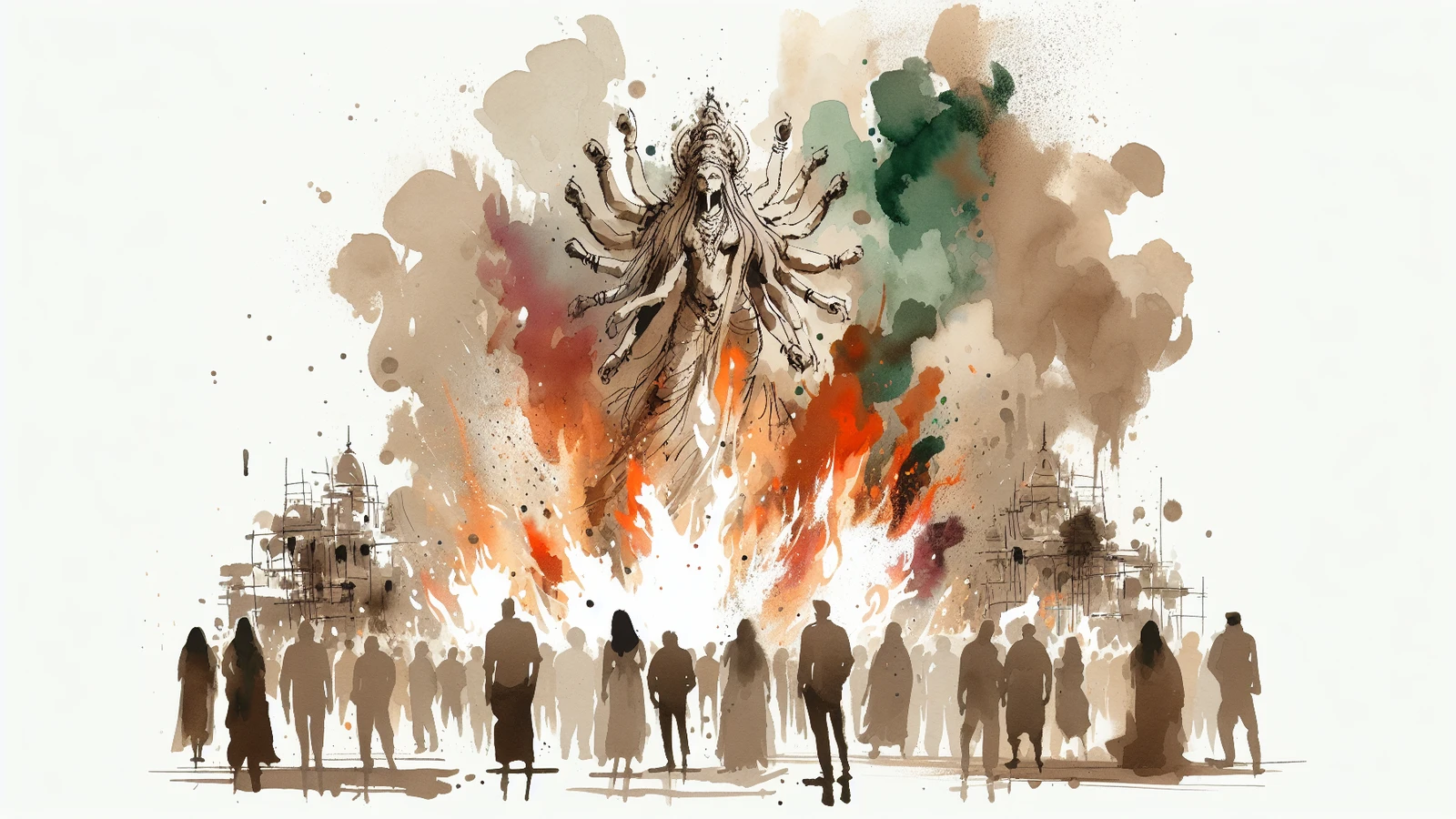
Welcome to Dussehra (Vijayadashami meaning tenth day of victory), the most spectacular bonfire of the year, where entire communities gather to watch towering effigies of a ten-headed demon king burst into flames. But this isn't just pyrotechnics and pageantry. This is family therapy on a cosmic scale, where every explosion in the sky represents another inner demon going up in smoke.
This year, Dussehra falls on October 2, 2025, marking the day when good triumphs over evil—starting with the battles we fight within ourselves.
“One's own self is the friend of that soul by whom the lower self has been conquered; on the other hand, the very self of him, who has not conquered his lower self, behaves inimically like one's own enemy.” — Bhagavad Gita, VI.6

The Kitchen King Who Lost Everything
Every family has stories of relatives who had everything going for them until pride became their downfall. Ravana, the ten-headed demon king of Lanka, was that relative on a mythic scale in Hindu mythology. Brilliant scholar, powerful ruler, devoted son—but his ego grew so large it literally sprouted extra heads.
The Ramayana tells his story like a cautionary tale passed down through generations of kitchen wisdom: even the most gifted among us can lose everything when we stop listening to the better angels of our nature.
Prince Rama—honorable as homemade bread, reliable as your grandmother's cast-iron skillet—lived in forest exile with his wife Sita and brother Lakshmana. When Ravana kidnapped Sita, it wasn't just an act of evil; it was the moment when unchecked desire collided with pure love.
“The Rákshas monarch, thus addressed, His hands a while together pressed, And straight before her startled eyes Stood monstrous in his giant size... 'I borne sublime in air can stand And with these arms upheave the land, Drink the deep flood of Ocean dry And Death with conquering force defy.'” — Valmiki, The Rámáyan of Válmíki, Aranya Kanda, Canto XLIX
Ravana's boasting sounds like every family gathering's insufferable relative who can't stop talking about their achievements. As Solomon wisely observed:
“Pride goeth before destruction, and an haughty spirit before a fall.” — The Bible (KJV), Proverbs 16:18
What Makes Dussehra Celebrations So Spectacular

During Dussehra, Indian communities transform into outdoor theaters where the ancient story comes alive. Ramlila (rama lila meaning Rama's play) performances turn neighborhood parks into stages where children learn their heritage through drama, music, and storytelling that makes every character feel like family.
But the real showstopper comes when night falls and those magnificent Ravana effigies—some towering over 50 feet tall—light up the sky. Packed with fireworks, they explode in cascades of light that make Fourth of July celebrations look timid by comparison.
Watching those towering figures burst into flames isn't just entertainment—it's collective therapy. Every explosion represents another inner demon released, another negative pattern interrupted, another chance to start fresh.
“Ravana's ten heads symbolize the ten negative traits that reside within. When Rama conquers him, it serves as a powerful reminder to overcome those qualities within ourselves.” — OceanLibrary summary of the Ramayana
The Ten Heads We Meet in the Mirror

Ravana's ten heads weren't just dramatic flair—they represent the internal committee that runs wild when we're not paying attention. Every family cook knows these voices well:
- Lust - That insatiable hunger that's never satisfied with what's on the plate
- Anger - The heat that burns every dish it touches
- Greed - Always grabbing for more, never appreciating what's already served
- Pride - The chef who can't take suggestions and ruins dinner for everyone
- Jealousy - Poisoning perfectly good meals with bitter comparisons
- Ego - Making every family gathering about yourself
- Delusion - Believing your own kitchen myths while ignoring the smoke alarm
- Attachment - Clinging to recipes that stopped working years ago
- Fear - Paralyzed in the pantry, afraid to try anything new
- Confusion - Lost between the salt and sugar, unable to trust your own taste
Burning Ravana's effigy becomes a sacred ritual of release: “I choose to let go of the voices that keep me small, scared, and separated from the people I love.”
Universal Wisdom for Inner Victory
Dussehra's message resonates across every spiritual tradition because every culture recognizes the same inner battlefield. For those exploring how different faiths approach inner transformation, World Religion 101: A Beginner's Guide to Global Faiths offers deeper insights into these universal struggles.
Christianity teaches:
“Be not overcome of evil, but overcome evil with good.” — Bible (KJV), Romans 12:21
Christians understand that victory comes not through fighting darkness, but by choosing light consistently, like Rama's unwavering devotion to righteousness.
Islam recognizes the greatest jihad as jihad al-nafs (Arabic for struggle against the self)—the struggle against the ego's demands for instant gratification and selfish pleasure.
“And whoso maketh efforts for us, in our ways will we guide them: for God is assuredly with those who do righteous deeds.” — Qur'an, Sura XXIX. The Spider, 29:69
Buddhism identifies the three poisons—ignorance, greed, and hatred—that the Buddha taught must be eliminated through mindfulness and compassion.
Judaism speaks of the yetzer hara (Hebrew for evil inclination) that everyone carries, balanced by the yetzer hatov (good inclination) through study, prayer, and righteous action.
As interfaith teachers remind us: “No matter what religion we follow, we are all trying to grow, to change, and to rise above our selfishness.” These timeless principles find profound expression in the Bhagavad Gita's wisdom for life's battles, where similar internal struggles are explored with divine guidance.
Sacred Dussehra Recipes: Feeding Victory

After Ravana's dramatic defeat, families gather for Dussehra feasts that celebrate triumph with every bite. These aren't just meals—they're edible prayers, recipes that nourish both body and spirit:
Aloo Puri: Humble Abundance
This simple combination of fried bread and spiced potatoes represents Rama's humble years in exile—proof that contentment doesn't require luxury, just gratitude for what's shared with love.
Sacred ingredients for the soul:
- Potatoes (humble roots that become golden when treated with care)
- Whole wheat flour (for puri that puffs with hope)
- Onions, tomatoes, green chilies
- Turmeric, cumin, salt (the holy trinity of Indian comfort)
- Oil for frying (transformation through fire)
The loving preparation:
- Cook potatoes with spices until they taste like home
- Mix flour with water, roll into small circles, and deep-fry until they balloon with joy
- Serve hot with the understanding that simple foods become sacred when shared with generous hearts
Find atta flour and spices at any Indian grocery store, or order online—good ingredients are worth seeking.
Jalebi: Sweet Spirals of Joy
These crispy, syrup-soaked spirals represent the sweetness that follows struggle—like Rama's joy when Sita was finally safe. Each golden coil reminds us that life's difficulties eventually transform into celebrations.
Ingredients for edible sunshine:
- Plain flour (foundation for transformation)
- Yogurt or baking soda (the lift that creates lightness)
- Sugar syrup infused with saffron (liquid gold)
- Oil for frying (the medium of magical change)
The alchemy of sweetness:
- Ferment batter until it bubbles with life
- Pipe spiral shapes into hot oil, watching them crisp into golden coils
- Immerse in warm syrup until they gleam like jeweled promises
Dairy-free? Use plant-based yogurt. Gluten-free? Try chickpea or rice flour. The recipe adapts like good families do.
Sundal: Pure Offering
This South Indian spiced chickpea dish represents the pure offerings made to divine feminine energy during Navaratri and Dussehra. Simple, wholesome, naturally free of dairy and gluten—it's food that honors both body and spirit.
Blessed ingredients:
- Cooked chickpeas (protein that sustains)
- Mustard seeds, curry leaves, green chilies (the aromatic trinity)
- Fresh grated coconut (richness from the earth)
- Salt and oil (essential elements of life)
The ritual of preparation: Heat oil, add mustard seeds until they dance, throw in curry leaves and chilies, then toss with chickpeas and coconut until every bite tastes like blessing.
Perfect for sharing with neighbors of any faith—good food needs no translation.
How Anyone Can Celebrate Dussehra Respectfully
Dussehra welcomes everyone to witness the victory of good over evil, regardless of religious background:
- Attend local celebrations - Many Hindu communities welcome respectful observers to Ramlila performances and Ravana burning ceremonies
- Prepare traditional foods - Cooking Dussehra recipes connects you to the festival's spirit of abundance and gratitude
- Learn from Hindu friends - Ask about family traditions, but listen more than you speak
- Reflect on inner battles - Use the festival as inspiration for your own journey toward better choices
Remember: Dussehra celebrates universal values of courage, integrity, and the triumph of love over fear.
Why Dussehra Matters in Our Modern Kitchen
Ravana's ten heads manifest differently today, but they're still wreaking havoc in our daily lives:
- Lust becomes endless scrolling for validation on social media
- Anger transforms into road rage and comment section wars
- Greed shows up as hoarding resources while others go without
- Pride prevents us from apologizing when we're wrong
- Attachment keeps us clinging to relationships and situations that no longer serve
Dussehra teaches that we can choose differently. We can feed compassion instead of criticism, nurture gratitude instead of greed, and practice humility like a daily recipe for peace.
The Inner Work That Changes Everything
The real magic of Dussehra isn't in the spectacular fires or festive foods—it's in the inner transformation that happens when we finally face our own shadows with courage and love.
Why Fighting Inner Demons Actually Matters
1. They Cloud Our Vision When jealousy or pride controls us, we see competitors instead of community. Fear makes us miss opportunities. Anger burns bridges we might need later.
2. They Limit Our Potential How many dreams have we abandoned because fear whispered “you can't”? How many relationships have we damaged because ego refused to apologize?
3. They Affect Everyone We Love Unchecked inner demons don't stay inner. They spill into our families, our friendships, our communities like smoke from a kitchen fire.
4. They Block Spiritual Growth Every major tradition teaches that spiritual development requires honest self-examination. Dussehra's fire represents the purification that makes space for divine light, a process enhanced through meditation practices found across world religions that cultivate self-awareness and inner peace.
As Buddha taught:
“Let a wise man blow off the impurities of his self, as a smith blows off the impurities of silver one by one, little by little, and from time to time.” — The Dhammapada, Siddhartha Buddha, 239

5. Healing Creates Freedom Confronting our inner Ravana is uncomfortable work—it requires admitting mistakes, forgiving hurts, releasing grudges we've nursed like sourdough starters. But that discomfort leads to genuine freedom, much like the transformative experience found in the universal power of atonement and forgiveness.
The Victory That Never Ends
Dussehra isn't just about celebrating Rama's ancient victory—it's about claiming your own triumph over the voices that keep you small, afraid, and separated from love.
This year, as you watch those towering effigies burst into flame (or simply light a candle in your own kitchen), consider which of Ravana's heads you're ready to release. Which inner voice needs to go up in smoke so your truest self can finally breathe free?
Every explosion in the Dussehra sky whispers the same promise: darkness may be persistent, but light is more powerful. Evil may be loud, but good has the final word.
Your inner demons may seem unconquerable, but love armed with wisdom always wins.
“And the light shineth in darkness; and the darkness comprehended it not.” — The Bible (KJV), The Gospel of John, 1:5
This Dussehra, may you discover that the most spectacular victory isn't the one that lights up the sky—it's the quiet triumph that happens when you choose courage over fear, compassion over judgment, and love over everything that tries to convince you otherwise.
The ten-headed demon of doubt doesn't stand a chance against a heart that remembers its own light.
Deeper Into the Sacred Fire
- Nine Faces of the Mother: How a Billion People Find God in the Feminine - Explore Navaratri's divine feminine victory through Hindu goddess worship
- Understanding inner transformation across spiritual traditions reveals similar patterns of conquering inner obstacles
- Moral Compass: Universal Values in a Diverse World - How different faiths approach the battle between good and evil
About the Festival Storyteller
Mercy Iburuoma illuminates how ancient festivals like Dussehra speak to modern struggles with inner demons we all face. Her interfaith perspective reveals the universal battle between our higher and lower selves, whether we call them Ravana's ten heads or simply bad habits. She specializes in transforming mythic wisdom into practical kitchen table conversations where families learn to choose light over darkness, one shared meal at a time.