The Waters That Transform: Humanity's Ancient Dance with Rebirth
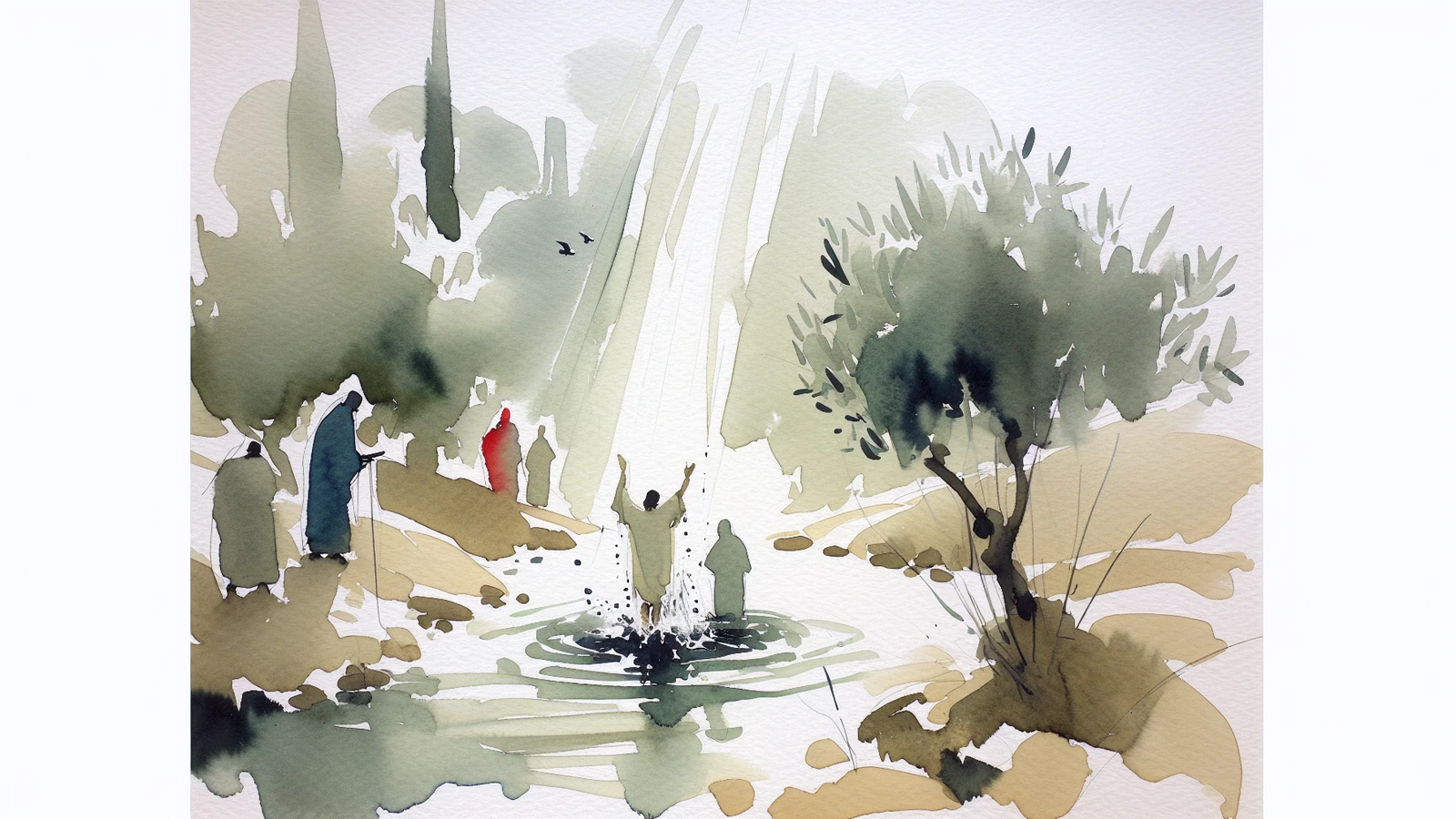
Explore baptism and ritual immersion across world religions—from Christian baptism to Jewish mikveh, Islamic ghusl to Hindu sacred river bathing rituals.
The Waters That Transform: Humanity's Ancient Dance with Rebirth

Stand by any river long enough, and you'll see it: a human being stepping into the water with one identity and emerging with another. It might be the Ganges at dawn, where a Hindu pilgrim seeks to wash away lifetimes of karma. It might be the Jordan at noon, where a Christian convert dies to their old self and rises anew. It might be a pristine mikveh in Jerusalem, where a Jewish bride prepares for her wedding by returning to a state of original purity.
The water doesn't know the difference. It simply does what water has always done—cleanse, refresh, transform. But for the human stepping into its embrace, everything changes. This is the mystery of ritual immersion, practiced in a thousand forms across every inhabited continent, throughout all recorded history. We call it by different names—baptism, mikveh, ghusl, snana—but the impulse is the same: to use the most basic element of life as a doorway to the sacred, connecting with the way of water that brings healing across traditions.
The First Baptism
Long before any scripture was written, before any temple was built, there was water. And there were humans who understood, with that deep knowing that predates language, that water could do more than slake thirst or clean bodies. It could cleanse souls.
The ancient Egyptians knew this. Their priests underwent elaborate washing rituals before entering sacred spaces. The Babylonians codified it in the Code of Hammurabi—purification through water was law, not just custom. Even the Greeks, those champions of reason, maintained sacred springs where pilgrims could wash away ritual pollution.
“Water symbolizes the universal sum of virtualities; it is the fons et origo, the spring and origin of all existence.” — Mircea Eliade
But it was in the Jewish tradition that ritual immersion found its most profound expression. The mikveh—literally a “collection” of water—became a technology for spiritual transformation. Not a bath for dirt, but a return to the womb of creation. Rabbi Aryeh Kaplan explains:
“The mikveh represents a spiritual rebirth, a transformation that allows one to re-enter a state of holiness.” — Rabbi Aryeh Kaplan
Every month, Jewish women would immerse after menstruation—not because they were “unclean” in any hygienic sense, but to mark the sacred rhythm of potential life and renewal. Converts would immerse, literally dying to their old identity and being reborn as Jews. Even cooking vessels required immersion, acknowledging that the most mundane acts could be elevated to holiness.

The Wild Man by the River
Into this world of careful ritual came a wild prophet who turned everything upside down. John the Baptist didn't wait for people to come to pristine ritual baths. He stood in the muddy Jordan—the river that marked Israel's entry into the Promised Land—and called people to a different kind of immersion.
This wasn't about ritual purity. This was about revolution. John's baptism was a one-time plunge that marked a complete turning—not just from ritual impurity to purity, but from an entire way of life to another. He baptized tax collectors and soldiers, prostitutes and Pharisees, anyone willing to admit they needed to start over.
“I baptize you with water for repentance. But after me comes one who is more powerful than I... He will baptize you with the Holy Spirit and fire.” — Matthew 3:11

Then came the day that changed everything. Jesus of Nazareth, who had no sins to repent, stepped into the Jordan. The sinless one submitted to a sinner's baptism, and in that moment, water itself was transformed. What had been a symbol became a sacrament. What had been about human effort became about divine grace, embodying the same transformative power found in sacred symbols across traditions.
Related Articles
- Way of Water: Ancient Wisdom Modern Peace - Water as spiritual metaphor
- Sacred Symbols: Universal Language of Spirituality - Cross-cultural sacred imagery
- God in the Straw: Christmas Nativity Manger - Divine presence in simple elements
Death in the Afternoon
For the early Christians, baptism became the defining moment of transformation. But they understood it as something far more radical than a ritual washing. Paul the Apostle explained it with stark clarity:
“We were therefore buried with him through baptism into death in order that, just as Christ was raised from the dead through the glory of the Father, we too may live a new life.” — Romans 6:4

This wasn't metaphorical. The early Christians practiced baptism by full immersion, often in natural bodies of water. The person would be plunged completely under—held there just long enough to feel the edge of panic, the body's desperate need for air. In that moment, they experienced death. Then they were pulled up, gasping, into resurrection.
The symbolism was visceral:
- Going under = dying with Christ
- Being submerged = burial
- Rising up = resurrection to new life
But it meant even more. In a world divided by nationality, class, and status, baptism created a new kind of human:
“For we were all baptized by one Spirit so as to form one body—whether Jews or Gentiles, slave or free.” — 1 Corinthians 12:13
A slave and their master could emerge from the same water as brothers. A Jew and a Gentile became family. The water washed away not just sin but the very categories that divided humanity.

The Great Divide
As Christianity spread and evolved, a question emerged that would divide the church for centuries: Who can be baptized?
The Case for Infants: As early as the 2nd century, Christian parents were bringing their babies for baptism. Their logic was compelling:
- If baptism replaces circumcision (done at 8 days old), why wait?
- If children can inherit sin, why can't they inherit grace?
- If Jesus said “Let the little children come to me,” why bar them from baptism?
The practice became standard in Catholic, Orthodox, and many Protestant traditions. The Catechism explains:
“Born with a fallen human nature and tainted by original sin, children also have need of the new birth in Baptism to be freed from the power of darkness.” — Catechism of the Catholic Church
The Case for Believers: But other Christians resisted. The Baptist movement insisted: How can an infant repent? How can a baby have faith? They pointed to the New Testament pattern—every recorded baptism followed a conscious decision. Their statement of faith declares:
“Christian baptism is the immersion of a believer in water... It is an act of obedience symbolizing the believer's faith in a crucified, buried, and risen Savior.” — Baptist Faith and Message
This wasn't just about timing. It was about the very nature of faith—is it a gift received or a choice made? Can a community have faith on behalf of an individual, or must each person choose for themselves?
Waters Without Borders
Christianity has no monopoly on sacred washing. Across the world's traditions, water serves as the universal solvent for spiritual impurity:
Islam: Five times daily, Muslims perform wudu—washing hands, face, and feet before prayer. It's not about dirt but about approaching the Divine in a state of purity. For major impurities, there's ghusl, a full-body washing that echoes baptismal totality. The Quran instructs:
“O you who believe! When you prepare for prayer, wash your faces, and your hands to the elbows; rub your heads; and wash your feet to the ankles.” — Quran 5:6
Sikhism: The Amrit Sanskar ceremony transforms a Sikh into a member of the Khalsa. Sacred water (amrit) is stirred with a double-edged sword while prayers are recited. The initiate drinks the water and has it sprinkled on their eyes and hair. They die to their old identity and are reborn with a new name—every man becomes “Singh” (lion), every woman “Kaur” (princess).
Hinduism: The Ganges isn't just a river—it's a goddess, Ganga, whose waters can wash away the karma of lifetimes. Millions make pilgrimage to bathe in her waters, especially at sacred confluences during auspicious times. The Skanda Purana promises:
“Those who bathe in Ganga obtain final liberation.” — Skanda Purana
Japanese Shinto: Before approaching a shrine, worshippers perform misogi—ritual purification with water. In its most intense form, practitioners stand under ice-cold waterfalls, allowing the crushing water to wash away spiritual impurities and strengthen the soul.

The Science of Sacred Water
Modern neuroscience offers fascinating insights into why water rituals are so universally powerful. When we immerse in water, especially cold water:
- The mammalian dive reflex kicks in, slowing heart rate and shifting consciousness
- Stress hormones plummet
- The vagus nerve activates, inducing calm
- Brain waves shift toward meditative patterns
But there's more than physiology at work. Water immersion triggers what psychologists call a “liminal state”—a threshold between one state and another. In this in-between space, identity becomes fluid. Old patterns can dissolve. New possibilities emerge.
Anthropologist Arnold van Gennep identified this pattern across cultures: separation (leaving the old state), liminality (the threshold), and reincorporation (entering the new state). Baptism perfectly embodies this universal pattern of transformation.
Living Water in a Dry Age
In our secular age, many have abandoned religious baptism. But the hunger for transformation remains. Notice how we've created secular baptisms:
- The ice bucket challenge that went viral—people dumping water on themselves for a cause
- Cold plunge therapy promising mental and physical transformation
- Wild swimming movements returning to natural waters for healing
- Even the simple act of crying—salt water washing away emotional pain
We still need marking moments, threshold experiences, ritual rebirth. We still need to die to old versions of ourselves and be born anew. Water still calls to us as the element of transformation.
Approaching Sacred Waters
Whether you're considering baptism, witnessing one, or simply curious about humanity's water rituals, here's how to approach with respect and openness:
If Participating: Don't take it lightly. Whether infant or adult baptism, this is a death and rebirth. Prepare mentally and spiritually. Understand what you're dying to and what you're being born into. Consider exploring contemplative prayer practices found across spiritual traditions to deepen your preparation.
If Witnessing: You're watching someone die and be reborn. Hold sacred space. Your presence matters—you're the community that receives the newly transformed person.
If Exploring: Visit different traditions' water rituals. Observe a baptism, visit a mikveh museum, watch sunrise bathing at a sacred river. Notice what stirs in you at the sight of human beings seeking transformation through water.
In Daily Life: Let every encounter with water remind you of its transformative power. Your morning shower can be a mini-baptism. Swimming can be practice dying and rising. Even washing dishes can become sacred if you remember: water cleanses more than surface dirt.

The River Flows On
That river where you stood watching—it's the same river where Naaman the Syrian dipped seven times and was healed of leprosy. It's the same river where Jesus rose dripping and divine. It's the same river where yesterday a young woman went under believing one thing about herself and came up knowing another.
The water doesn't care what name you give the ritual. It doesn't check your theology or ask for your denomination. It simply offers what it has always offered: a liquid doorway between who you were and who you're becoming.
Step in. The water's fine. And on the other side? That's between you and the Mystery that flows through all things, washing, renewing, transforming, making all things new.
Because ultimately, every baptism whispers the same secret: you don't have to stay who you were. The waters of transformation are always flowing, always available, always ready to carry away what needs to die so that what needs to live can surface, gasping and grateful, into the light.
Related Articles
- Intercessory Prayer: The Art of Spiritual Advocacy Across Faiths - Discover prayer practices that accompany ritual immersion
- Dark Night of the Soul: Spiritual Crisis as a Path to Growth - Understanding spiritual transformation and rebirth
References
- Bradshaw, Paul F. The Search for the Origins of Christian Worship. Oxford: Oxford University Press, 2002.
- Catechism of the Catholic Church. 2nd ed. Vatican: Libreria Editrice Vaticana, 1997.
- Cross, F.L. and Livingstone, E.A., eds. The Oxford Dictionary of the Christian Church. Oxford: Oxford University Press, 2005.
- Eliade, Mircea. Images and Symbols: Studies in Religious Symbolism. Princeton: Princeton University Press, 1961.
- Holy Bible, New International Version. Grand Rapids: Zondervan, 2011.
- Kaplan, Rabbi Aryeh. Waters of Eden: The Mystery of the Mikvah. Brooklyn: Mesorah Publications, 1982.
- The Baptist Faith and Message 2000. Southern Baptist Convention, 2000.
- Van Gennep, Arnold. The Rites of Passage. Chicago: University of Chicago Press, 1960.
About the Author
Rev'd Dr. Ayotunde Oyadiran is a Priest of the Anglican Church who brings a unique perspective to the exploration of faith and spirituality. Holding a PhD in Church History and an MSc in Ecology and Environmental Biology, he bridges the worlds of faith, science, and human experience. As the author of over three books, Dr. Oyadiran has explored themes of spirituality, personal growth, and environmental stewardship. He also works as a coach and trainer on peak performance, helping individuals unlock their potential and achieve their goals. His passion is empowering others to live purposeful, high-impact lives that integrate faith, wisdom, and excellence.