Yamas and Niyamas: Yoga's Ethical Guidelines for Modern Life
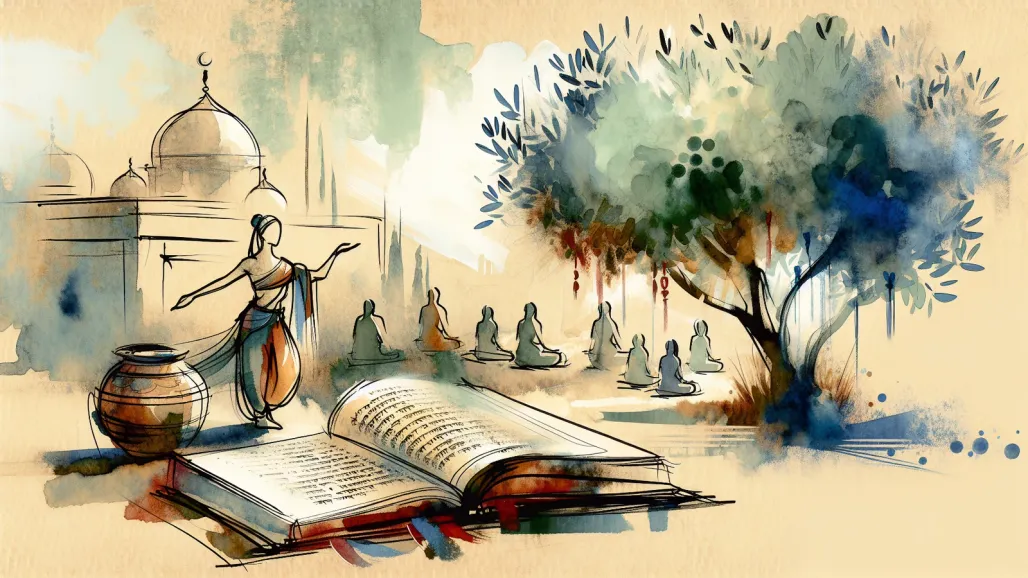
Discover yoga's ethical foundations through the Yamas and Niyamas. Learn how these ancient Patanjali principles guide modern spiritual practice and authentic...
Across the contemporary world, yoga is predominantly associated with physical postures, breathing techniques, and wellness practices. Yet beneath this modern interpretation lies a profound spiritual tradition that extends far beyond physical exercise. At its most fundamental level, yoga represents a comprehensive spiritual path designed to cultivate unity between individual consciousness and universal truth. The foundation of this transformative journey rests upon ethical disciplines known as the Yamas and Niyamas—ten guiding principles that serve as moral compass for how practitioners relate to themselves, to others, and to the divine. These principles share profound resonances with Buddhism's Noble Eightfold Path and the ethical teachings found in sacred texts worldwide. These ancient teachings, carefully preserved in sacred scriptures across millennia, remain profoundly relevant for navigating the complexities of modern existence, offering timeless wisdom for cultivating integrity, self-awareness, and authentic inner freedom.
The Historical Roots of Yamas and Niyamas within the Yogic Tradition
The philosophical framework of ethical yoga practice finds its most systematic expression in the Yoga Sutras of Patanjali, arguably one of the most influential and enduring texts in Indian spiritual philosophy. This seminal work delineates an eightfold path known as Ashtanga Yoga, literally meaning “eight limbs of yoga,” which provides a comprehensive roadmap for spiritual development and self-realization. Significantly, the first two limbs of this sacred path are the Yamas and Niyamas, positioning ethical conduct as the essential foundation that must precede and support all subsequent practices, including physical postures, breath control, and meditation.
Patanjali's fundamental definition establishes the ultimate goal of yogic practice:
“Union, here as always in the Scriptures of India, means union of the individual soul with the Oversoul; of the personal consciousness with the Divine Consciousness, whereby the mortal becomes immortal, and enters the Eternal. Therefore, salvation is, first, freedom from sin and the sorrow which comes from sin, and then a divine and eternal well-being, wherein the soul partakes of the being, the wisdom and glory of God.” — Charles Johnston, The Yoga Sutras of Patanjali 1.2

To achieve this profound inner stillness and mental equilibrium, practitioners must first establish a solid foundation of moral discipline through the systematic cultivation of these ethical guidelines. The wisdom recognizes that without proper ethical grounding, the mind remains agitated by internal conflicts and moral confusion, making deeper spiritual practices ineffective or even potentially harmful.
The five Yamas function as ethical restraints that guide practitioners in their outward behavior and relationships with the world, while the five Niyamas serve as positive observances for self-discipline and inner development. Together, these ten principles form a comprehensive moral compass for yogic living, providing structure and guidance similar to how other major faith traditions offer codes of ethical conduct for their adherents.
This vision of ethical harmony resonates throughout ancient Vedic literature. The Rig Veda emphasizes the importance of unity and collective purpose:
“Assemble, speak together: let your minds be all of one accord.” — Rig Veda 10:191:2

This ancient aspiration for harmony perfectly mirrors the fundamental purpose of the Yamas and Niyamas—to create unity within oneself and establish harmonious relationships with the broader world.

The Yamas: Foundational Restraints Guiding Our Conduct with Others
Ahimsa – The Practice of Nonviolence as Universal Compassion
Ahimsa, or nonviolence, stands as the first and most fundamental Yama, serving as the cornerstone upon which all other ethical practices rest. This principle extends far beyond simple restraint from physical harm to encompass a comprehensive approach to compassionate living that includes kind speech, benevolent thought, and deep respect for all forms of life. The practice of Ahimsa demands careful attention to the subtle ways in which we might cause harm through our words, actions, thoughts, and even our consumption patterns.
The Buddhist tradition strongly reinforces this principle of universal compassion. The Dhammapada teaches:
“A man is not an elect (Ariya) because he injures living creatures; because he has pity on all living creatures, therefore is a man called Ariya.” — Dhammapada 270

In our contemporary world, marked by persistent conflict, environmental destruction, and social division, practicing Ahimsa becomes not merely a personal spiritual discipline but a radical act of love, empathy, and social responsibility that can contribute to healing our fractured world. This practice of universal compassion finds expression in healing prayers across traditions.
Satya – Truthfulness as a Path to Integrity and Freedom
Satya encompasses the practice of truthfulness in its most comprehensive sense, urging practitioners toward honesty in word, thought, and action. This ethical principle transcends mere factual accuracy to demand authentic living—alignment between one's inner truth and outer expression. Satya challenges practitioners to examine not only what they say but how they present themselves to the world and whether their actions consistently reflect their deepest values and convictions.
The epic Mahābhārata provides profound insight into the supreme importance of truth:
“Truth is duty; Truth is penance; Truth is Yoga; and Truth is the eternal Brahma. Truth has been said to be Sacrifice of a high order. Everything rests upon Truth.” — Mahābhārata 12.162.2

This teaching reminds us that embracing truthfulness in all aspects of life fosters trust, courage, and alignment with dharma—the universal order that governs cosmic and moral law. In an era increasingly characterized by misinformation and inauthentic self-presentation, Satya offers a pathway to genuine personal freedom and social healing.
Asteya – Non-Stealing as Respect for What Belongs to Others
Asteya, while literally meaning non-stealing, encompasses a far broader ethical framework that includes avoiding exploitation, envy, taking more than one's fair share, and misusing resources that belong to others or to the collective. This principle reflects fundamental attitudes of gratitude, humility, and respect for the interconnected web of relationships that sustain all life.
The Bhagavad Gita illuminates the deeper meaning of ethical reciprocity:
“But if one eats Fruits of the earth, rendering to kindly Heaven No gift of toil, that thief steals from his world.” — The Bhagavad-Gita 3.3

Asteya fosters attitudes of generosity, fair distribution of resources, and conscious consumption—qualities that are particularly crucial in our current age of environmental crisis and economic inequality. This principle challenges practitioners to examine their consumption patterns and ensure they are taking only what they genuinely need.
Brahmacharya – Moderation and Wise Use of Energy
Traditionally, Brahmacharya was understood as celibacy for serious spiritual aspirants, but in its broader application, it signifies moderation and the wise, conscious direction of life force energy. This principle recognizes that human energy is precious and limited, requiring careful stewardship and intentional direction toward worthy purposes.
The Mahabharata praises the self-controlled person who draws in his desires just as a tortoise withdraws its limbs:
“The learned man who absorbs all desires into himself from all sides like the tortoise withdrawing all its limbs, who is devoid of passion, and who is released from everything, becomes always happy.” — The Mahabharata 14.42.1

In contemporary life, Brahmacharya can be understood as cultivating balanced relationships, practicing mindful consumption, and living with clear intention and purpose rather than being driven by unconscious desires and impulses.
Aparigraha – Non-Possessiveness and Freedom from Greed
Aparigraha represents the practice of non-attachment to material possessions and desires, encouraging practitioners to develop inner freedom from the compulsive need to acquire, accumulate, and possess. This principle directly challenges the consumerist mindset that dominates contemporary society and offers an alternative path toward genuine satisfaction and contentment.
The Yoga Sutras of Patanjali reveal the profound spiritual benefits of this practice:
“Where there is firm conquest of covetousness, he who has conquered it awakes to the how and why of life.” — Charles Johnston, The Yoga Sutras of Patanjali 2.89

This teaching suggests that releasing attachment to material possessions creates space for deeper understanding and spiritual insight, allowing practitioners to discover the fundamental questions and purposes of human existence.

The Niyamas: Disciplines for Inner Growth and Self-Realization
Saucha – Purity of Body, Mind, and Spirit
Saucha, or cleanliness, encompasses both external physical cleanliness and internal purification of thoughts, emotions, and intentions. This practice involves caring for the physical body as a sacred temple that houses the spirit while simultaneously cultivating clarity, peace, and wholesomeness in mental and emotional life.
The Bhagavad Gita describes the essential qualities of mental purification:
“Serenity of soul, benignity, Sway of the silent Spirit, constant stress To sanctify the Nature” — The Bhagavad-Gita 17.7

These qualities highlight that true purity extends far beyond physical cleanliness to encompass the refinement of character and the cultivation of noble qualities that support spiritual development.
Santosha – Contentment and the Joy of Sufficiency
Santosha invites practitioners to cultivate genuine contentment rather than constantly striving for external validation or acquisition. This practice represents a fundamental shift from the endless pursuit of more toward appreciation and gratitude for what is already present in one's life.
The transformative power of contentment is described in the The Yoga Sutras of Patanjali:
“From acceptance, the disciple gains happiness supreme.” — The Yoga Sutras of Patanjali 2.95

This teaching reminds practitioners that lasting happiness cannot be found through external achievements or possessions but emerges naturally from a contented and grateful heart.
Tapas – Self-Discipline and Inner Strength through Effort
Tapas refers to the transformative heat generated through disciplined spiritual practice and conscious effort to overcome limitations and negative patterns. This principle empowers practitioners to face challenges with courage, break destructive habits, and build the spiritual resilience necessary for sustained growth and development.
It highlights the value of sustained effort and inner determination, showing that true strength develops progressively through continuous practice and commitment.
Tapas is not mere willpower but intelligent, sustained effort directed toward worthy spiritual goals, tempered with wisdom and compassion.
Svadhyaya – Self-Study and Study of Sacred Knowledge
Svadhyaya encompasses both introspective self-examination and the study of sacred texts and wisdom teachings. Through careful observation of thoughts, emotions, and behavioral patterns, combined with deep engagement with spiritual literature, practitioners develop genuine self-knowledge and understanding.
The Bhagavad Gita provides guidance for sincere seekers:
“And these are gained by reverence, by strong search, By humble heed of those who see the Truth And teach it.” — The Bhagavad-Gita 4.5

This teaching emphasizes that authentic learning requires humility, service, and openness to guidance from those who have walked the spiritual path before us.
Ishvarapranidhana – Surrender to the Divine Will
The final Niyama, Ishvarapranidhana, represents devotion and conscious surrender to the divine, recognizing that ultimate freedom and peace arise not from personal control but from trusting alignment with a higher power and cosmic intelligence. This principle invites practitioners to release the burden of trying to control outcomes and instead find peace in faithful service and trust in divine wisdom.
Interfaith Parallels: Ethical Codes Shared Across World Religions
The universal applicability of the Yamas and Niyamas becomes evident when examining their remarkable parallels with ethical frameworks found throughout world religions. The Ten Commandments in Judaism and Christianity establish moral boundaries similar to the Yamas, while virtues such as contentment, purity, and devotion closely resemble the Niyamas. Buddhism's Noble Eightfold Path emphasizes right speech, right action, and right livelihood, directly echoing these fundamental principles.
The Taoist tradition offers particularly beautiful parallels. The Tao Te Ching describes:
“The highest excellence is like (that of) water. The excellence of water appears in its benefiting all things, and in its occupying” — Tao Te Ching 8.1

This image resonates deeply with the principles of Aparigraha and Santosha, suggesting that the greatest virtue lies in selfless service without attachment to recognition or reward.
Islamic teachings emphasize humility, generosity, and truthfulness throughout the Qur'an, aligning closely with many Yamas and Niyamas, while Hindu and Jain traditions consistently emphasize Ahimsa as a supreme virtue underlying all ethical behavior. These universal principles of ethical living appear across all major spiritual traditions, from the Ten Commandments to Buddhist precepts.

Relevance for Modern Life: Applying Ancient Ethics Today
In our fast-paced, consumption-driven world, the Yamas and Niyamas offer timeless guidance for both personal well-being and collective flourishing. Like meditation practices across world religions, these ethical principles provide practical wisdom for modern spiritual seekers, offering guidance for navigating contemporary challenges while maintaining spiritual integrity and authentic purpose.
Modern practitioners can incorporate these principles through small but meaningful daily practices: mindful communication that reflects Satya and Ahimsa, ethical consumption patterns that honor Asteya and Aparigraha, disciplined self-care that embodies Saucha and Tapas, and the cultivation of inner stillness through regular spiritual practice.
The Dhammapada reminds us of our individual responsibility:
“You yourself must make an effort. The Tathāgatas (Buddhas) are only preachers.” — Dhammapada 276

Genuine transformation comes through conscious, sustained effort aligned with these timeless virtues, requiring personal commitment and daily practice.
A Pathway to Liberation through Ethical Living and Inner Discipline
Ultimately, the Yamas and Niyamas are not moral rules imposed from external authority but stepping stones toward authentic freedom and self-realization. They prepare the mind and heart for deeper stages of meditation and spiritual practice, eventually leading to union with divine consciousness.
The Yoga Sutras describe the ultimate goal:
“Then the Seer comes to consciousness in his proper nature.”
— The Yoga Sutras of Patanjali 1.5

By aligning our actions and intentions with these ethical guidelines, we cultivate not merely personal virtue but contribute to creating a world rooted in compassion, wisdom, and authentic spiritual values. These ancient principles remain as relevant today as they were millennia ago, calling all humanity to live with integrity, simplicity, and devotion. Whether approached as spiritual disciplines or universal ethics, the Yamas and Niyamas remind us that true freedom begins with the conscious choices we make in each present moment.
Related Articles
- Meditation Mastery: Techniques from World Religions - Meditation
- Free Immersive Interfaith Library - spiritual texts
- Ten Commandments: Ancient Laws, Modern Relevance - ten commandments
- Under the Bodhi Tree: The Night That Changed Everything - Buddhism
- Lantern Festival: Illuminating the Path to Spiritual Enlightenment - spiritual awakening
About the Author
Elly Marimbocho is a seasoned writer with a background in Religious Studies and over a decade of experience producing long-form educational content on theology, interfaith spirituality, and world religions. Passionate about the contemplative heart of faith, Elly creates in-depth, reverent, and accessible guides that help readers engage meaningfully with religious wisdom across traditions.