When Words Fail the Soul: A Journey Through Ecstatic Utterance
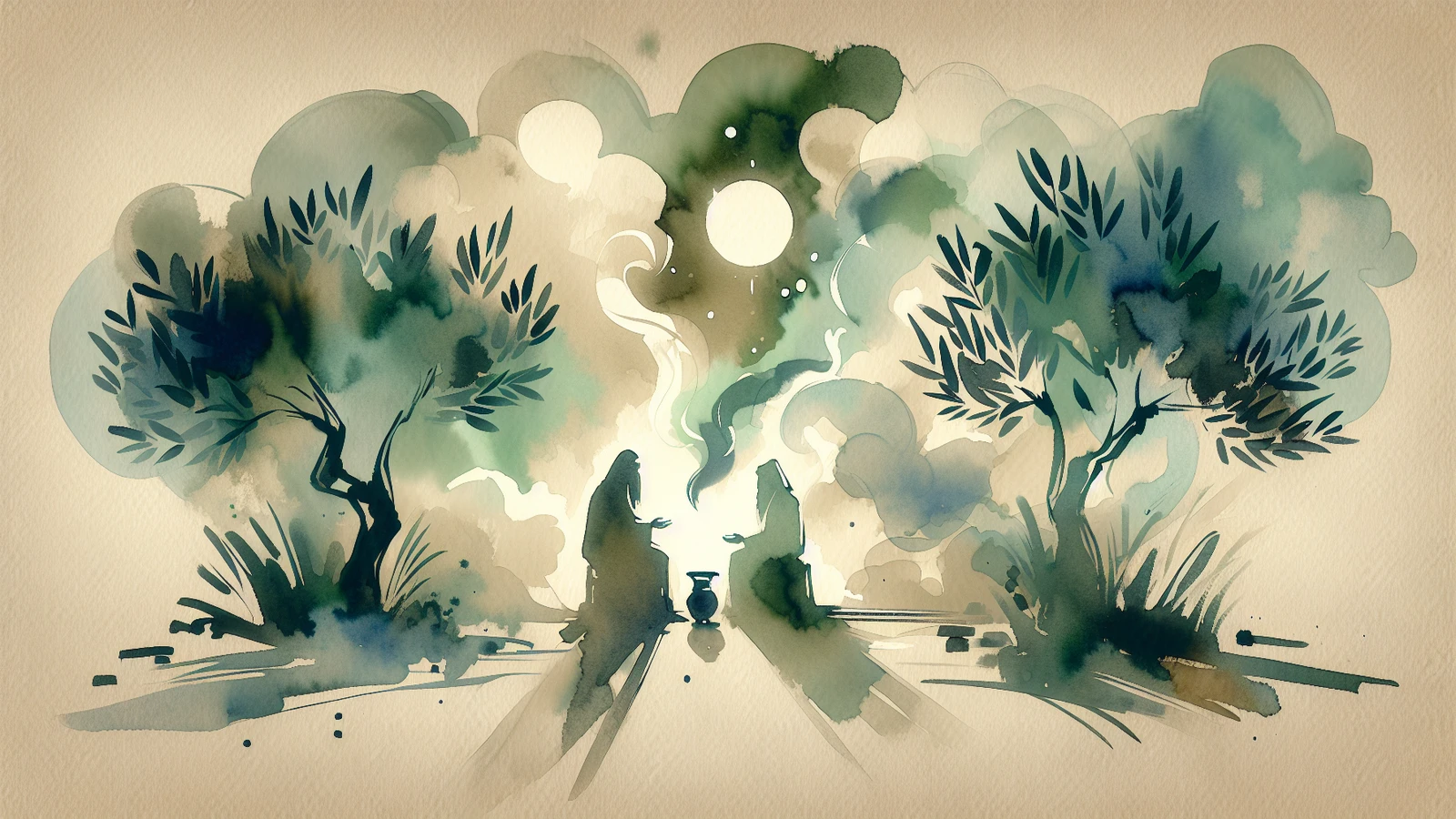
Explore speaking in tongues across cultures—from ancient oracles to modern Pentecostals. Discover humanity's universal ecstatic language of divine connection.
Listen. In a small church in rural Tennessee, a woman's voice rises and falls in patterns no linguist can decode. Across the world, in the mountains of Siberia, a shaman chants in the language of eagles and wind. In ancient Delphi, a priestess breathes volcanic fumes and speaks words that will topple empires. They are all doing the same thing: reaching for something language cannot touch.
This is the mystery of speaking in tongues—when the human voice becomes a bridge between worlds, when ordinary speech surrenders to something vast and strange. It's happened everywhere humans have reached for the divine, from the first cave paintings to last Sunday's service. And it tells us something profound about who we are. These ecstatic experiences transcend cultural boundaries, connecting all faiths through humanity's universal spiritual language, much like the world religions that share common spiritual yearnings.
The Oracle's Breath

Picture the scene: Ancient Greece, 800 BCE. A young woman descends into a cave where sweet vapors rise from cracks in the earth. She is the Pythia, the Oracle of Delphi, and kings have traveled for months to hear her speak. As the fumes envelop her, her body begins to tremble. When she opens her mouth, what emerges isn't quite human speech.
Plutarch, who served as a priest at Delphi, wrote:
“Her voice was not articulate or regular, but uttered with great effort, and like the speech of one in great pain.” (Moralia 405B)
The priests lean forward, listening intently. In her wild utterances, they hear Apollo himself speaking. Wars will be fought, cities founded, marriages made or broken based on these sounds that hover at the edge of meaning.
But here's what's remarkable: this wasn't unique to Greece. Travel anywhere in the ancient world, and you'd find the same phenomenon. The Sibyls of Rome, writhing in ecstatic frenzy. The prophets of Canaan, dancing themselves into divine madness. Something in the human soul has always known that our deepest truths cannot be captured in grammar and syntax.
The Shaman's Secret Language

In the frozen forests of Siberia, an old woman sits by the fire. She is the last shaman of her people, and tonight she will journey to the spirit world. The drums begin—boom, boom, boom—matching the rhythm of a heart. Her eyes roll back. Her body sways. And then she speaks.
But not in Russian. Not in her native tongue. She speaks in what her people call “the language of the spirits”—clicks and whistles, growls and songs that seem to come from somewhere beyond her throat. Anthropologist Mircea Eliade observed:
“The shaman's ecstasy is often accompanied by unintelligible words, which are interpreted as the language of the spirits, or the secret language of the shamans themselves.” (Shamanism: Archaic Techniques of Ecstasy)
Watch closely, and you'll see her assistant leaning in, translating these otherworldly sounds into human speech. “The reindeer spirits say the hunt will be good.” “Your grandmother's soul is at peace.” The shaman isn't just speaking—she's become a telephone line between dimensions.
This same pattern appears from the Amazon to Australia. When the healer drinks ayahuasca, when the medicine man dances with rattles, when the Aboriginal elder enters the Dreamtime—they all discover the same truth. Sometimes human language is too small for what needs to be said.
The Day the Sky Cracked Open
Jerusalem, 33 CE. Fifty days after a crucifixion that should have ended everything. A hundred and twenty disciples huddle in an upper room, waiting for something—they're not sure what. Then it happens.
“And they were all filled with the Holy Spirit and began to speak in other tongues as the Spirit enabled them.” (Acts 2:4)

But this wasn't the incomprehensible ecstasy of the oracle. This was different—miraculous in another way. Parthians heard Parthian. Medes heard Median. Egyptians heard Egyptian. Each person in that cosmopolitan crowd heard the gospel in their mother tongue, spoken by Galilean fishermen who had never left Palestine.
The apostle Peter stands up to explain, and three thousand people join the movement that day. But the story doesn't end there. It gets stranger.
When Language Breaks Down

Twenty years later, the apostle Paul writes to a church in Corinth where things have gotten wonderfully, chaotically out of hand. People are standing up in meetings and speaking in languages no one has ever heard. Not French or Latin or Hebrew—something else entirely. Paul, ever the practical mystic, tries to bring order to the chaos, applying principles similar to those found in the Ten Commandments for community order:
“For one who speaks in a tongue speaks not to men but to God; for no one understands him, but he utters mysteries in the Spirit.” (1 Corinthians 14:2)

Notice what he's saying: this isn't about communication between humans. This is about something more intimate—the soul's private conversation with the infinite. He even admits to doing it himself, more than anyone else. But he warns: in public, you need interpretation. Otherwise, he says with typical bluntness, visitors will think you've all gone mad.
The Great Silence and the Roaring Return
For over a thousand years, speaking in tongues retreated to the margins of Christianity. You might hear whispers of it in monastery cells, where mystics like Teresa of Ávila experienced what she called “jubilation”—wordless praise that bubbled up like a spring. But in the main churches, in the public squares, the gift seemed to have vanished.
Then came 1906, Azusa Street, Los Angeles. In a converted stable, something explosive happened. William Seymour, a one-eyed son of slaves, led meetings where blacks and whites, men and women, rich and poor all mingled—scandalous for the time. And they spoke in tongues.
A reporter from the Los Angeles Times came to mock. He left writing about “a weird babble of tongues” and “fanatical cries.” But something unstoppable had been unleashed. Within two years, the fire had spread to fifty nations. Today, half a billion Pentecostals and Charismatics speak in tongues regularly. In São Paulo and Seoul, Lagos and Los Angeles, the ancient gift has found new life.
The Spirits Speak Everywhere

But step outside Christianity, and you find the same phenomenon wearing different clothes. In Haiti, when the loa ride their horses—when the spirits possess the faithful during Vodou ceremonies—the possessed speak in voices not their own. Sometimes it's archaic French, unknown to the speaker. Sometimes it's the language of Guinea, carried in ancestral memory across the Atlantic.
In Istanbul, Sufi mystics whirl themselves into ecstasy, and from their lips flow sounds that aren't quite words—the language of divine love, they say. In Chinese homes, ordinary people suddenly manifest the gift of speaking for the gods, their living rooms transformed into impromptu temples.
Adam Chau documented this “household idiom” of Chinese religion:
“This often begins within a private residence when a member of the household starts to exhibit gifts of divination and unusual spiritual powers, such as glossolalia.”
What starts as Aunt Mei speaking strangely during family dinner can end with a full temple, complete with altars and visiting hours. The spirits, it seems, don't much care about zoning laws.
What the Scientists Found
In 2006, neuroscientist Andrew Newberg did something audacious. He put Pentecostals in brain scanners while they spoke in tongues. What he found challenges both skeptics and believers.
The language centers of the brain—usually buzzing with activity during speech—went quiet. But the regions associated with self-consciousness also dimmed. The speakers weren't manufacturing these sounds the way you'd make up nonsense syllables. Something else was happening. They had surrendered control, and their brains showed it.
“Changes in brain activity in areas associated with self-awareness and language during glossolalia suggest a complex interplay between brain function and spiritual experience.” (Newberg et al., 2006)
This doesn't prove God is speaking, but it does prove something real is happening. These aren't actors performing. They're humans touching something beyond ordinary consciousness.
The Pattern Hidden in Plain Sight
Step back and look at the whole picture. From Delphi to Detroit, Siberia to the Amazon, humans have discovered the same door. When we need to speak what cannot be spoken—when we need to pray what cannot be prayed—something in us knows how to let language dissolve into pure sound, pure intention, pure connection.
The skeptic sees psychological release. The believer sees divine encounter. The anthropologist sees cultural performance. But maybe they're all looking at the same elephant from different angles. Maybe what matters isn't explaining it but recognizing it: the universal human experience of reaching beyond words to touch the wordless. These experiences point to dimensions of reality beyond ordinary understanding, revealing the profound depths of human spiritual connection found in healing prayers and other forms of spiritual practice.
Learning to Listen

So how do we, in our age of tweets and texts, engage with this ancient mystery? First, with humility. Whether you think it's God or psychology or culture at work, millions of people experience something profound in these moments. Their experience deserves respect, not ridicule.
Second, with curiosity. What drives humans to seek this experience across every culture and age? What does it tell us about the limits of language and the vastness of consciousness? These are questions worth pondering, whether you ever speak in tongues or not.
Third, with openness. If you find yourself in a place where people speak in tongues—a Pentecostal church, a Vodou ceremony, a Sufi gathering—don't panic. Don't mock. Watch. Listen. You're witnessing something as old as humanity itself: the moment when words fail and the soul keeps speaking anyway.
The Sound of the Unspeakable
In the end, speaking in tongues reminds us of a truth we forget in our verbose world: not everything can be said. Love is bigger than the word “love.” God (or whatever you call the ultimate) is vaster than any name. Our deepest pains and highest joys stretch beyond the dictionary's reach.
Sometimes the most honest thing we can do is open our mouths and let mystery pour out. Sometimes the truest prayer is the one that makes no sense. Sometimes the soul needs to speak in a language that was never meant for human ears, only for the heart of the universe itself. This connects to the broader practice of intercessory prayer, where words often feel inadequate for our deepest spiritual needs.
Listen. Somewhere right now, someone is letting their language break apart, letting their voice become a bridge. They're discovering what the oracle knew, what the shaman knows, what millions of believers know: when words fail, the soul finds another way to sing.
Sources and Further Reading
- The Bible. English Standard Version, Crossway, 2016.
- Chau, Adam. “Superstition Specialist Households?: The Household Idiom in Chinese Religious Practices.” Xuehai 3:1 (2010): 43-56.
- Eliade, Mircea. Shamanism: Archaic Techniques of Ecstasy. Princeton University Press, 1964.
- Newberg, Andrew, et al. “The Measurement of Regional Cerebral Blood Flow During the Experience of Glossolalia in Pentecostal Subjects.” Psychiatry Research: Neuroimaging, vol. 148, no. 1, 2006, pp. 67-71.
- Plutarch. Moralia. Translated by Frank Cole Babbitt, vol. V, Harvard University Press, 1936.
- Sargant, William Walters. Battle for the Mind: A Physiology of Conversion and Brain-Washing. Doubleday, 1957.
Related Articles
- Lantern Festival: Illuminating the Path to Spiritual Enlightenment - spiritual awakening
- Intercessory Prayer: The Art of Spiritual Advocacy Across Faiths - blessing prayer
- Yom Kippur: The Universal Power of Atonement and Forgiveness - spiritual transformation
The Author's Voice
Rev'd Dr. Ayotunde Oyadiran is a Priest of the Anglican Church who brings a unique perspective to the exploration of faith and spirituality. Holding a PhD in Church History and an MSc in Ecology and Environmental Biology, he bridges the worlds of faith, science, and human experience. As the author of over three books, Dr. Oyadiran has explored themes of spirituality, personal growth, and environmental stewardship. He also works as a coach and trainer on peak performance, helping individuals unlock their potential and achieve their goals. His passion is empowering others to live purposeful, high-impact lives that integrate faith, wisdom, and excellence.
Continue Your Journey
Journey through diverse spiritual traditions and discover the universal human quest for divine connection through ecstatic experience.
- Ten Commandments: Ancient Laws with Modern Relevance - Discover timeless moral principles