The Way of Water: Ancient China's Secret to Modern Peace
Discover how Taoism's ancient wisdom of wu wei transforms modern stress through water's gentle power of yielding and flow, showing the path to effortless act...
The Way of Water: Ancient China's Secret to Modern Peace

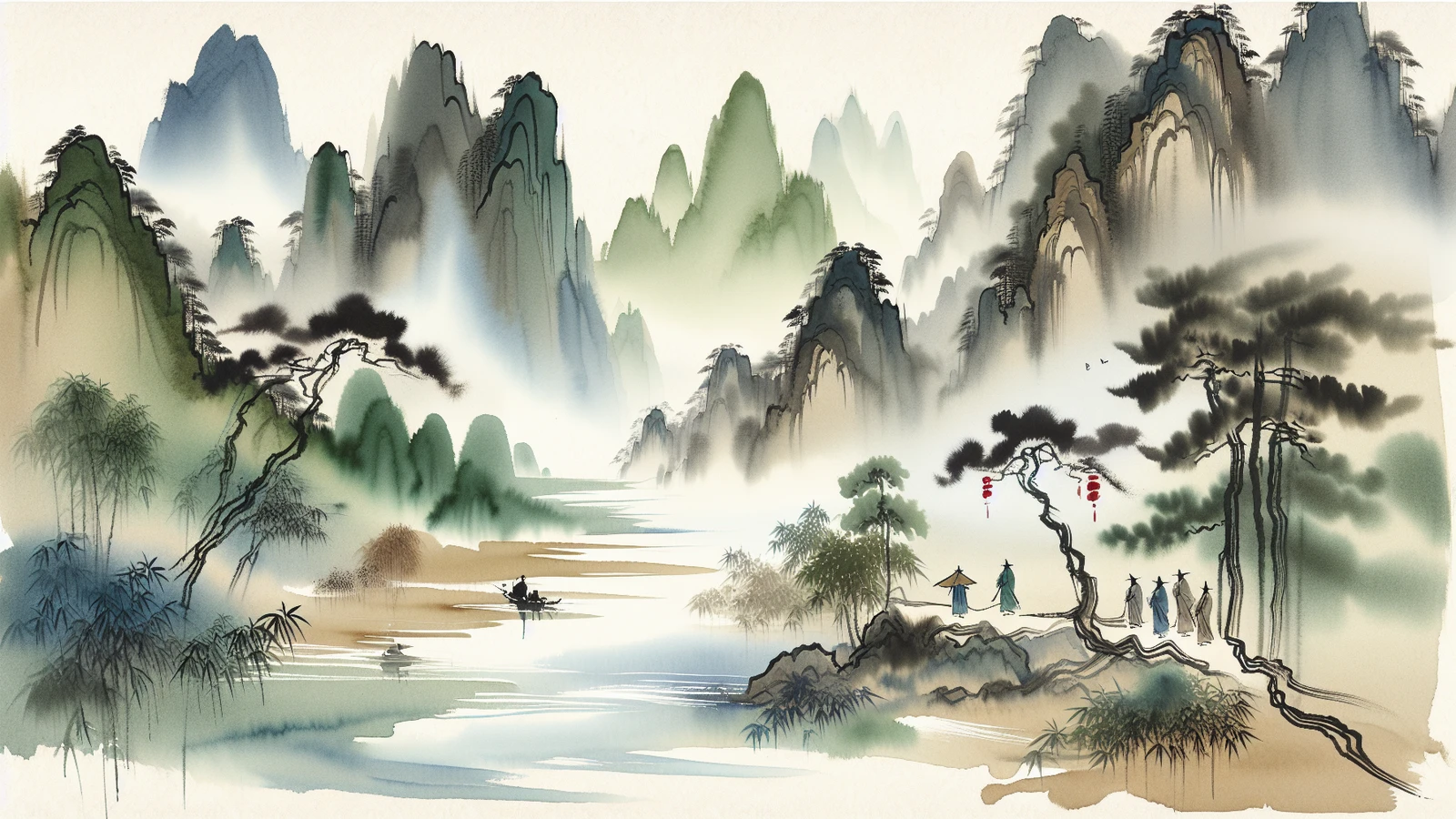
Watch water for a moment. Really watch it. See how it yields to every obstacle, flows around every rock, fills every hollow. Yet given time, this softest of substances carves grand canyons through solid stone. It wins not by force but by persistence, not by hardness but by humility.
Twenty-five centuries ago, an old man heading west toward the mountains understood this. His name—if he had one—was Laozi, the “Old Master.” Disgusted with the corruption and chaos of civilization, he was leaving it all behind. But at the western gate of the kingdom, a border guard recognized him as a sage and made an extraordinary request: “Before you disappear forever, please—write down your wisdom.”
What emerged was a slim volume of 5,000 Chinese characters arranged in 81 verse chapters. The Tao Te Ching—“The Book of the Way and Its Power”—would become one of humanity's most influential texts, translated more than any book except the Bible. And at its heart lies a radical proposition: the secret to life is to become like water.
The Uncarved Block
Picture ancient China, 4th century BCE. The land fractures into warring states. Armies clash. Philosophers debate. Everyone has a solution to the chaos. Confucius says: more rules, more rituals, more righteousness. The Legalists demand: stronger laws, harsher punishments, absolute control.
Then comes this strange little book suggesting something outrageous: maybe the problem is trying too hard. Maybe the solution is not doing more, but doing less. Not controlling more, but yielding more. Not knowing more, but unknowing more.
“The Tao is empty, yet inexhaustible.” — Tao Te Ching, Verse 4
Imagine the shock. In a world obsessed with fullness—full treasuries, full armies, full minds—someone dares praise emptiness. But Laozi points to the obvious: a cup is useful because of its emptiness. A room functions because of its space. A wheel turns because of the hole in its center.
We are born, he suggests, like uncarved blocks of wood—complete, perfect, without need of improvement. Then society starts carving: you should be this, achieve that, desire this, fear that. By the time we're adults, we're so intricately carved we've forgotten our original nature. The Way back? Stop carving. Return to simplicity.

Wu Wei: The Art of Not-Doing
Here's where Taoism gets deliciously paradoxical. The central practice is wu wei—often translated as “non-action.” But this isn't laziness or passivity. It's something far more sophisticated: acting in perfect harmony with the natural flow of events.
“The best athlete doesn't have to strain. The best surgeon doesn't have to cut. The best artist doesn't have to paint.” — Tao Te Ching, Verse 73
Think of a master martial artist who defeats opponents not by meeting force with force, but by using their own momentum against them. Or a skilled sailor who reaches their destination not by fighting the wind, but by adjusting their sails. This is wu wei—achieving maximum effect with minimum effort by aligning with natural forces rather than opposing them.
In our age of hustle culture and grinding productivity, this seems almost heretical. We're taught that success comes from pushing harder, working longer, forcing outcomes. But watch anyone at the peak of their craft—a concert pianist, a master chef, an elite athlete—and you'll see wu wei in action. They're not straining. They're flowing. They've found the groove where effort becomes effortless.
The Wisdom of Yielding
Water always seeks the lowest place. In Chinese culture, as in many others, high status is prized and low position avoided. Yet the Tao Te Ching repeatedly praises the low, the soft, the yielding:
“The softest thing in the world overcomes the hardest thing in the world.” — Tao Te Ching, Verse 43
This isn't weakness—it's wisdom. The bamboo bends in the storm while the rigid oak breaks. The tongue outlasts the teeth. Relationships thrive on compromise, not rigidity. Even in business, the companies that adapt survive while those that resist change perish.
Modern neuroscience confirms what Laozi intuited: our brains function best not in states of rigid focus but in relaxed attention. Creativity emerges not from forcing but from allowing. The “default mode network”—the brain state we enter when we stop trying—is where insights arise and problems solve themselves.

The Universal Stream
What's remarkable is how this ancient Chinese wisdom flows into the same ocean as other great spiritual traditions. Each found their own way to the same water.
Buddhism's Middle Way navigates between extremes, teaching that enlightenment comes not from severe asceticism or indulgence but from balanced awareness. The Buddha, like Laozi, understood that forcing enlightenment is like trying to smooth water with your hand—the very effort creates more disturbance. The Buddhist teaching of non-attachment echoes wu wei's effortless action.
“As a solid rock is not shaken by the wind, so are the wise unshaken by praise or blame.” — Dhammapada, Verse 81

Christianity's Surrender echoes in Jesus's teaching: “Consider the lilies of the field, how they grow; they neither toil nor spin” (Matthew 6:28). The prayer “Thy will be done” is pure wu wei—aligning personal will with divine flow. Christian mystics like Meister Eckhart spoke of “letting go and letting God,” a perfect expression of Taoist yielding.
Indigenous Wisdom worldwide recognizes humanity as part of nature's flow, not its master. The Lakota saying “Mitakuye Oyasin” (all my relations) expresses the same interconnectedness that Taoism sees in the dance of yin and yang. Native peoples don't try to conquer the land but to live in harmony with its rhythms.
Islamic Surrender (Islam literally means “submission”) shares this understanding. The Muslim who truly submits to Allah's will experiences the peace of flowing with divine order rather than fighting against it. The whirling dervishes physically embody this principle—spinning in harmony with cosmic forces rather than resisting them.
Living Water in a Digital Desert
So how do we, drowning in notifications and deadlines, rediscover this ancient flow? How do we become like water in a world that demands we be like stone?
Start with Stillness: The Tao Te Ching returns repeatedly to emptiness and quiet. Not because stillness is virtuous, but because it's practical. In stillness, muddy water clears. In silence, inner wisdom speaks. Try this: before checking your phone each morning, sit quietly for five minutes. Just sit. Watch what bubbles up from the depths. This practice aligns with contemplative prayer traditions found across faiths.
Practice Presence: Wu wei begins with awareness. You can't flow with a current you don't feel. Throughout your day, pause and ask: “Am I forcing or flowing?” Notice when you're pushing against reality and experiment with yielding instead. That traffic jam? Instead of fuming, what if you used it as unexpected meditation time?
Embrace Paradox: The Tao Te Ching delights in contradiction:
“When people see some things as beautiful, other things become ugly.” — Tao Te Ching, Verse 2
Life isn't binary. Strength contains weakness, success holds failure's seeds, endings birth beginnings. When we stop demanding that life be one thing or another, we find peace with what is. The yin and yang symbol perfectly captures this dance of opposites—the interplay of complementary forces that create harmony through balance.

Follow Natural Rhythms: Modern life ignores natural cycles. We work under fluorescent lights, eat summer fruit in winter, expect constant productivity. But you're not a machine. You're part of nature. Honor your rhythms. Rest when tired. Eat what's seasonal. Let your creativity ebb and flow like tides.
Cultivate Uselessness: In our productivity-obsessed culture, this is radical. But the Tao Te Ching praises the useless—the gnarled tree that's too twisted for lumber and thus lives long. Schedule time for “pointless” activities: watch clouds, doodle, wander without destination. In uselessness, you might find your greatest use.
The Pathless Path
Here's the final paradox: the Tao that can be spoken is not the true Tao. The moment we try to grasp it, define it, explain it, we've lost it. It's like trying to catch the moon's reflection in water—the reaching disturbs the very thing we seek.
Yet this doesn't mean the Tao is unreachable. It means it's so close we overlook it. It's the ground we stand on, the air we breathe, the awareness reading these words right now. We don't need to seek the Tao because we've never been separate from it. We just need to stop trying so hard to find what was never lost.
In our world of endless striving, perhaps this is the Tao Te Ching's greatest gift: permission to stop. Stop improving yourself—you're already whole. Stop pushing the river—it flows by itself. Stop seeking peace—you're standing in it.
The old master who wrote these verses understood something our anxious age has forgotten: life isn't a problem to be solved but a mystery to be lived. The way forward isn't through more effort but through less resistance. The path to strength runs through softness. The route to fullness passes through emptiness.
Be like water, the ancient text whispers across twenty-five centuries. Yield and overcome. Empty and be filled. Bend and be straight. This isn't philosophy—it's physics. It's not religion—it's reality. It's not Chinese—it's human.
The Way is beneath your feet right now. The only question is: will you stop long enough to notice?
Related Articles
- Chinese New Year: A Celebration of Renewal in Eastern Faiths - Explore how Taoism, Buddhism, and Confucianism shape this vibrant celebration
- Zen and the Art of Universal Mindfulness - Discover how Zen Buddhism's approach to mindfulness complements Taoist wisdom through non-striving awareness
- Yin and Yang: The Dance of Duality in Spiritual Traditions - Understand the profound symbol at the heart of Taoist philosophy and universal balance
References
- Le Guin, Ursula K. (1997). Lao Tzu: Tao Te Ching, A Book about the Way and the Power of the Way. Shambhala.
- Maté, Gabor. (2008). In the Realm of Hungry Ghosts: Close Encounters with Addiction. North Atlantic Books.
- Mitchell, Stephen. (1988). Tao Te Ching: A New English Version. Harper Perennial.
- Nouwen, Henri J.M. (1996). The Inner Voice of Love: A Journey Through Anguish to Freedom. Doubleday.
- The Dhammapada. Various translations available.
About the Author
Rev'd Dr. Ayotunde Oyadiran is a Priest of the Anglican Church who brings a unique perspective to the exploration of faith and spirituality. Holding a PhD in Church History and an MSc in Ecology and Environmental Biology, he bridges the worlds of faith, science, and human experience. As the author of over three books, Dr. Oyadiran has explored themes of spirituality, personal growth, and environmental stewardship. He also works as a coach and trainer on peak performance, helping individuals unlock their potential and achieve their goals. His passion is empowering others to live purposeful, high-impact lives that integrate faith, wisdom, and excellence.