When Sleep Becomes Prophecy: The Secret Language of Divine Dreams
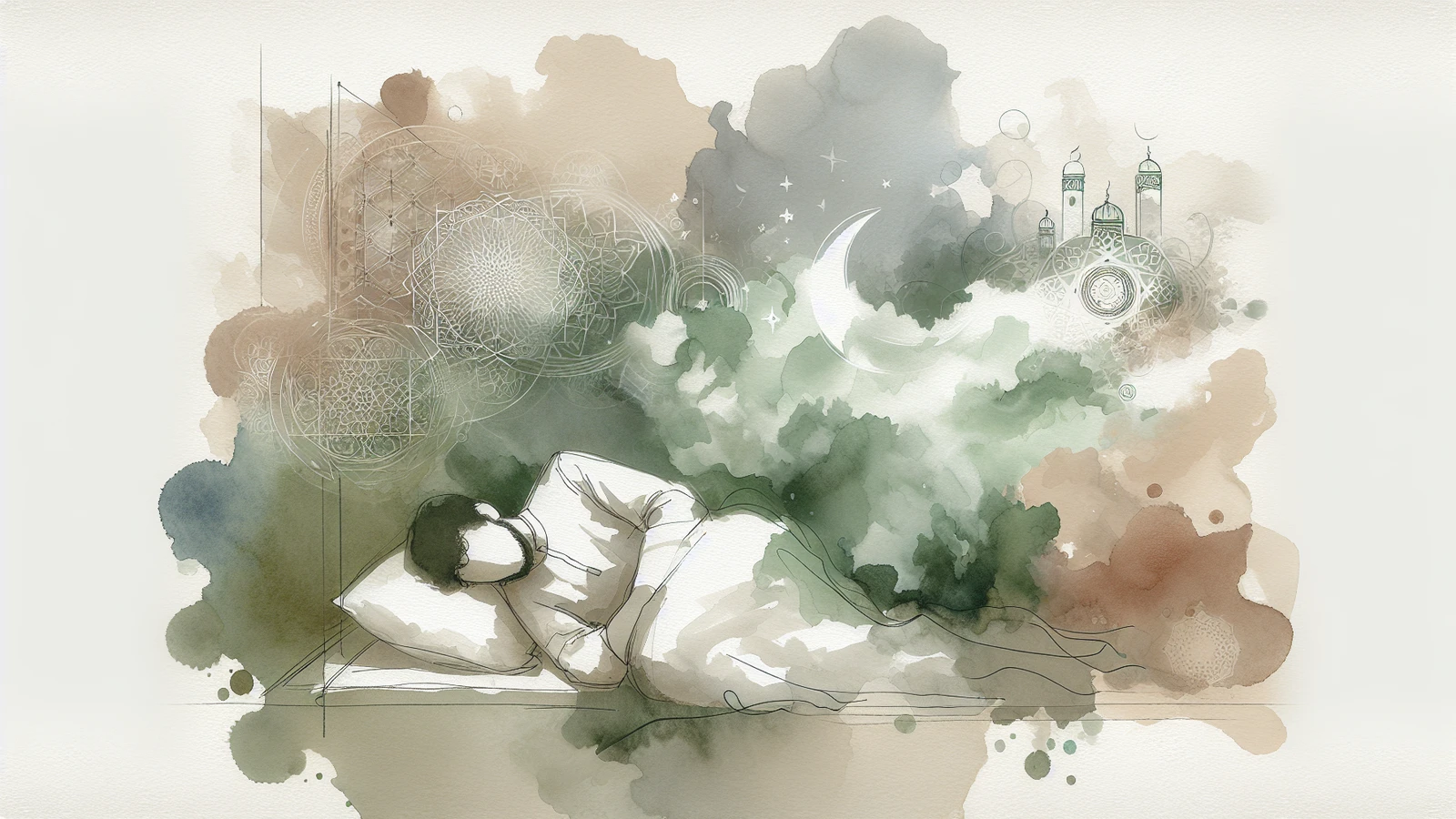
Explore Islamic dream interpretation as divine communication—how 1.4 billion Muslims decode sacred messages through prophetic sleep using centuries-old wisdom.
Every night, seven billion humans perform the same extraordinary act: they voluntarily surrender consciousness and enter a realm where physics dissolves, time bends, and the impossible becomes routine. In this strange theater of the mind, we soar without wings, converse with the dead, and witness events that will never appear on any news channel. Most of us wake, shrug, and dismiss these nocturnal adventures as mere neural housekeeping—the brain's screensaver, nothing more.
But what if we're wrong? What if some of these midnight movies are actually messages? What if the human soul, freed from the tyranny of waking logic, becomes a receiver capable of picking up transmissions from realms beyond the reach of our ordinary consciousness?
In the Islamic tradition, this isn't speculation—it's spiritual science. For over fourteen centuries, Muslims have understood dreams not as random brain static but as one of the most sophisticated communication systems ever designed: a direct line between the human heart and the divine mind, operating while the ego sleeps and the soul awakens, similar to how prophetic dreams are understood across world religions.
Welcome to the world where shepherds become kings, prisoners become prime ministers, and the language of heaven is spoken in symbols that dance behind closed eyelids.
The Boy Who Dreamed of Stars Bowing
The story begins in the ancient Near East with a dream so vivid it would reshape the destiny of nations. A young boy named Yusuf—Joseph to those familiar with the Biblical tradition—awakens one morning with images burned into his consciousness: eleven stars, the sun, and the moon, all prostrating before him in perfect submission.
“Indeed, I saw eleven stars and the sun and the moon—I saw them prostrating to me” (Quran 12:4).
His father, Yaqub (Jacob), himself a prophet, immediately recognizes this isn't the product of an overactive imagination or too much dinner before bed. This is wahy—divine revelation packaged in the visual poetry of dreams. But he also understands something else: some truths are too dangerous to share with those who aren't ready to receive them. “Do not relate your vision to your brothers,” he warns, “or they will contrive against you a plot” (Quran 12:5).
The father's intuition proves tragically accurate. The jealous brothers, already resentful of their father's favoritism toward Yusuf, would indeed plot against him. They cast him into a well, sell him into slavery, and watch their father's heart break with grief, all while maintaining the fiction that wild beasts had devoured the dreamer.
But here's where the story becomes extraordinary: the very gift that made Yusuf a target would ultimately become his salvation. Thrown into an Egyptian prison on false charges, Yusuf encounters two fellow inmates troubled by mysterious dreams. One dreams of pressing wine; the other of birds eating bread from a basket on his head. In the darkness of that ancient dungeon, Yusuf reveals his remarkable ability to decode the symbolic language of sleep.
“The interpretation belongs to Allah alone,” he tells them, demonstrating the humility that marks true spiritual insight, a principle that resonates with the divine protection prayers that acknowledge divine sovereignty over all guidance. The dreams, he explains, are prophecies: one man will be restored to his position as the Pharaoh's cupbearer; the other will be executed. Both predictions come to pass with stunning accuracy.
Years later, when Pharaoh himself is tormented by a dream of seven fat cows being devoured by seven lean ones, followed by seven green ears of grain and seven withered ones, it's the former cupbearer who remembers the Hebrew slave with the extraordinary gift. Yusuf's interpretation—seven years of abundance followed by seven years of devastating famine—not only saves Egypt from catastrophe but elevates him to become the kingdom's chief administrator.
The story reaches its crescendo when, during the famine, Yusuf's brothers arrive in Egypt seeking grain. They don't recognize the powerful official before them as the brother they betrayed decades earlier. Eventually, Yusuf reveals his identity and brings his entire family to Egypt. In that moment of reunion, as his parents and eleven brothers prostrate before him in gratitude, the childhood dream finds its fulfillment—not in domination, but in deliverance.
This isn't just ancient storytelling—it's the foundational case study for understanding how the divine communicates through the language of dreams.

The Prophet's Awakening
Fast-forward several centuries to another pivotal moment in the history of divine dreams. In a cave outside Mecca, a forty-year-old merchant named Muhammad begins experiencing something unprecedented. His wife Aisha would later describe how “his first experience of divine revelation began with pious visions in his sleep. These were so clear that they came to him 'like the break of dawn'” (Sahih al-Bukhari).
These weren't ordinary dreams—they were the opening notes of a prophetic symphony that would transform human consciousness, connecting to the broader promises that outlived empires found in prophetic traditions. The man who would become the final messenger of Islam began his journey not with dramatic visions while awake, but with divine downloads delivered through the sophisticated technology of sacred sleep.
This establishes a crucial principle in Islamic understanding: dreams aren't the poor cousin of “real” revelation—they're one of its primary delivery systems. The Prophet Muhammad himself declared that true dreams are “a part of the forty-six parts of prophecy” (Sahih al-Bukhari), meaning that authentic dream experiences contain actual fragments of divine wisdom.
But here's where Islamic dream interpretation becomes brilliantly sophisticated: not every dream carries divine mail.

The Threefold Mystery: Decoding the Night Shift
Recognizing that the human psyche is too complex for one-size-fits-all explanations, Islamic tradition developed the most nuanced dream classification system ever devised. The Prophet Muhammad taught his followers to sort their nocturnal experiences into three distinct categories—a spiritual triage system that prevents believers from either dismissing genuine revelation or obsessing over mental noise.
Divine Downloads: When Heaven Speaks Through Sleep
These are the dreams that matter—the ones carrying actual messages from the divine realm. They arrive with unmistakable characteristics: crystal clarity, profound peace, and meanings that unfold with time like flowers blooming in the soul. They don't fade like ordinary dreams but imprint themselves on consciousness with the permanence of truth.
A person might dream of a lush garden where they feel overwhelmed with peace—a preview of paradise. Or they might see a deceased loved one radiating contentment, bringing reassurance about the afterlife. These dreams often come at crucial moments: before major decisions, during times of grief, or when guidance is desperately needed.
The woman struggling with whether to accept a job offer who dreams of walking confidently down a bright path. The man grieving his mother's death who dreams of her smiling and saying, “I am well.” The student anxious about exams who dreams of successfully climbing a mountain. These aren't wish fulfillment—they're divine coaching, celestial counseling delivered while the conscious mind sleeps.
Shadow Projections: Recognizing Spiritual Interference in Dreams
Then there are dreams that come from an entirely different source—the realm of spiritual opposition. These are the nightmares, the confusing visions, the dreams that leave you waking with dread or moral pollution clinging to your consciousness. Islam teaches that these originate from Shaytan (Satan), whose goal is to disturb, confuse, and spiritually sabotage human beings even in their sleep.
The Prophet Muhammad provided a specific protocol for dealing with these toxic transmissions: spit lightly to your left three times, seek refuge in Allah from Satan, turn over in bed, and—most importantly—tell no one about the dream. This isn't superstition; it's sophisticated spiritual hygiene. By refusing to give these dreams airtime through discussion, you strip them of their power to contaminate your waking consciousness.
The Mental Screensaver: Understanding Psychological Dreams
The third category encompasses the majority of our dreams—the strange, jumbled, often nonsensical movies our minds produce while processing the day's experiences. These are hadeeth an-nafs, literally “self-talk dreams.” They're the psychological equivalent of your computer defragmenting files while you sleep.
The student dreams of failing an exam because they're anxious about academic performance. The traveler dreams of missing flights because they're worried about logistics. The person on a diet dreams of eating chocolate cake because their conscious mind has been denying these cravings all day.
These dreams aren't messages from heaven or hell—they're messages from your own subconscious. Understanding this prevents the spiritual exhaustion that comes from treating every random dream image as a divine telegram.
The Art of Sacred Interpretation
For over a millennium, Islamic scholars have refined the science of ta'bir al-ru'ya—dream interpretation—into a sophisticated discipline that combines scriptural knowledge, psychological insight, and spiritual discernment. The master of this field was Muhammad ibn Sirin, an 8th-century scholar whose approach was revolutionary in its sophistication.
Ibn Sirin understood that dreams speak in symbols, not literal statements. They communicate through a divine metaphorical language where seven fat cows represent years of abundance, a beautiful tree might symbolize beneficial knowledge, and a snake could represent hidden enemies or toxic relationships.
But here's the genius: interpretation isn't mechanical. The same symbol can mean different things for different people. A lion might terrify one dreamer (representing oppression or danger) while empowering another (representing courage or leadership). Context is everything—not just the dream's context, but the dreamer's.

Modern Dream Navigation: Applying Ancient Wisdom Today
How does a contemporary person apply this ancient wisdom? The process begins with spiritual discernment:
First, assess the dream's quality. True dreams leave you with a sense of clarity and peace, even if their meaning isn't immediately obvious. They feel different from the chaotic jumble of ordinary dreams—more coherent, more purposeful, more real than reality itself.
Second, look for symbolic rather than literal meanings. Dreams communicate in the language of metaphor and archetype. Don't expect literal predictions; expect symbolic guidance. The dream of flying might not mean you'll become a pilot; it might mean you're ready to transcend current limitations.
Third, consider your personal symbolic vocabulary. Your subconscious assigns meanings based on your unique experiences and associations. A childhood home might represent security for one person and trauma for another. Cultural background, personal history, and current life circumstances all influence the dream's symbolic language.
Fourth, seek wise counsel. The Prophet Muhammad advised sharing good dreams only with sincere, knowledgeable people. Not everyone is qualified to interpret dreams—it requires not just knowledge of Islamic principles but spiritual insight and psychological wisdom.
The Healing Power of Sacred Sleep
Perhaps most remarkably, Islamic dream interpretation offers profound therapeutic benefits that modern psychology is only beginning to understand. Dreams become a form of divine therapy, offering healing, guidance, and hope when they're most needed.
Consider Sarah, a young professional who kept dreaming of being lost in vast deserts. Rather than dismissing these dreams or panicking about their meaning, she sought guidance from an elder in her community known for wisdom and spiritual insight. Instead of providing a quick interpretation, the elder asked about Sarah's waking life.
It emerged that Sarah felt spiritually and professionally lost, uncertain about her career path and disconnected from her faith. The elder explained that the desert in her dreams wasn't a literal place but a metaphor for her current spiritual state—not a curse, but an invitation. Every desert journey in spiritual tradition leads to an oasis of wisdom. The dreams weren't predicting doom; they were calling her to find her path.
This guidance helped Sarah reframe her confusion as a natural part of spiritual growth rather than evidence of divine abandonment. She began treating her uncertainty as a sacred wilderness experience, trusting that clarity would emerge as she continued seeking.
The Universal Language
What makes Islamic dream interpretation so compelling is its recognition that divine communication transcends the boundaries of ordinary consciousness. While we're awake, our rational minds filter, analyze, and often reject spiritual insights that don't fit our preconceived notions. But in sleep, these defenses dissolve, allowing the soul to receive messages that the ego might resist.
This creates a democratic spiritual communication system where divine guidance isn't limited to religious professionals or mystical elites. A simple farmer can receive the same quality of divine counsel as a learned scholar. A child's dream can carry the same prophetic weight as an adult's. The only requirement is a heart open to receiving divine wisdom, however it chooses to arrive.
Dreams become prayer in reverse—instead of humans speaking to the divine, the divine speaks to humans through the intimate theater of sleep. It's guidance delivered to the most private chambers of consciousness, requiring no intermediaries, no institutions, no special equipment—just the willingness to listen with the ears of the soul.
The Eternal Conversation
In our hyperconnected age, where we're constantly bombarded with external voices and digital noise, Islamic dream interpretation offers something precious: a reminder that the most important conversations often happen in silence, in darkness, in the sacred space between sleep and waking.
Every night, as consciousness fades and the soul steps forward, we enter a realm where the impossible becomes routine, where time bends to accommodate eternity, and where the divine whispers secrets too profound for ordinary language. The question isn't whether these messages are real—the question is whether we're still listening.
For those who learn to decode this ancient language, dreams become a source of healing, guidance, and hope. They transform sleep from mere biological necessity into sacred communion, turning every night into a potential pilgrimage of the soul.
The conversation continues, one dream at a time, in the secret chambers of consciousness where heaven touches earth and prophecy dances behind closed eyes.
Further Explorations on Sacred Practice
- Sacred Hunger: Ramadan Fasting as Spiritual Discipline - Discover how Ramadan's sacred fast transforms consciousness through spiritual discipline
- Prophetic Dreams: Divine Messages in the Night - Explore prophetic dreams and divine visions across traditions
- Speaking in Tongues: The Ecstatic Utterance - Journey into the mystical realm of glossolalia and ecstatic spiritual communication
About the Dream Interpreter
Rev'd Dr. Ayotunde Oyadiran navigates the liminal spaces where consciousness meets the sacred, exploring how divine wisdom penetrates human awareness through dreams, visions, and mystical experience. His interfaith scholarship reveals the universal patterns in humanity's prophetic traditions—from Islamic dream interpretation to Christian visionary experiences. With expertise spanning church history and spiritual psychology, Dr. Oyadiran illuminates how ancient practices of dream discernment offer profound guidance for contemporary seekers. His writings guide readers through the sacred territories where sleep becomes prophecy and the night unveils divine secrets.
References
The Holy Qur'an: A New Translation. Translated by M.A.S. Abdel Haleem. Oxford University Press, 2004.
Ibn Kathir, Ismail. Tafsir al-Qur'an al-Azim (Commentary of the Magnificent Qur'an).
Al-Bukhari, Muhammad ibn Ismail. Sahih al-Bukhari. Translated by M. Muhsin Khan.
Ibn Sirin, Muhammad. Tafsir al-Ahlam (Interpretation of Dreams).
Armstrong, Karen. Muhammad: A Prophet for Our Time. HarperOne, 2007.
Ibrahim, Yasmin. The Interpretation of Dreams in Islam. Amana Publications, 2000.
OceanLibrary.com. “The Semiotics of Dreams in Classical Islamic Exegesis.” Islamic Studies Collection.
OceanLibrary.com. “The Therapeutic Function of Dreams in Islamic Psychology.” Islamic Psychology and Wellbeing Section.